


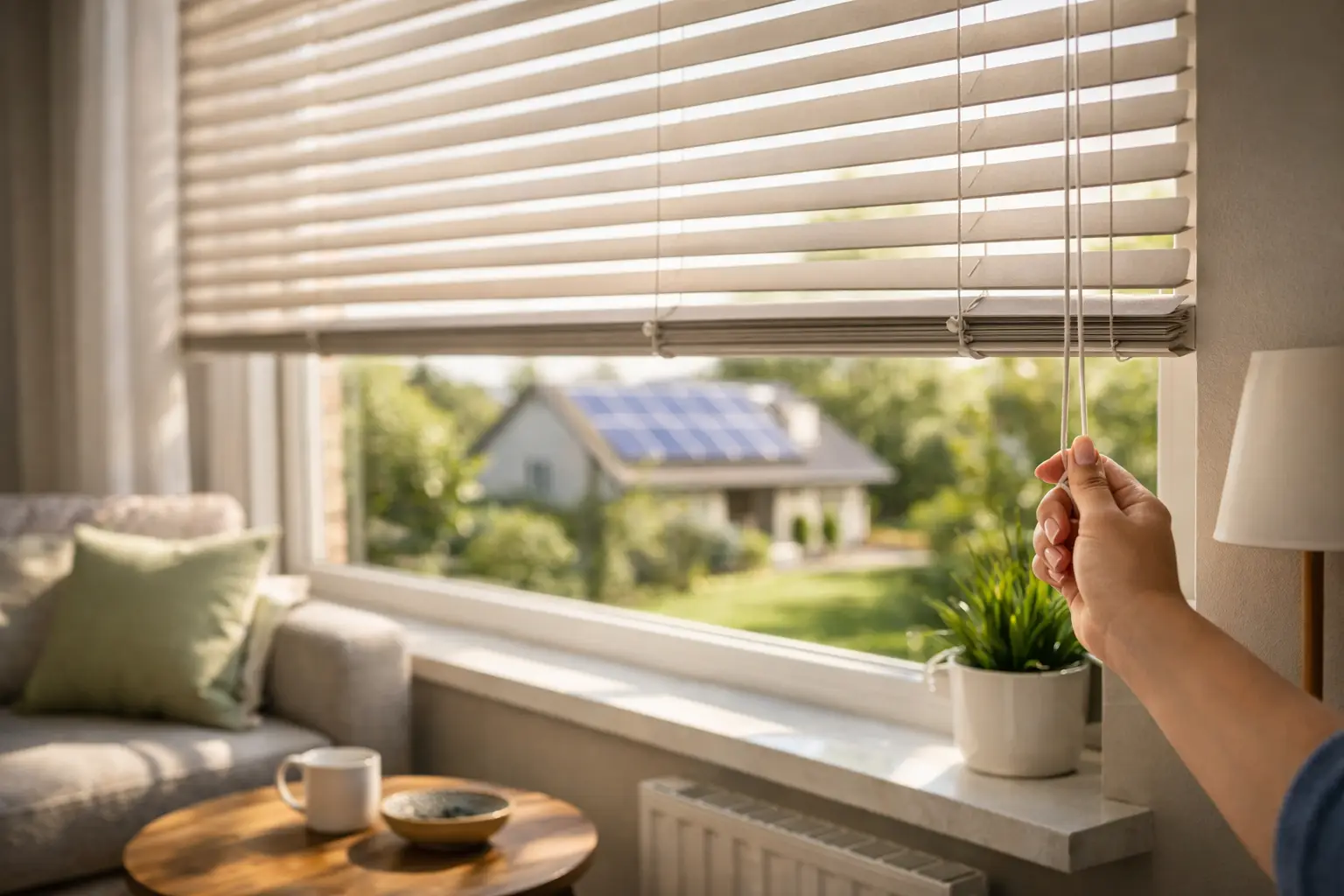
A cold draught by the patio doors, a sunny upstairs room that becomes uncomfortable by mid-afternoon, or heating that seems to disappear through the windows can all make a property harder and more expensive to run. So, can blinds improve energy efficiency? Yes – when they are chosen for the room, fitted accurately and used at the right times, blinds can help reduce heat loss in winter and control solar gain in summer.
They are not a replacement for good glazing, insulation or draught-proofing. However, window coverings add a useful extra barrier at one of the areas where homes and commercial spaces commonly feel least comfortable. For properties across Coventry and the West Midlands, that can mean rooms that feel warmer in colder months, cooler during bright spells and easier to manage throughout the year.
How blinds improve energy efficiency
Windows allow light into a room, but they can also be a source of heat transfer. During winter, warmth from your heating naturally moves towards colder glass. In summer, direct sunshine can heat the glass and the air inside, particularly in south- and west-facing rooms.
Blinds sit between the room and the window, creating an additional layer. The small pocket of air between the blind and the glass slows the movement of heat. A closer, better-fitting blind generally performs more effectively because there are fewer gaps for warm air to circulate around it.
The benefit also comes from light control. Closing blinds before strong sunlight reaches the room can reduce glare and limit overheating, so you may be less reliant on fans or air conditioning. In winter, opening them on a bright day lets in useful natural warmth, while closing them at dusk helps keep that warmth indoors.
This is why energy efficiency is not only about the material you choose. It is also about how you use your blinds day to day.
Which blinds are best for insulation?
The right answer depends on the window, the room and how you use the space. A bathroom needs a moisture-resistant option, while a bedroom may benefit most from blackout and privacy. An office may need glare reduction without losing all daylight.
Roller blinds with thermal or blackout fabrics
Roller blinds are a practical choice for many homes and workplaces because they sit neatly within or just above the window recess. Fabrics with thermal backing, blackout layers or a denser weave can offer greater insulation than a lightweight sheer fabric.
A blackout roller blind can be particularly helpful in bedrooms, nurseries and media rooms. Its main advantage is light control, but the closer fabric also provides an extra barrier against heat loss and summer sun. It will not make a single-glazed window perform like modern double glazing, but it can make the room feel noticeably more comfortable.
For rooms with strong afternoon sun, consider a reflective or solar-control fabric. These are designed to reduce glare and filter solar heat while preserving a brighter feel than a full blackout blind.
Venetian blinds for adjustable light and heat control
Venetian blinds offer precise control. By tilting the slats, you can direct daylight upwards, reduce screen glare or block direct sun without completely closing off the room. This makes them well suited to kitchens, home offices and commercial spaces.
Aluminium Venetian blinds can reflect sunlight effectively, while wooden-look composite slats provide a warmer, more substantial finish that suits living areas and bedrooms. The trade-off is that slatted blinds have small gaps by design, so they are usually less insulating than a close-fitting thermal roller blind. Their strength is flexibility: you can adjust the balance of privacy, light and heat as conditions change.
Vertical blinds for larger windows and doors
Vertical blinds work especially well across wide windows, bay windows and patio doors. They make it simple to control sunlight across a large glazed area, and the vanes can be angled to reduce glare while keeping a view outside.
Because vertical blinds have spaces between the vanes, they are not normally the first choice where maximum insulation is the priority. They are, however, a sensible solution for large openings where ease of operation, privacy and broad light control matter just as much. Choosing a heavier fabric and ensuring the blind is measured to cover the window properly will improve its performance.
Made-to-measure fitting makes a real difference
A blind that is too narrow, too short or badly positioned leaves larger gaps around the edges. Those gaps allow air to move freely between the room and the glass, reducing the insulating effect. This is one reason made-to-measure blinds are worth considering when energy performance is part of the brief.
The best mounting position depends on the window and product. A recess-fitted blind can look clean and compact, while an outside-recess fitting may cover more of the window and reduce edge gaps. For doors, the blind must also remain practical to use, especially where handles, frequent access or safety requirements need to be considered.
Professional measuring helps avoid simple but costly mistakes. At Queen Blinds, a home appointment gives you the chance to look at fabrics, discuss which rooms overheat or feel cold, and choose a blind that suits both the window and the way you live.
Use your blinds with the weather, not against it
Even the most suitable blind cannot help much if it stays open during a hot, sunny afternoon or closed during a bright winter morning. Small habits can make the difference.
In colder weather, open blinds when sunshine reaches the window to gain free natural warmth. Close them as daylight fades, especially in rooms you use during the evening. If a room faces north or receives little direct sun, keeping the blind closed at the coldest times may be more useful.
During warmer months, close blinds before the sun is fully on the glass. This is more effective than waiting until the room already feels hot. Tilt Venetian or vertical slats to reflect and redirect direct rays, and use blackout or solar-control roller blinds in rooms that receive intense sun.
For offices, shops and shared workspaces, motorised blinds can make this easier to manage. Timed operation can close blinds before the building warms up and open them when daylight is useful, without relying on someone remembering to adjust every window.
Blinds work best as part of a wider plan
It helps to be realistic about what blinds can achieve. If windows are poorly sealed, single glazed or damaged, heat loss may still be significant. Condensation also needs attention at its cause, which can include ventilation, moisture levels and cold surfaces. Closing blinds may improve comfort, but it should not be used to hide an ongoing damp or ventilation problem.
Think of blinds as one part of a sensible energy-efficiency approach. Good glazing, secure seals, loft and wall insulation, heating controls and well-fitted window coverings all have a role. Blinds are often one of the more straightforward upgrades because they also improve privacy, light control and the overall look of a room.
Choosing for your room, not just the brochure
Start with the problem you want to solve. If the bedroom is cold and too bright at night, a thermal blackout roller blind may be the strongest fit. If your conservatory or home office suffers from glare, an adjustable Venetian blind or solar-control roller fabric may be more practical. If a patio door needs privacy without losing everyday access, vertical blinds can offer the flexibility you need.
Colour matters too, although it is not the only factor. Lighter and reflective finishes can help manage direct sunlight, while darker fabrics may absorb more heat. Fabric construction, lining, coverage and fitting quality usually have a greater impact than colour alone.
A well-chosen blind should not force you to choose between comfort and style. With the right product and accurate fitting, your windows can look finished, provide the privacy you need and make the room easier to keep comfortable through changing seasons.