


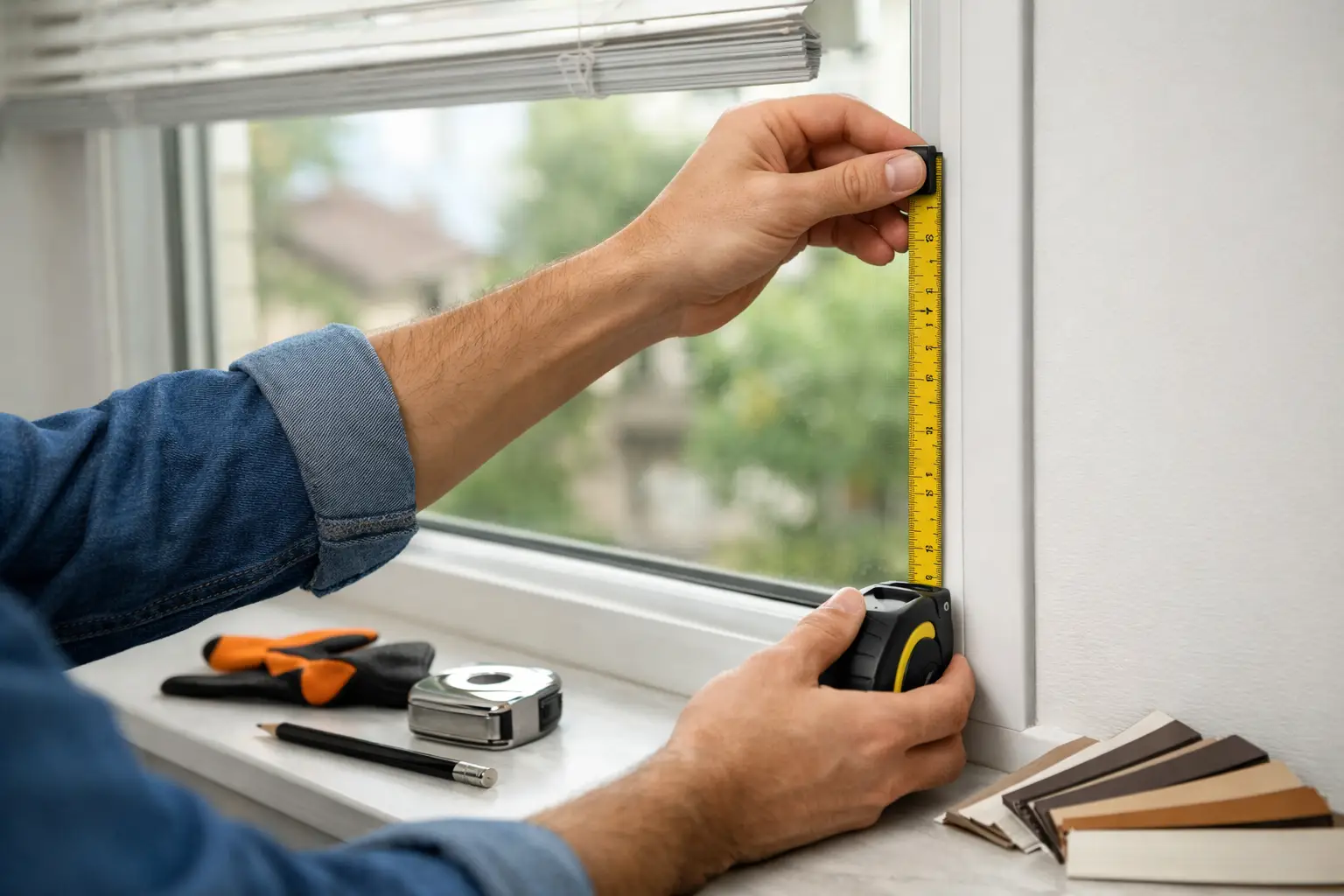
A blind can look perfect in the showroom and still feel wrong once it is up at the window. In most cases, the issue is not the fabric, colour or style. It is the measuring. If you are wondering how to measure windows for blinds, getting the basics right from the start makes everything easier, from choosing the right fitting type to avoiding gaps, drag or awkward operation.
Made-to-measure blinds are designed around precision, so even small errors can affect the final result. That matters whether you are refreshing a bay window at home, fitting blackout blinds in a bedroom, or ordering practical blinds for an office or rental property.
How to measure windows for blinds properly
Before you reach for the tape measure, decide how you want the blind to sit. This shapes every measurement that follows. The two main options are an inside recess fit, where the blind sits neatly within the window opening, and an outside fit, where the blind is fixed beyond the recess to cover a wider area.
Neither option is automatically better. A recess fit tends to look clean and built-in, which suits modern spaces and keeps the sill clear. An outside fit can be the better choice if the recess is shallow, the window is not perfectly square, or you want stronger blackout coverage with fewer light gaps.
Use a metal tape measure rather than a cloth one, as it gives a firmer and more accurate reading. Measure in millimetres, not centimetres, and write each figure down as you go. It sounds obvious, but plenty of measuring mistakes come from relying on memory or rounding numbers up and down later.
Measuring for a recess fit
If your blind will sit inside the window recess, you need the exact size of the opening, not the size you think the blind itself should be. Measure the width in three places – at the top, middle and bottom. Then measure the drop in three places – left, centre and right.
Take the smallest width and the smallest drop. Windows are often less even than they appear, especially in older properties, and using the tightest measurement helps avoid a blind that catches or will not fit. Do not make your own deductions unless the supplier specifically asks you to. Many made-to-measure blinds are adjusted by the manufacturer to allow for brackets and smooth operation.
It is also worth checking for anything that could obstruct the blind. Window handles, inward-opening vents, tiles, deep plaster lines and trims can all affect how neatly the blind sits. A recess might look generous at first glance but become tighter once these details are factored in.
Measuring for an outside fit
An outside fit gives you more flexibility, but it also means thinking beyond the glass itself. Decide how much overlap you want on each side and above and below the window. This is especially important for bedrooms, where blackout performance improves when the blind extends past the frame.
Measure the width of the area you want to cover, then the full drop from the fixing point to where you want the blind to finish. In a living room, that might be just below the sill. For a full-height window or door, it may be closer to the floor, leaving enough clearance so the blind moves freely.
A good outside fit can make a small window look more substantial, but there is a balance to strike. Too narrow and it may look skimpy. Too large and it can crowd the wall or interfere with nearby switches, radiators or furniture.
How measurements vary by blind type
The general method stays similar, but some blind styles need a little more thought.
Roller blinds are usually straightforward to measure, though you should be mindful of chain position, bracket space and whether the fabric needs extra coverage for blackout. Venetian blinds need enough room for the slats to stack when raised, which can affect how much of the window remains visible. Vertical blinds often suit wider windows and patio doors, where the headrail width and vane draw direction matter as much as the drop.
If you are measuring for a kitchen or bathroom, moisture and easy cleaning may influence the style you choose, but the practical measuring points still matter. Handles, tiles and limited recess depth are common issues in these rooms. In offices and commercial spaces, larger spans and multiple windows can make consistency just as important as accuracy.
Bay windows and shaped spaces
Bay windows are where measuring becomes more technical. Each section usually needs to be measured individually, and angles can affect how blinds sit side by side. If the windows have shared corners or limited bracket space, the blinds need enough clearance to operate without clashing.
For shaped or unusual windows, there is rarely a one-size-fits-all approach. A neat result depends on careful measuring and product choice together, not just dimensions on a page. In these situations, professional measuring often saves time and prevents expensive corrections later.
Common mistakes when measuring blinds
Most measuring errors are not dramatic. They are small, easy-to-miss details that create frustration once the blind arrives.
One of the most common is measuring only once. Another is taking the size of the existing blind rather than the window recess or intended coverage area. Older blinds may have been poorly fitted in the first place, so copying them can repeat the same problem.
People also forget to check depth. A recess may be wide and tall enough, but not deep enough to house the blind mechanism neatly. This can be an issue with Venetian blinds or motorised options where the headrail needs more room.
Then there is the question of obstructions. Window handles are the usual culprit, but alarm sensors, trickle vents and even decorative mouldings can all affect the fit. If a blind has to sit awkwardly around these features, it can compromise both appearance and performance.
When it makes sense to book a professional measure
Plenty of straightforward windows can be measured successfully with a little care. But there are times when expert help is the sensible option. Bay windows, large commercial installations, motorised blinds, full-height glazing and older properties with uneven recesses all benefit from a trained eye.
A professional measure is not just about reading a tape correctly. It also includes advising on the best fitting method, checking recess depth, spotting access issues and matching the blind style to how the room is used. That can make a real difference if you want insulation, privacy, child-safe operation or a clean blackout finish.
For many customers, convenience matters as much as precision. Having someone handle measuring and fitting removes the guesswork and gives you greater confidence that the finished blind will sit exactly as it should. That is one reason full-service support is so valuable, particularly when several rooms or a business premises are involved.
A simple measuring checklist before you order
Before placing an order, make sure you have confirmed whether the blind is recess fit or outside fit, measured width and drop in millimetres, checked three points across each direction, and noted any handles or obstructions. If you are ordering more than one blind, label every window clearly so nothing gets mixed up.
It also helps to think about the room itself. A bedroom may need better light control. A family home may prioritise child safety. A workspace might need glare reduction without making the room feel dark. The right measurement supports these practical goals as much as it supports the look of the blind.
If you would rather avoid second-guessing any of it, Queen Blinds offers a local measuring and fitting service across Coventry and the West Midlands, helping customers get a tailored result without the stress of doing it alone.
The best blinds do not just match your décor. They fit the way your room works, the way your window is built and the way you want the space to feel. Measure with care, and the finished result tends to speak for itself.