


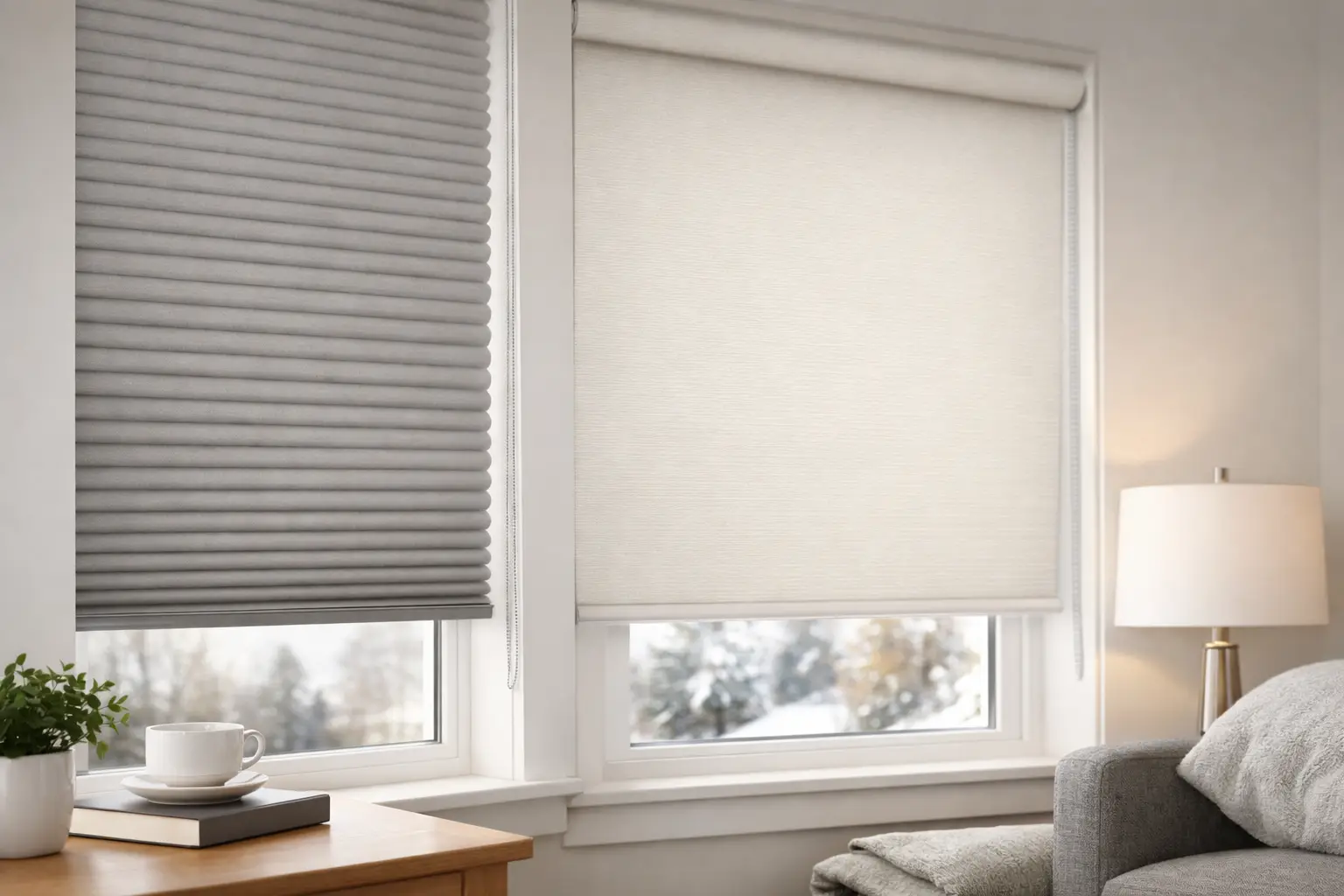
If one room in your home always feels colder than the rest, the window is usually part of the problem. Heat escapes through glazing, draughts creep in around the frame, and standard coverings often do very little to help. This guide to insulated window blinds explains what they do, where they work best, and how to choose a made-to-measure option that improves comfort without compromising on style.
Insulated blinds are designed to create a barrier between the room and the glass. That barrier helps reduce heat loss in winter and can also limit excess heat gain in summer. The result is a room that feels more stable throughout the day, with less reliance on heating or cooling to keep it comfortable.
That said, not every insulated blind works in exactly the same way. Fabric type, blind style, window size and how accurately the blind is fitted all make a difference. For homeowners, landlords and commercial clients, the best choice usually comes down to balancing thermal performance with light control, appearance and day-to-day practicality.
What insulated window blinds actually do
At their simplest, insulated blinds help trap a layer of air between the blind and the window. Air is a poor conductor of heat, so this pocket slows down the transfer of warmth. Some blind fabrics also include thermal backings or specialist coatings that improve performance further.
This does not mean blinds replace proper glazing or wall insulation. If a property has old windows, worn seals or major draught issues, blinds can only do so much. But they can make a noticeable improvement, especially in bedrooms, living rooms, bay windows, offices and north-facing spaces that struggle to stay warm.
The other benefit is control. Unlike curtains, which can feel heavy or take up more space, blinds offer a neater finish while still helping with privacy, glare reduction and light management. In many homes, that combination is what makes insulated blinds a practical upgrade rather than just a decorative one.
A guide to insulated window blinds by style
The term insulated blinds covers several different products. Some are built around thermal fabric, while others rely on design features such as closer window coverage or layered construction.
Roller blinds
Thermal roller blinds are one of the most popular choices because they are straightforward, tidy and versatile. A good-quality roller blind with an insulating or blackout backing can help reduce heat loss while also giving you strong light control.
They work particularly well in bedrooms, home offices and living spaces where you want a clean look and easy operation. For rental properties and commercial settings, they are also a sensible option because they are simple to maintain and available in a wide range of colours and finishes.
The trade-off is that a roller blind is a single sheet of fabric, so small gaps at the sides can still let in some draughts and light. That is why made-to-measure fitting matters. The closer the blind sits to the window area, the better the overall performance tends to be.
Roman blinds
Roman blinds can offer a softer, more decorative look while still improving insulation, especially when they are made with heavier fabrics or thermal linings. They are often chosen for lounges, dining rooms and master bedrooms where appearance matters just as much as performance.
They do, however, stack up at the top when raised, which can make them less minimal than a roller blind. In moisture-prone areas such as bathrooms or kitchens, fabric choice also needs more thought.
Cellular and pleated styles
Cellular blinds, sometimes called honeycomb blinds, are specifically designed for insulation. Their internal pockets trap air very effectively, which is why they are often regarded as one of the strongest performers for thermal efficiency.
They are a smart option for rooms that are difficult to keep warm or where energy savings are a priority. The catch is that they may not suit every interior style, and the look is more functional than classic. For some clients, that is perfectly fine. For others, finish and appearance carry equal weight.
Venetian and vertical blinds with insulating features
Traditional aluminium Venetian blinds are not usually the first choice for warmth, but there are composite, faux-wood and specialist slat options that can perform better than expected. Vertical blinds can also be paired with fabrics that offer thermal or blackout benefits.
These styles are often useful for larger windows, patio doors and commercial spaces where flexible light control matters. They may not create the same insulating effect as a dedicated thermal roller or cellular blind, but they can still support comfort when specified properly.
Where insulated blinds make the biggest difference
Some rooms benefit more than others. Bedrooms are an obvious example because you want warmth, privacy and, in many cases, blackout control. A thermal blackout roller blind can improve sleep conditions while helping the room feel less chilly at night.
Living rooms are another strong candidate, especially if they have large front windows or bay windows. These spaces are used heavily in the evening, when outside temperatures drop and heat loss becomes more noticeable.
In kitchens and bathrooms, moisture resistance often matters as much as insulation. A practical blind that can cope with humidity may be the better long-term choice, even if its thermal performance is slightly lower than a fabric-heavy alternative.
For offices, clinics, schools and other commercial premises, insulated blinds can support comfort for staff and visitors while helping to manage glare and maintain a polished appearance. In these environments, ease of cleaning and durability often sit alongside energy efficiency in the decision-making process.
How to choose the right insulated blind
The best starting point is not style. It is the room itself. Ask what problem you are actually trying to solve. If the issue is a cold bedroom with early morning light, a thermal blackout blind may be ideal. If it is a bright office that overheats in summer and loses heat in winter, a different fabric or operating system might be more suitable.
Window shape and size matter too. Wide windows, door openings and awkward recesses need careful measuring if the blind is going to sit properly and perform well. This is where off-the-shelf options often fall short. A blind that is almost right can still leave gaps, hang unevenly or look out of place.
It is also worth thinking about operation. In family homes, child safety is a priority, so cordless or properly secured systems should always be considered. In hard-to-reach windows or business settings, motorised blinds can make day-to-day use far easier.
Then there is appearance. Insulated blinds do not need to look bulky or overly functional. With made-to-measure options, you can choose colours, textures and finishes that work with the room rather than fighting against it. That matters if you want practical performance but still care about how the space feels.
Why fitting matters as much as the blind itself
A well-made blind can only do its job properly if it is measured and installed correctly. Gaps around the edge reduce insulation, and a poor fit can affect privacy, blackout performance and the overall finish.
That is one reason many customers prefer a full measuring and fitting service rather than trying to do everything themselves. Professional advice can also help avoid common mistakes, such as choosing a fabric that is too light for a cold room or selecting a style that clashes with the way the window is used.
For properties across Coventry and the wider West Midlands, local knowledge can help as well. Different property types present different challenges, from modern extensions with large glazed doors to older houses with uneven recesses and period features. A tailored recommendation tends to work better than a one-size-fits-all approach.
Are insulated blinds worth it?
In many cases, yes, but it depends on expectations. Insulated blinds are not a cure-all for poorly performing windows, and they will not deliver the same impact as major building upgrades. What they can do is improve comfort, support energy efficiency, reduce glare and give you better control over privacy and light.
That combination makes them worthwhile for many homes and workplaces, particularly when the blind is chosen for the room rather than simply for looks. A made-to-measure solution from a specialist such as Queen Blinds also removes much of the guesswork, which is often the difference between blinds that look fine and blinds that genuinely improve the space.
If you are comparing options, focus on the whole picture: thermal benefit, blackout level, maintenance, safety, appearance and fit. The right blind should make the room feel better to use every day, not just look better when it is first installed.
A colder room does not always need a major renovation. Sometimes, the smarter fix is a better window covering chosen with care and fitted properly from the start.