


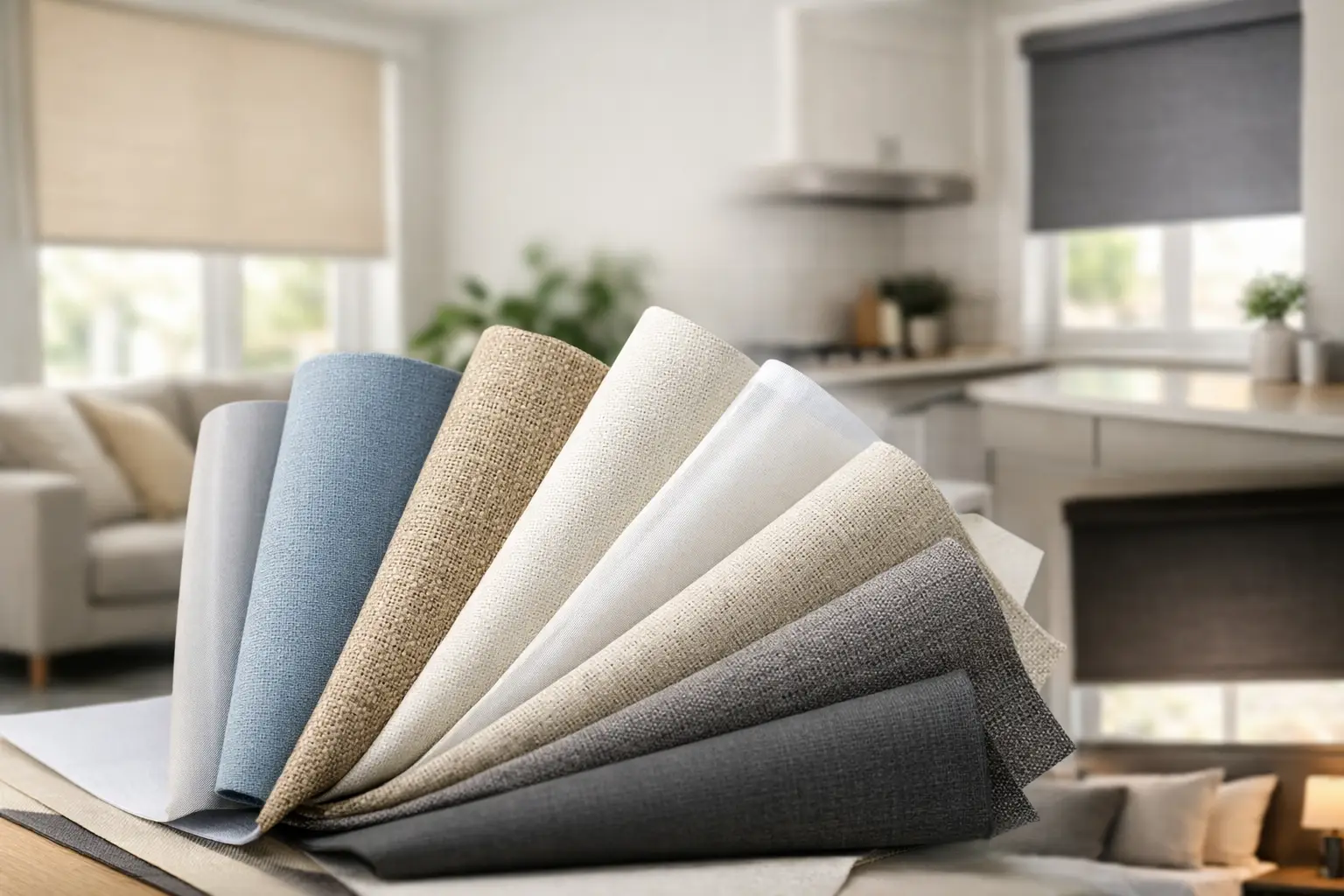
A roller blind can look simple, but the fabric you choose changes how a room feels and functions every day. This guide to roller blind fabrics will help you compare the main options, from blackout and sunscreen materials to practical moisture-resistant finishes, so your made-to-measure blinds suit both the window and the way you use the space.
The best fabric is rarely just the one that matches the wallpaper. A south-facing lounge may need glare control without losing daylight, while a child’s bedroom usually benefits from a darker, more restful finish. In kitchens, bathrooms and commercial settings, easy cleaning and moisture resistance often matter more than softness or pattern.
Start with what the room needs
Before considering colours, ask what you want the blind to achieve. Most choices come down to light control, privacy, temperature, durability and appearance. One fabric can perform well in several areas, but there is usually a trade-off.
For example, a blackout roller blind offers excellent darkness but will block more daylight when lowered. A sunscreen fabric preserves an outward view during the day, but it will not give the same evening privacy when interior lights are on. Choosing well means being clear about the room’s priorities.
In Coventry and across the West Midlands, many homes have a mix of older rooms, extensions and wide patio doors. There is no need for every blind to use the same fabric. Matching the fabric to each room often gives a better result than choosing one style for the whole property.
A guide to roller blind fabrics and their benefits
Blackout fabrics for bedrooms and media rooms
Blackout roller blind fabrics are designed to stop light passing through the material. They are a popular choice for bedrooms, nurseries, shift workers’ rooms and television spaces, where controlling daylight is the main concern.
A true blackout fabric will make a significant difference, particularly on bright summer mornings. However, some light can still appear around the sides of the blind, above the fitting or beneath the bottom bar. For the darkest possible finish, accurate measuring and professional fitting are just as important as the fabric itself. Recess fitting can reduce gaps where the window shape allows, while an outside-recess fit may provide wider coverage.
Blackout does not have to mean dark colours. White, cream, grey and patterned blackout fabrics are available, allowing you to keep a lighter decorative scheme while improving sleep and reducing glare.
Dim-out and translucent fabrics for softer light
Dim-out and translucent roller blind fabrics filter daylight rather than blocking it completely. They are ideal for lounges, dining rooms, hallways and home offices where you want a degree of privacy but still want the room to feel bright.
These fabrics soften harsh sunlight and reduce reflections on screens without making a room feel closed off. They also suit windows facing neighbouring properties, particularly where daytime privacy is useful. At night, though, translucent fabrics may show silhouettes when lights are on indoors. If your window is overlooked after dark, consider a blackout blind, a layered window treatment or a fabric with a denser weave.
The appearance of a translucent fabric can vary considerably. Some have a clean, plain finish for a contemporary room, while others imitate linen or woven textiles for a warmer, more relaxed look.
Sunscreen fabrics for glare control and daytime views
Sunscreen roller blind fabrics have a specially woven structure that filters sunlight while allowing you to see out during the day. They are particularly useful in conservatories, garden rooms, offices and living spaces with large glazing.
The key detail is the fabric’s openness factor. A more open weave allows a clearer view and more natural light, while a tighter weave gives greater shade and privacy. A 1% openness fabric provides stronger screening than a 5% option, for instance, although the view through it will be less clear.
Sunscreen blinds can help protect furnishings, flooring and displays from fading caused by UV exposure. They are also a practical option for computer screens and televisions where direct sunlight causes glare. Their limitation is nighttime privacy: once it is dark outside and lights are on inside, people may be able to see in. They work best where daytime comfort is the priority or alongside curtains for evenings.
Moisture-resistant fabrics for kitchens and bathrooms
Bathrooms, kitchens and utility rooms need a fabric that can cope with steam, splashes and regular wiping. Moisture-resistant roller blind fabrics are made for these conditions and tend to have a smooth, easy-clean surface.
They offer a neat alternative to curtains, which can hold moisture and absorb cooking odours. In a bathroom, choose a finish that provides privacy without making the room gloomy. In a kitchen, a light-filtering fabric often works well near a dining area, while a wipe-clean option is sensible close to sinks and worktops.
No blind should sit where it receives constant water contact, and good ventilation remains essential. The right fabric will withstand everyday humidity, but it is not a replacement for extractor fans or sensible positioning.
Thermal and energy-conscious fabrics
Roller blinds can contribute to a more comfortable room by creating an extra barrier at the window. Some fabrics are designed with thermal properties or reflective backings to help manage heat and light.
During colder months, a well-fitted blind can reduce the cold sensation from glazing and help retain warmth. In sunnier rooms, reflective or light-coloured backings can limit solar gain and make the space more comfortable. The overall effect depends on the glass, window frame, blind fit and whether the blind is kept lowered at the right times, so it should be viewed as one part of an energy-efficient home rather than a complete insulation solution.
For offices and commercial premises, thermal and solar-control fabrics can be especially useful on broad banks of windows. They create a more consistent working environment without sacrificing a professional finish.
Colour, texture and pattern matter too
Once performance is right, the fabric’s look can bring the room together. Pale fabrics make a compact room feel more open and reflect more daylight. Deeper colours can add contrast and make a large room feel more settled, but they may absorb more heat on sunny windows.
Texture deserves attention because a roller blind is a visible surface when lowered. A subtle woven effect can soften a modern kitchen or complement natural timber furniture. Smooth fabrics suit clean-lined interiors and are often the easiest to wipe down. Pattern can be effective in a child’s room, a feature window or a commercial reception area, although a bold print may date faster than a neutral texture.
It is worth looking at samples in the actual room. Fabric colours can appear very different under morning light, evening lamps and the changing daylight typical of a British winter.
Consider safety and operation alongside the fabric
The fabric choice and blind mechanism should work together. Chain-operated roller blinds are a familiar, reliable option, while motorised blinds are convenient for high windows, large glazed areas and busy households. They can also make it easier to manage several blinds at once when sunlight moves across the room.
For homes with young children, child-safe control options and correctly fitted safety devices are essential. A professional consultation can identify the most suitable operating method for the window location, the blind size and who uses the room.
Fabric weight can also affect the final design. Wider blinds and heavier materials need appropriate components to hang smoothly and roll evenly. This is one reason made-to-measure blinds are a worthwhile choice over off-the-shelf alternatives, especially for bay windows, large openings and unusually shaped recesses.
Get the fit right before making a final choice
A fabric sample tells you about colour and texture, but measuring determines how the blind performs. A blind that is too narrow can leave uncomfortable gaps for light and privacy. One fitted too close to a window handle may not operate properly. Recess depth, tile placement, opening windows and nearby doors all need consideration.
Queen Blinds provides a free home appointment, allowing you to see suitable fabrics in your own light and receive recommendations based on the room’s practical needs. Expert measuring and fitting remove the uncertainty around recess sizes, window obstructions and the finish you want.
The right roller blind fabric should make daily life easier: darker when you need rest, brighter when you need focus, more private when you need comfort and simple to maintain when life gets busy. Start with the room’s needs, view samples at home and choose a finish you will be happy to see every day.