


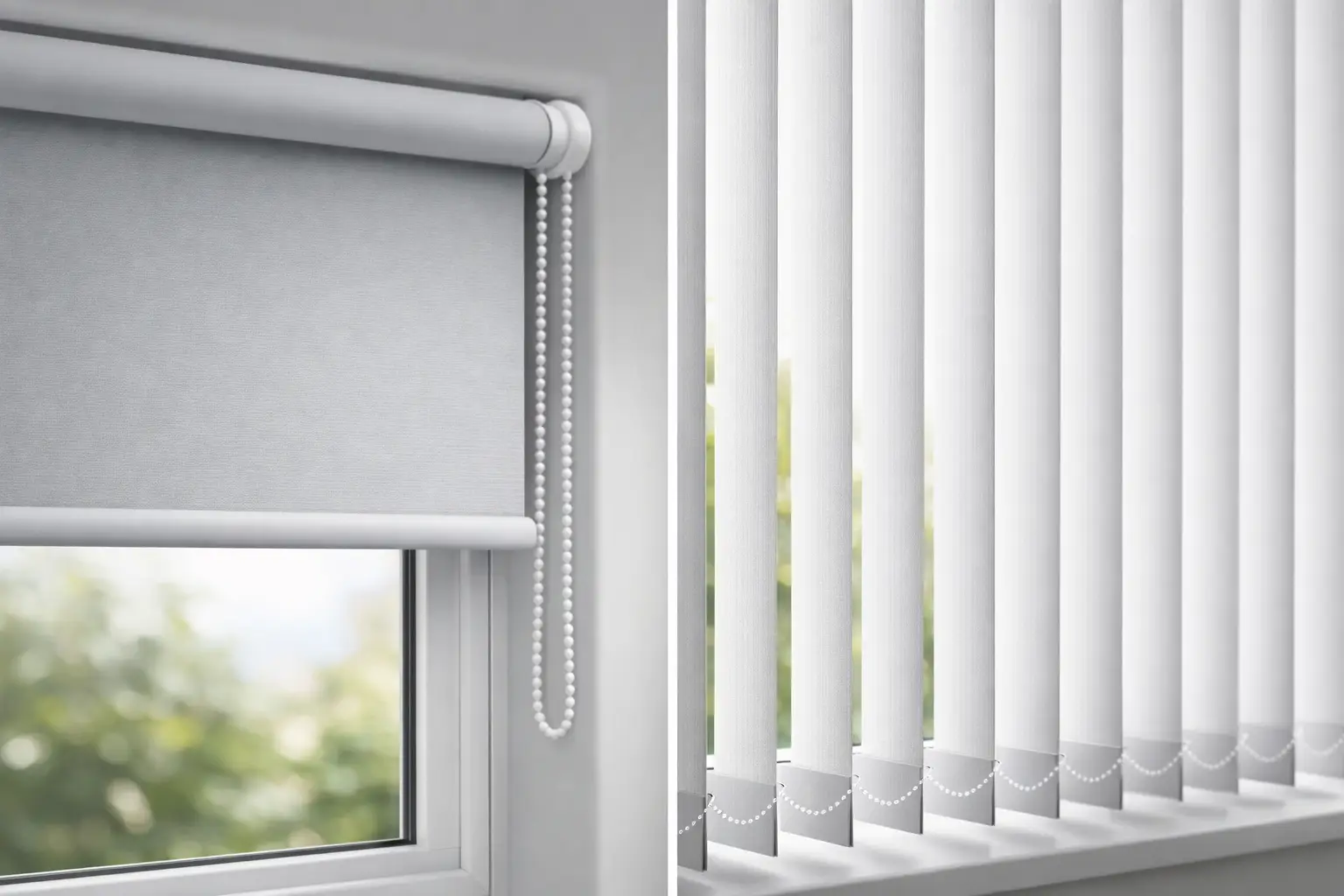
Choosing blinds sounds simple until you are standing in a room that gets harsh afternoon sun, needs privacy by evening and still has to look right with the rest of the space. That is usually the point where the question becomes roller blinds vs vertical blinds – and the right answer depends less on trends and more on how the room is actually used.
Both options are practical, made-to-measure and well suited to homes and workplaces across Coventry and the West Midlands. The difference is in how they handle light, how they sit within the room and how much flexibility you want day to day. If you are deciding between the two, it helps to look beyond appearance and think about windows, routine and long-term upkeep.
Roller blinds vs vertical blinds: the key difference
Roller blinds use a single piece of fabric that rolls neatly up and down. They give a clean, streamlined finish and are often chosen for a modern, uncluttered look. Depending on the fabric, they can soften daylight, reduce glare or block out light almost completely.
Vertical blinds are made from individual slats that hang from a headrail and tilt to control light. They can also be drawn to one side or split in the middle, which makes them especially useful for wider windows and patio doors. They tend to offer more adjustable light control throughout the day, rather than simply open or closed coverage.
That distinction matters. If you want a straightforward blind with a smooth finish, roller blinds often feel like the simpler choice. If you want to fine-tune privacy and sunlight as conditions change, vertical blinds usually offer more flexibility.
Which looks better in a home?
This depends on the room and the style you are aiming for.
Roller blinds suit spaces where you want the window treatment to feel tidy and understated. They work particularly well in kitchens, bedrooms, bathrooms and newer interiors where clean lines matter. With the right fabric and finish, they can either blend quietly into the background or add a strong block of colour or texture.
Vertical blinds have a more structured appearance. In some homes, that is a real advantage, especially on large windows where a roller blind can look like a broad sheet of fabric. Vertical slats break up the scale of the window and can make big glazed areas feel more manageable. They are also a practical fit for conservatories and patio doors, where access matters just as much as style.
If your priority is a softer, more contemporary look, roller blinds often come out ahead. If you are covering a large opening and want the blind to look proportionate, vertical blinds can be the better visual choice.
Light control and privacy
This is where the decision often becomes clearer.
Roller blinds are excellent when you want one fabric to do one job very well. Blackout roller blinds are a popular option for bedrooms, nurseries and media rooms because they help reduce incoming light significantly. In living areas, lighter filtering fabrics can cut glare without making the room feel dark. The trade-off is that roller blinds are less adjustable while in use. They are either lowered to a set height or raised, so you do not get the same level of precision as tilting slats.
Vertical blinds give you more control during the day. You can angle the slats to let in light while limiting direct sun or overlooking from outside. That makes them useful in offices, front rooms and street-facing spaces where privacy needs change hour by hour. They are particularly effective on bright windows where full sunlight can become uncomfortable, but closing a blind completely would make the room too gloomy.
For rooms where total blackout is the main goal, roller blinds are often the stronger option. For spaces where light and privacy need constant adjustment, vertical blinds are usually more versatile.
Roller blinds vs vertical blinds for large windows and doors
Large windows can be the deciding factor on their own.
Vertical blinds are often the more practical choice for wide expanses of glass, bi-fold style openings and sliding or patio doors. Because the slats can be drawn aside, access is easier and the blind is less likely to feel cumbersome. You can also tilt the slats to manage sunlight without fully covering the glass.
Roller blinds can still work on larger windows, especially when you want a simpler, more minimal finish. But as widths increase, the blind itself becomes more substantial. In some settings that is fine, while in others it can feel heavier and less convenient for frequent use.
For standard windows, roller blinds are often a natural fit. For broad openings or doors used every day, vertical blinds tend to be easier to live with.
What about maintenance and durability?
Most customers want blinds that look good without becoming another job to keep on top of.
Roller blinds are generally easy to maintain. With fewer moving parts and one main fabric panel, they are straightforward to wipe down or dust, depending on the material. This simplicity makes them a strong option in busy family homes and in rental properties where practicality matters.
Vertical blinds also wear well, but they have more components. Individual slats may need occasional straightening or replacement over time, especially in high-traffic areas where doors are opening and closing regularly. The advantage is that if one slat becomes marked or damaged, it can often be replaced without changing the whole blind.
Neither option is difficult to maintain when fitted properly and chosen for the right room. The better question is whether you want the simplicity of a single blind or the flexibility of a system with more moving parts.
Best rooms for each blind type
Roller blinds are especially well suited to bedrooms, bathrooms, kitchens and children’s rooms. They are compact, neat and available in practical fabrics, including blackout and moisture-resistant options. They also work well where child safety is a priority, particularly when selected with suitable safety features and fitted professionally.
Vertical blinds are often the better fit for dining rooms with large windows, conservatories, offices, reception areas and rooms with patio doors. In commercial settings, they remain a popular choice because they are smart, functional and effective at reducing glare on screens while keeping spaces bright.
This is why there is no one-size-fits-all answer. A house can suit both styles perfectly, just in different rooms.
Cost, value and made-to-measure fitting
When customers compare prices, it is worth thinking beyond the blind itself. A cheaper off-the-shelf option can quickly become poor value if the fit is wrong, light gaps are frustrating or the finish looks uneven.
Roller blinds can be cost-effective, especially on straightforward window sizes. Vertical blinds can also offer excellent value, particularly for larger openings where they provide practical coverage without compromising usability. The final cost depends on dimensions, fabric or slat choice, controls and whether you include upgraded features.
What makes the biggest difference is accurate measuring and fitting. A blind that is tailored to the exact window will usually perform better, look smarter and last longer. That is one reason many homeowners and businesses prefer a full service rather than guessing sizes themselves.
How to choose between roller and vertical blinds
If you are stuck between the two, start with the room rather than the product.
Ask yourself how much light control you need during the day, whether the window is standard or extra wide and how often the blind will be opened for access. Think about whether you want the blind to make a style statement or sit quietly in the background. Also consider practical points such as blackout needs, privacy from neighbouring properties and how much wear the blind will get.
In many cases, the right answer is obvious once those questions are clear. Bedrooms often benefit from roller blinds, especially with blackout fabric. Patio doors and office windows often suit vertical blinds because they offer easier access and more adjustable screening. Living rooms can go either way depending on the look you prefer and the amount of glazing involved.
For customers who want a tailored recommendation, a professional home visit can save time and avoid expensive mistakes. Seeing samples in the room, checking window sizes properly and discussing how the space is used usually leads to a much better result than choosing from pictures alone. That is where a local made-to-measure specialist such as Queen Blinds can make the process far easier.
There is no need to force every room into the same solution. The best blinds are the ones that fit the window properly, suit the way you live or work and still feel right months later when the novelty has worn off.