


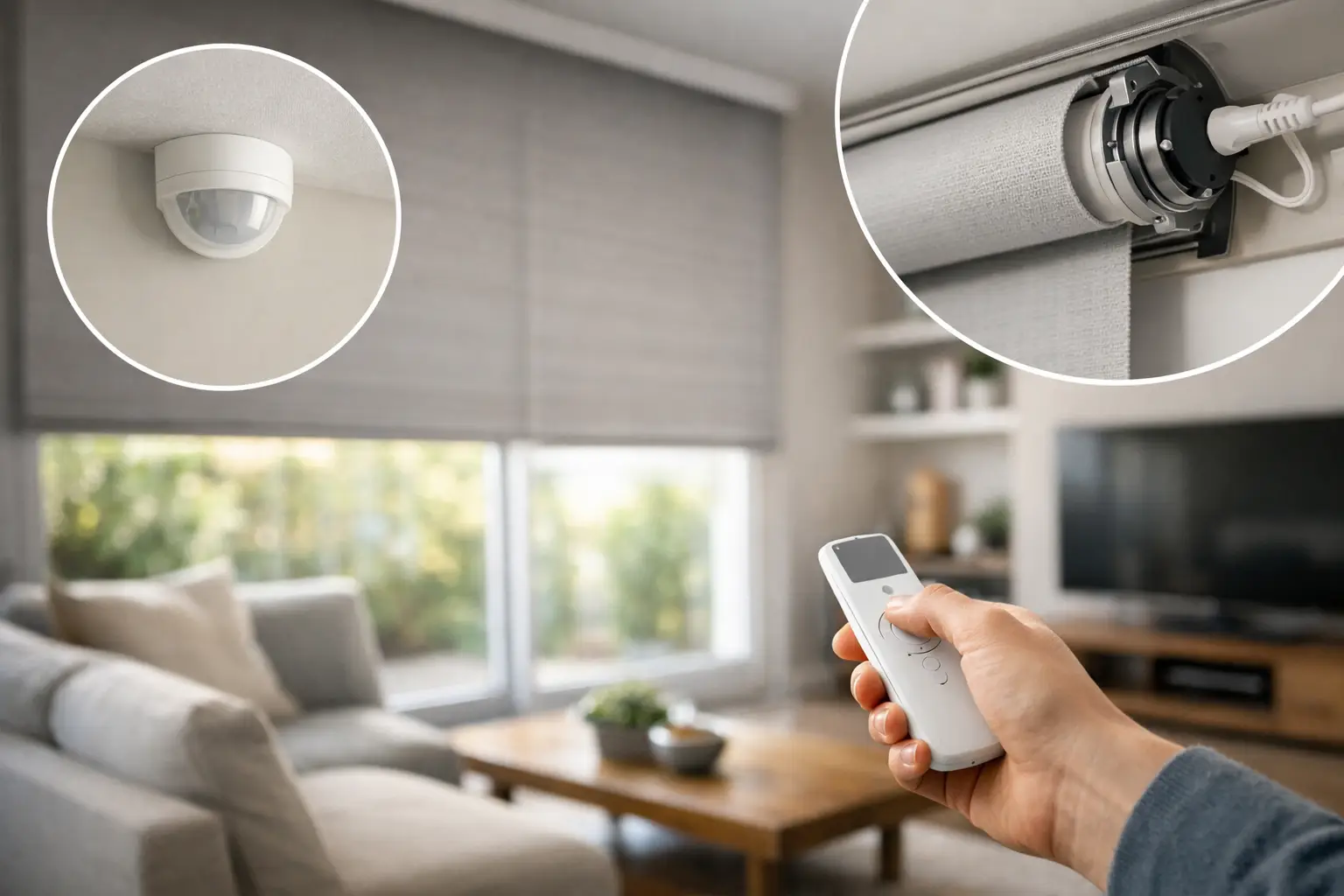
A blind that opens at the touch of a button feels like a simple upgrade. For many households and workplaces, though, the real value is not just convenience. Understanding how motorised blinds operate safely helps you choose a system that is practical, reliable and well suited to the people using the room every day.
Motorised blinds are designed to remove the need for hanging cords or manual strain, while giving you controlled movement and consistent operation. That matters in family homes, rented properties and commercial spaces alike. Safety comes from the way the motor, controls, power supply and installation all work together, not from one feature alone.
How motorised blinds operate safely in daily use
At the centre of the system is a compact motor fitted inside or alongside the blind mechanism. When you press a wall switch, use a remote or activate a smart control, the motor turns the tube or headrail and moves the fabric or slats to the required position. Because the motion is powered and controlled, the blind raises and lowers in a measured way rather than being pulled by hand.
This controlled movement is one of the main safety advantages. Manual blinds can be opened unevenly, pulled too hard or allowed to snap back. A motorised blind is set to travel within specific limits, so it stops where it should and does not keep winding beyond its intended range. That reduces wear on the blind and lowers the risk of damage to the mechanism.
In practical terms, motorised systems also remove external operating cords in many designs. For families with young children, that is a major benefit. Cordless operation creates a cleaner finish at the window and reduces one of the most common household blind safety concerns.
The safety features built into motorised blind systems
Not every motorised blind is identical, but good systems tend to rely on the same core protections. One is limit setting. During installation, upper and lower stopping points are programmed so the blind knows exactly where to stop. This prevents over-rolling, bunching or running too far into the cassette or sill.
Another is obstacle awareness or resistance detection, available on some systems. If the blind meets unusual resistance, the motor can stop rather than forcing continued movement. This can help protect the fabric, the motor and anything caught in the path. It is especially useful in busy spaces where furniture may be moved or where several people use the same room.
Low-voltage and battery-operated options can also support safer use. These systems avoid the need for exposed trailing wires and can be a sensible choice where hard wiring is not practical. In the right setting, they offer a neat installation while still giving dependable operation.
There is also the simple safety benefit of reach. A blind fitted high above bi-fold doors, in a stairwell, over a kitchen sink or across large office glazing is awkward to operate manually. Motorisation removes the temptation to stretch, climb on furniture or force a mechanism from an uncomfortable angle.
Why expert fitting matters as much as the motor
Even the best blind system depends on correct measuring and installation. A poorly aligned blind may rub, catch or strain as it moves. Brackets that are not secure can affect stability. Incorrect limit setting can shorten the life of the system and compromise smooth operation.
That is why made-to-measure supply and professional fitting matter. The blind needs to suit the width, drop, recess depth and intended use of the window. In a bedroom, the priority may be blackout performance and quiet operation. In an office, it may be reliable daily scheduling across multiple blinds. In a family living space, safe cordless control may be the deciding factor.
A properly fitted blind should move evenly, stop accurately and look tidy when open or closed. It should also be installed with the power source, controls and any charging access positioned sensibly for the room. These details are easy to overlook when buying off the shelf, but they make a real difference to long-term safety and convenience.
Power options and what they mean for safe operation
Motorised blinds generally use either rechargeable battery motors, replaceable battery systems or mains-powered motors. Each option can be safe and effective when specified properly, but the right choice depends on the room and how often the blind will be used.
Rechargeable battery motors are popular in homes because they keep the installation clean and avoid visible wiring. They work well for many standard windows and are especially appealing where décor matters. The key is making sure the battery is accessible for charging and that usage levels match the motor capacity.
Mains-powered systems are often better suited to larger blinds, heavier fabrics or commercial settings with frequent operation. They provide consistent power and can integrate neatly with wider control systems, but they need careful planning during installation. Safe routing of cables and professional electrical work are essential.
Replaceable battery systems can be practical in lighter-use spaces, although they may be less convenient over time. The safety point here is not that one power source is automatically better than another. It is that the system should fit the demands of the room, the blind size and the way the space is used.
Smart controls, timers and sensors
When people hear “smart blinds”, they often think first about convenience. Scheduled opening in the morning and automatic closing in the evening are certainly useful, but they can support safer operation too.
Timers reduce unnecessary handling and create consistent movement patterns. If blinds are opened and closed at predictable times, there is less chance of someone tugging at them manually or using them incorrectly. In workplaces, that can be particularly useful where multiple staff members share control of one room.
Some systems can also work with light or temperature settings. That can help manage glare, heat gain and privacy without constant adjustment. It does not mean every property needs a fully connected smart home setup. In many cases, a simple remote or wall switch is the most sensible option. The safest system is usually the one that suits the user, rather than the one with the longest list of features.
Where motorised blinds are especially useful
The clearest safety benefits tend to show up in rooms where manual operation is inconvenient or where cordless design matters most. Large windows, tall stairwells and hard-to-reach glazing are obvious examples. So are children’s bedrooms, nurseries and family spaces where reducing cords is a priority.
In commercial properties, motorised blinds can support a more controlled and professional environment. Meeting rooms, receptions and open-plan offices often benefit from blinds that can be adjusted quickly and evenly. They also reduce wear caused by different users handling the blinds throughout the day.
Landlords and renovators may also see the value. A made-to-measure motorised blind can add a more premium finish to a property while improving practical day-to-day use. That said, there is always a balance between budget, usage and specification. Not every window needs motorisation. It tends to offer the strongest return where access, appearance and regular operation all matter.
Maintenance and safe long-term performance
Motorised blinds are low maintenance, but they are not maintenance free. Dust should be kept under control, fabrics should be cleaned according to the material, and the blinds should not be forced by hand if the motor is engaged. If a blind starts moving unevenly, making unusual noise or stopping short, it is best to have it checked rather than continuing to use it.
Battery charging should be kept on schedule where relevant, and remotes or control settings should be used as intended. With quality components and proper fitting, motorised blinds are built for regular use. Most problems come from mismatched products, poor installation or trying to override the mechanism manually.
This is one of the reasons tailored advice matters. A local specialist can recommend whether a particular window would be better served by roller, Venetian or vertical blinds, and whether motorisation is genuinely worthwhile for that setting. For customers across Coventry and the wider West Midlands, that sort of practical guidance often saves time and avoids expensive guesswork.
Choosing a safe motorised blind with confidence
If you are weighing up motorised blinds, the best place to start is not the app or the remote. It is the room itself. Think about who uses the space, how often the blind will move, whether child safety is a concern, and whether the window is awkward to reach.
From there, the focus should be on fit, power source, control method and installation quality. A well-chosen system should feel easy to use from day one. It should move smoothly, stop where expected and suit the way the room functions. That is what safe operation really looks like in practice.
At Queen Blinds, that is why made-to-measure advice and fitting matter as much as the product itself. The right motorised blind should not just look smart at the window. It should make everyday living or working simpler, tidier and more reassuring.
If a blind is going to be used every day, safety is rarely about one dramatic feature. More often, it comes from lots of good decisions made well before the blind ever moves.