


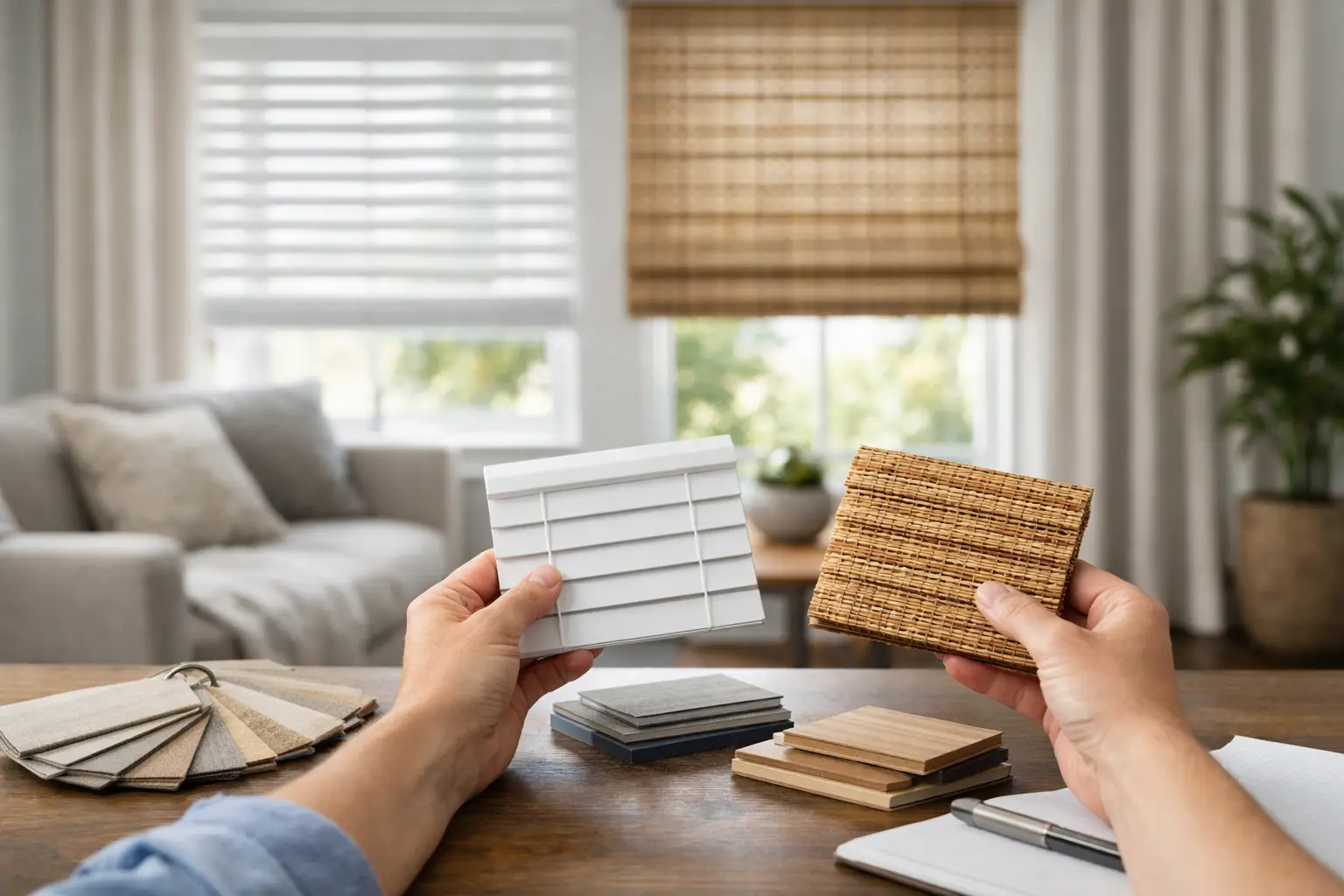
A living room can change completely with the wrong blinds. Too dark, and the space feels smaller than it is. Too sheer, and you lose privacy the moment the lights go on. If you are wondering how to pick blinds for living room windows, the best starting point is not colour or trend – it is how you actually use the room.
Some living rooms need soft daylight through the afternoon. Others need better glare control for a television, extra insulation in winter, or safer options for homes with young children. The right choice usually sits somewhere between style and practicality, and that balance is what makes made-to-measure blinds worth getting right.
How to pick blinds for living room use
Before choosing a blind style, think about what the room needs to do from morning to evening. A front-facing living room in Coventry may need more privacy than a garden-facing space in Warwick. A family room used all day will have different demands from a formal sitting room used mainly in the evenings.
Start with four things: light control, privacy, maintenance and the overall look you want. If one of these matters far more than the others, it will narrow your options quickly. For example, if glare on screens is the main problem, a blind that tilts or adjusts easily is often more useful than one that simply rolls fully up or down.
Window size also matters. Large patio doors and wide window spans often suit vertical blinds or carefully specified roller blinds because they give clean coverage without making the room feel busy. Smaller windows can take more decorative finishes, including Venetian styles that add detail without overwhelming the space.
Match the blind type to the room
Different blind styles solve different problems. The best option depends on the shape of the window, the level of privacy you need and how simple you want day-to-day use to be.
Roller blinds for a clean, modern look
Roller blinds are often the simplest choice for living rooms because they work with almost any interior style. They sit neatly within the window area, keep lines clean and are available in a wide range of fabrics, from light-filtering to blackout and thermal options.
They are especially useful if you want a straightforward finish that does not compete with furniture, wallpaper or curtains. In open-plan homes, roller blinds can help keep the living area looking tidy and consistent. If your room gets strong sunlight, a UV-protective or glare-reducing fabric can make the space more comfortable without making it gloomy.
Venetian blinds for flexible light control
Venetian blinds are a strong option if you want more control over light throughout the day. The adjustable slats let you change the angle of incoming daylight rather than choosing only open or closed. That can make a real difference in south-facing or street-facing living rooms.
Aluminium Venetian blinds suit more contemporary spaces, while wooden-look composite slats bring warmth without the maintenance concerns of real wood. Composite finishes are also practical where condensation or temperature changes are a factor, particularly in homes where windows cool quickly in winter.
Vertical blinds for wide windows and doors
Vertical blinds are sometimes overlooked in living rooms, but they can be an excellent fit for larger glazed areas. They work particularly well on wide windows, bay sections and patio doors, where smooth operation matters just as much as appearance.
Modern vertical designs are far smarter than many people expect. With the right fabric and colour, they can look polished and understated while offering good privacy and simple light control. They are also a sensible choice for rooms that need easy access to doors opening onto a garden.
Think about privacy in the evening
One of the biggest mistakes people make when deciding how to pick blinds for living room spaces is judging privacy only during daylight. A fabric that looks private in the afternoon can become far more transparent after dark when the interior lights are on.
If your living room faces a road, neighbours or a shared access point, privacy needs to be considered properly. This does not always mean choosing blackout fabric. Often, a denser light-filtering material or a blind with adjustable slats is enough. It depends on how overlooked the room is and whether you are happy to add curtains for another layer.
If the room is used mainly in the evenings, privacy may matter more than preserving every bit of daylight. In that case, a made-to-measure solution can help you strike the right balance rather than settling for an off-the-shelf blind that almost works.
Choose colours and finishes that work with the space
Blinds should support the room, not dominate it. In most living rooms, neutral shades remain the safest choice because they are easier to live with over time. Soft whites, warm greys, stone tones and muted taupes tend to work well across both modern and traditional interiors.
That said, neutral does not have to mean plain. Texture can make a big difference. A subtle woven roller fabric or a wood-effect Venetian finish can add depth without making the room feel busy. If you already have strong colours in your sofa, rug or wall finish, quieter blinds usually create a better balance.
For compact living rooms, lighter colours can help the space feel more open. In larger rooms, deeper tones can add warmth, especially if the windows are a big visual feature. The best choice often comes down to whether you want the blinds to blend in or act as a deliberate design detail.
Do not overlook insulation and comfort
Blinds are not only about appearance. They can also improve comfort throughout the year. In many West Midlands homes, living rooms lose heat through glazing in winter and become too bright or warm in summer. The right blind can help on both fronts.
Thermal and insulated fabrics can reduce heat loss and make the room feel cosier, particularly in older properties or homes with larger windows. During sunnier months, solar-reflective or UV-reducing materials can help cut glare and protect furnishings from fading.
This is one of those areas where product advice matters. A blind that looks right but does very little for comfort may not be the best value in the long run. When a room is used daily, practical performance quickly becomes just as important as style.
Safety and ease of use matter more than people expect
If you have children at home, safety should be part of the decision from the start. Child-safe blind systems are not an optional extra – they are essential. The same applies in schools, waiting areas and other commercial settings where safer operation is a priority.
Ease of use matters too. A blind that is awkward to open, close or adjust will not feel like a good choice after a few weeks. Motorised options are becoming more popular in living rooms because they make larger blinds easier to operate and give a cleaner finish without loose cords. They also suit hard-to-reach windows and homes where convenience is a priority.
Why made-to-measure usually gives a better result
Living room windows are rarely as standard as people hope. Bay windows, wide openings, shallow recesses and uneven frames can all make off-the-shelf blinds look untidy or perform poorly. Poor fit affects privacy, light control and the overall appearance of the room.
Made-to-measure blinds solve that problem by fitting the actual window, not an estimate of it. They also allow you to choose the right fabric, finish and operating system for the room rather than settling for whatever is available in a limited size range.
That is why many homeowners prefer a full service that includes measuring, product advice and fitting. With Queen Blinds, that means a more straightforward process from home appointment to installation, with recommendations based on the room rather than guesswork.
How to narrow down the final choice
If you are still between two styles, ask yourself what would annoy you most if you got it wrong. Too much glare on the television? Not enough privacy? A finish that dates quickly? That answer usually points you in the right direction.
For many living rooms, the best result comes from choosing one clear priority and one supporting benefit. You might want a roller blind primarily for a neat look, with thermal fabric as the added practical advantage. Or you might choose Venetian blinds mainly for adjustable light control, with a wood-look finish to soften the room.
A good blind should feel right when it is fully open, half-closed and shut at night. If it only looks good in one position, it is probably not the right choice for a room you use every day.
The living room is where comfort, appearance and day-to-day practicality all meet, so it is worth taking a little extra care before deciding. When the blind is fitted properly and chosen around the way you live, the whole room feels more settled from the moment it goes up.