


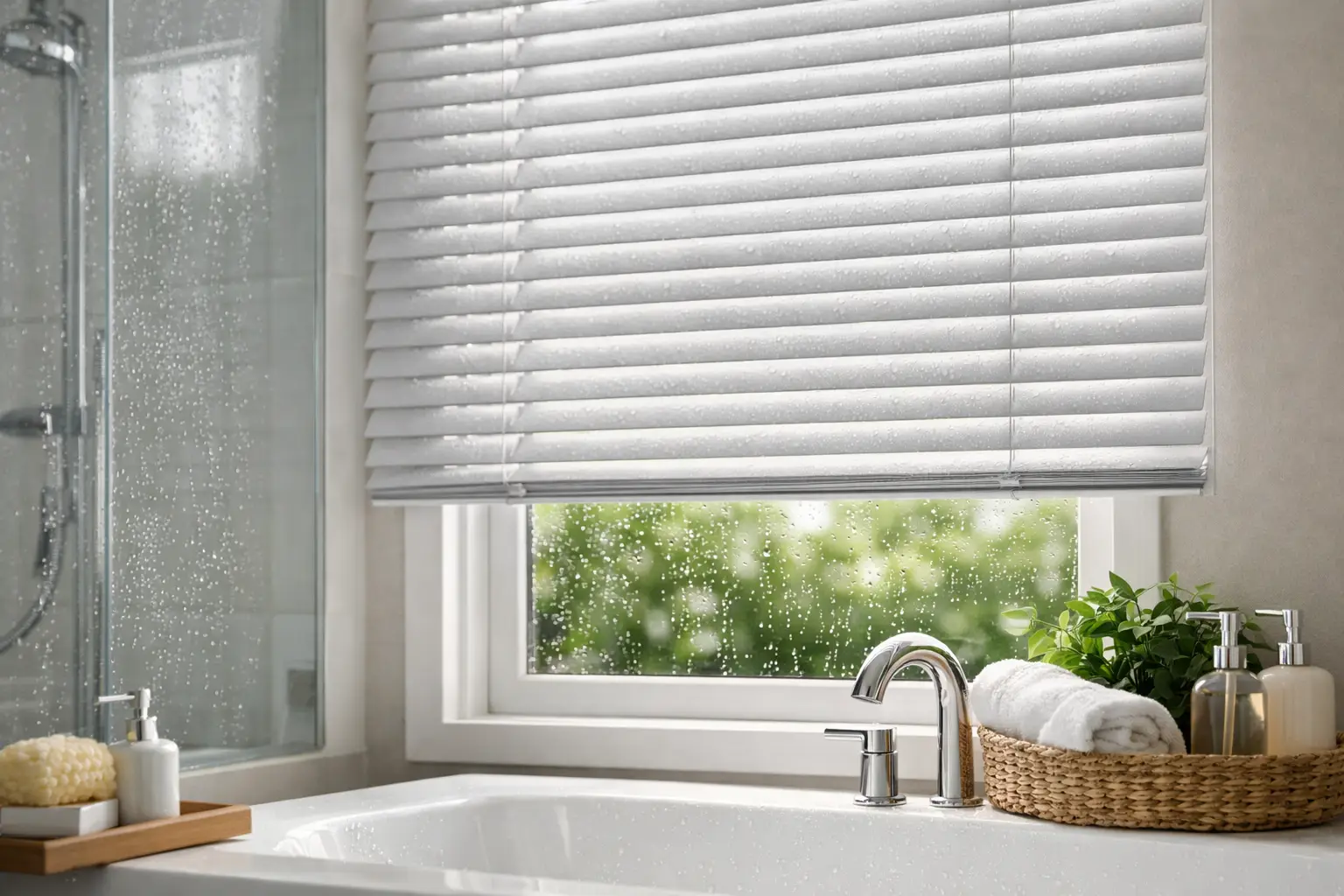
Steam on the mirror, splashes around the sink and condensation on cold mornings can quickly expose the weakness in ordinary window coverings. This guide to moisture resistant blinds will help you choose a practical, attractive option for bathrooms, kitchens, utility rooms and other hard-working spaces – without compromising on privacy or style.
The right blind should do more than look good on installation day. It needs to cope with changing humidity, be simple to wipe clean and fit your window properly, especially where space around a shower, basin or cooker is limited.
Why moisture resistance matters
Moisture in the air can cause certain materials to warp, stain, fade or develop mildew. Natural wood is a classic example. It may suit a dry living room beautifully, but repeated exposure to steam and condensation can make it swell or lose its shape.
Fabric blinds can also be less suitable in a poorly ventilated bathroom, particularly if they are positioned close to a shower or regularly collect condensation. This does not mean every fabric blind is ruled out in every kitchen or bathroom. It depends on the fabric, the room’s ventilation and how close the blind sits to the source of moisture. However, purpose-made moisture resistant materials provide greater reassurance and require less upkeep.
For landlords and busy households, this is often the deciding factor. A blind that can be wiped down in seconds is more likely to stay fresh and presentable between deep cleans.
The best types of moisture resistant blinds
Aluminium Venetian blinds
Aluminium Venetian blinds are a dependable choice for bathrooms and kitchens. Their slim metal slats are non-porous, cope well with humidity and can be wiped clean with a soft cloth. By tilting the slats, you can maintain privacy while still letting daylight into the room – particularly useful for overlooked bathroom windows.
They also give precise control over light. Open the slats fully for a bright kitchen, angle them to reduce glare at the worktop, or close them when privacy is needed. Aluminium is lightweight and available in a wide range of colours, from clean white and soft grey to darker contemporary finishes.
The trade-off is that individual slats can collect dust and grease over time, especially in a kitchen. Regular light cleaning prevents this becoming a larger job.
PVC and faux wood Venetian blinds
For homeowners who like the warmth and structure of wooden blinds but need something better suited to humid rooms, faux wood or PVC Venetian blinds are an excellent alternative. They have the look of painted wood, with waterproof or water-resistant composite slats that are less likely to warp, crack or discolour.
These blinds can feel more substantial than aluminium and work particularly well in family bathrooms, utility rooms and kitchen windows. White, cream and grey finishes complement both traditional and modern interiors, while wider slats can make a smaller window feel more considered.
Not all faux wood products are made to the same standard, so the material and fitting method matter. A made-to-measure blind will sit neatly within the recess or across the window, avoiding unnecessary gaps and ensuring the slats operate smoothly.
Moisture resistant roller blinds
Roller blinds are often the simplest solution where a clean, uncluttered finish is wanted. Choose a moisture resistant, wipe-clean fabric or PVC-based material for kitchens, bathrooms and utility spaces. These blinds roll up neatly when not in use and provide straightforward privacy and light control.
They are especially useful for narrow windows, windows above sinks and areas where a Venetian blind may feel too detailed. A plain roller blind can blend quietly into the room, while a patterned or textured finish can bring colour to an otherwise practical space.
If the room needs strong privacy at night, consider an opaque fabric. For a bathroom that receives intense sunlight, a dim-out or blackout option may be more comfortable. Blackout blinds reduce light very effectively, but they do not automatically make a room waterproof, so the fabric itself should still be suitable for humidity.
Vertical blinds for larger windows and doors
Vertical blinds are a sensible option for wide kitchen windows, patio doors and commercial settings where moisture and frequent use are both concerns. With the right PVC or easy-clean louvre material, they offer flexible light control and straightforward maintenance.
Their vertical design helps them suit taller windows and doors, and damaged louvres can often be replaced individually rather than changing the whole blind. For cafés, staff kitchens, clinics or office washrooms, this can be a practical long-term advantage.
How to choose the right blind for each room
A bathroom blind needs to manage privacy first, then moisture. For a window directly beside a shower or bath, PVC or aluminium is usually the safest choice. If the window is farther from water and the bathroom has a good extractor fan, a moisture resistant roller blind can offer a softer look.
In kitchens, think about more than steam. Grease, food splashes and everyday fingerprints matter too. Wipe-clean roller blinds and aluminium Venetians are popular because they are easy to maintain. Around a sink, avoid materials that can absorb water or retain marks.
Utility rooms often have high humidity from drying clothes or tumble dryers, even if there is no obvious splash zone. Choose a blind that will not hold dampness and make sure the room is ventilated. In a cloakroom or downstairs WC, the level of moisture may be lower, so your choice can be guided more by the desired style.
For commercial properties, durability and ease of cleaning are usually priorities. A blind should look professional, meet the practical demands of the room and be fitted securely for regular use.
Fitting details that make a difference
The material is only part of the decision. Poorly fitted blinds can trap moisture, obstruct a window handle or leave awkward gaps that reduce privacy. Accurate measuring is particularly valuable in older properties, where recesses are not always square, and in modern homes with tightly positioned tiling or window furniture.
Consider where the blind will sit when raised. A roller blind above a bathroom window should not interfere with opening the window for ventilation. Venetian blinds need enough clearance to tilt and lift comfortably. If a window opens inwards, the bracket position becomes even more important.
Safety should also be considered in family homes. Cord and chain controls need to be fitted with suitable child-safety devices. Motorised options can be useful for difficult-to-reach windows, although they are generally best chosen where convenience and access justify the additional cost.
A professional survey removes much of the uncertainty. Queen Blinds provides tailored advice, careful measuring and fitting, helping customers select a blind that works with the room rather than simply filling the window.
Caring for moisture resistant blinds
Moisture resistant does not mean maintenance-free. A little regular care keeps blinds looking cleaner and extends their useful life. Wipe PVC, faux wood and aluminium slats with a soft microfibre cloth, using warm water with a small amount of mild detergent where needed. Dry them afterwards rather than leaving water sitting in corners or along the bottom rail.
For roller blinds, follow the fabric care guidance and avoid harsh cleaners or abrasive sponges. A damp cloth is often enough for routine marks. In kitchens, deal with grease early before it builds up.
Good ventilation protects every type of blind. Use an extractor fan during and after showers, open the window when conditions allow, and avoid leaving wet towels or laundry close to the blind. If you notice persistent condensation, address the ventilation issue as well as the window covering. Even the most suitable blind will perform better in a room that can dry out properly.
Common mistakes to avoid
Choosing on appearance alone is the most common mistake. A real wood Venetian may match your bathroom cabinet perfectly, but it is unlikely to be the best choice beside a regularly used shower. Equally, choosing a very cheap ready-made blind can lead to uneven coverage, difficult operation and a shorter lifespan.
It is also easy to overlook privacy when focusing on moisture resistance. A bathroom blind needs to prevent visibility from outside, including in the evening when indoor lights are on. Tilt control, an opaque roller fabric and accurate sizing all help.
Finally, do not install a blind so close to a direct water source that it is constantly soaked. Moisture resistant materials are designed for humid conditions and occasional splashes, not continual saturation. Positioning, ventilation and sensible daily use all matter.
A well-chosen moisture resistant blind makes a practical room feel finished. Start with how the space is used, how much moisture it holds and the level of privacy you need, then choose a material and fit that will stay looking smart long after the first few steamy mornings.