


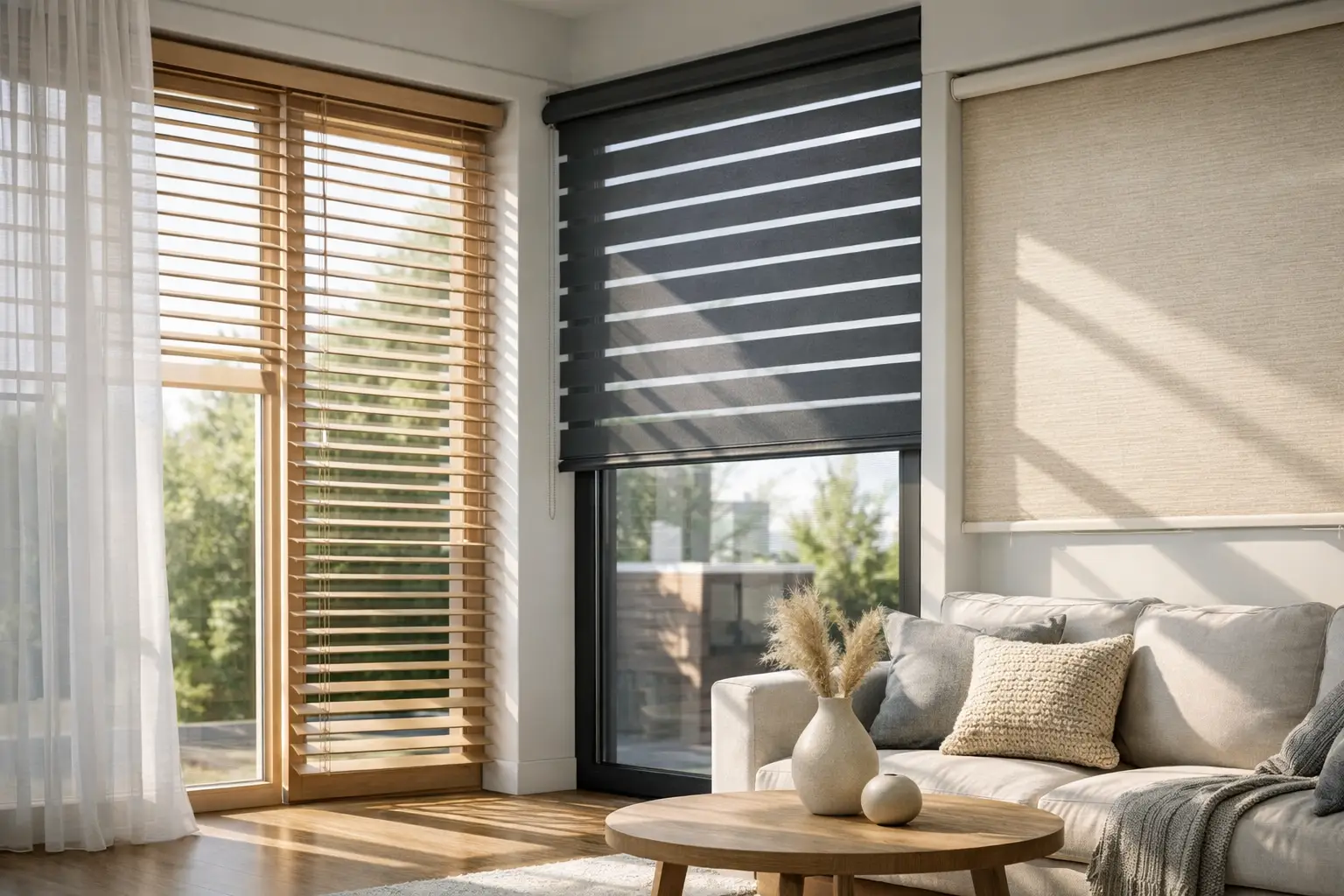
A blind can do far more than cover a window. It can soften a hard-edged new extension, make a sunny bedroom sleep-friendly, give a bay window a cleaner finish or bring a more considered look to a rented property. The strongest window blinds design trends are not simply about following a fashionable colour. They balance appearance with the everyday needs of homes and workplaces: privacy, light control, warmth, easy cleaning and a fit that looks properly finished.
For homeowners across Coventry and the West Midlands, the direction is clear. Blinds are becoming warmer, more tailored and more useful. Here are the design choices worth considering when planning a refresh, renovation or commercial fit-out.
Window blinds design trends are warmer and more considered
For several years, cool grey dominated many interiors. It still has a place in contemporary rooms, particularly where a crisp, architectural look is wanted, but warmer neutrals are now taking the lead. Think soft stone, putty, oatmeal, sand, mushroom and muted taupe. These shades work comfortably with natural timber, cream walls, textured fabrics and the softer lighting many households prefer.
This does not mean every room needs to be beige. Deep green, navy and charcoal blinds can give a dining room, office or lounge real definition, particularly against pale walls. The key is to treat the blind as part of the room’s palette rather than an afterthought. A made-to-measure blind can match the mood of the space without overwhelming it.
Texture is equally influential. Linen-look roller fabrics, woven finishes and subtly patterned materials bring depth to plain walls and modern furniture. They are especially useful in newer homes, where large, clean surfaces can otherwise feel a little stark. In a busy family kitchen, however, a smooth wipe-clean fabric may be the better choice. Design should suit the way the room is used.
Soft light, strong privacy and better sleep
The most popular interiors now feel light-filled without leaving occupants exposed. This is why adaptable light control has become central to blind selection. People want to reduce glare on screens, protect furnishings from harsh sun and maintain privacy, while still making the most of daylight.
Roller blinds remain a dependable choice for this reason. Available in a broad range of plain, textured, sunscreen and blackout fabrics, they suit bedrooms, kitchens, bathrooms and offices. A translucent fabric will soften a bright south-facing room, while a blackout option is a practical investment in bedrooms, nurseries and shift workers’ homes.
Blackout does have a trade-off. It offers excellent darkness and privacy when lowered, but the room will be noticeably dimmer during the day. For rooms that need both daylight and sleep control, choosing the right fabric and fitting it closely to the window recess makes a meaningful difference. An expert measure helps limit the light gaps that can spoil the effect.
Venetian blinds offer a different kind of flexibility. Their adjustable slats let you angle light upwards, reduce direct glare and keep a degree of privacy without completely closing the room off. They work particularly well in home offices, living rooms and street-facing windows. Composite wooden-look Venetian blinds are gaining attention because they deliver the warmth of timber with greater resistance to moisture and everyday wear, making them well suited to kitchens and bathrooms.
Natural finishes without high-maintenance demands
The desire for natural-looking interiors has made wood and wood-effect finishes increasingly popular. Warm slats can make a room feel more settled and add contrast to white walls or pale cabinetry. Yet real wood is not always the right answer. It may not suit humid spaces, and some households simply want a finish that is easier to clean and maintain.
Composite wooden-look blinds answer that need well. They have the visual character of painted or timber slats but are designed for practical environments. For a family kitchen, a bathroom or a rental property, that balance can be more valuable than choosing a material solely for its appearance.
This broader trend is less about copying a showroom look and more about selecting finishes that will continue to work after daily life gets involved. A blind that looks excellent but is difficult to wipe down, or that warps in a damp room, is unlikely to remain a favourite for long.
Clean lines for large windows and commercial spaces
Large glazing, patio doors and wide office windows need a different approach from a standard bedroom window. Vertical blinds continue to offer an effective solution, especially where broad spans and practical light control are priorities. Their vertical louvres can be tilted for shade or drawn aside for access and an open view.
Modern vertical blinds have moved well beyond the plain white styles many people remember. Softer neutral fabrics, subtle textures and more refined headrails can give them a polished appearance in conservatories, lounges, clinics, offices and reception areas. They are also a sensible choice for landlords and commercial clients who need a durable, straightforward window covering for multiple rooms.
For full-height windows, the final appearance depends heavily on accurate measurements. Blinds that are too short, poorly aligned or awkward around handles can make even a well-decorated room feel unfinished. Bespoke fitting is not just about getting the dimensions right. It accounts for recess depth, window openings, door access and how the blind will be used every day.
Smart controls are becoming a practical upgrade
Motorised blinds are no longer reserved for high-end developments. They are increasingly chosen for difficult-to-reach windows, large banks of glazing and homes where convenience matters. With a remote control or compatible smart controls, blinds can be adjusted without stretching over furniture or handling several individual cords.
This can make a real difference in an extension with roof lanterns, a living room with tall windows or a workplace with multiple blinds to manage. It also supports a more consistent routine: closing blinds at the end of the day for privacy, reducing low sun on screens or helping keep rooms cooler during bright periods.
Motorisation should be selected for a clear reason rather than simply because it is new. A simple manually operated roller blind may be the best-value option for a small guest room. In contrast, motorised operation can be a worthwhile long-term choice where access, safety or frequent adjustment is an issue.
Energy efficiency is shaping blind choices
With household energy costs still a concern, window coverings are increasingly being considered as part of a room’s comfort rather than purely its decoration. A well-chosen blind can help reduce the sensation of cold glass in winter and limit solar heat and glare in summer. Insulating layers and close-fitting designs can support a warmer, more comfortable interior, particularly in older properties with larger windows.
Blinds are not a replacement for good glazing or proper insulation, and expectations should be realistic. Their benefit depends on the window, the fabric, the direction the room faces and how consistently the blind is used. Even so, improving control over sunlight and draughts can make a noticeable difference to how a room feels throughout the year.
UV protection is another useful consideration. Strong daylight can gradually fade flooring, furniture and artwork. Fabrics designed to filter UV rays allow natural light into a room while helping to protect the surfaces within it. This is particularly relevant for south- and west-facing lounges, shopfronts and offices.
Family-friendly design has to work quietly in the background
The best blind design is often the one nobody has to think about once it is fitted. In homes with young children, safe operating options are essential. Cordless solutions, tensioned systems and professionally fitted controls can reduce avoidable risks while keeping the window treatment neat.
Ease of cleaning matters too. Bathrooms and kitchens benefit from materials that handle moisture and can be wiped clean. Bedrooms may justify a softer, more decorative fabric. A busy office may need a durable, glare-reducing option that looks consistent across several windows. Choosing one blind style for every room can be tempting, but it rarely gives the best result.
Choosing a trend that will still suit your home
Trends are most useful when they help you make a confident decision, not when they force a look that does not fit your property. A warm textured roller blind may suit a calm bedroom beautifully, while a composite Venetian is likely to be the smarter choice beside a kitchen sink. Vertical blinds can bring order to wide doors and commercial windows, and blackout fabric can transform a room where sleep has become difficult.
The practical details make the design feel successful: the right colour in natural light, a fabric suited to the room, a safe control method and a precise fit. A free home appointment gives you the chance to compare options at the window itself, where light, privacy and surrounding décor can be assessed properly. Queen Blinds can then recommend and fit a made-to-measure solution that feels right for the room, not just for a trend board.
A well-chosen blind should make everyday living easier while giving the room a finish you are pleased to see each morning.