


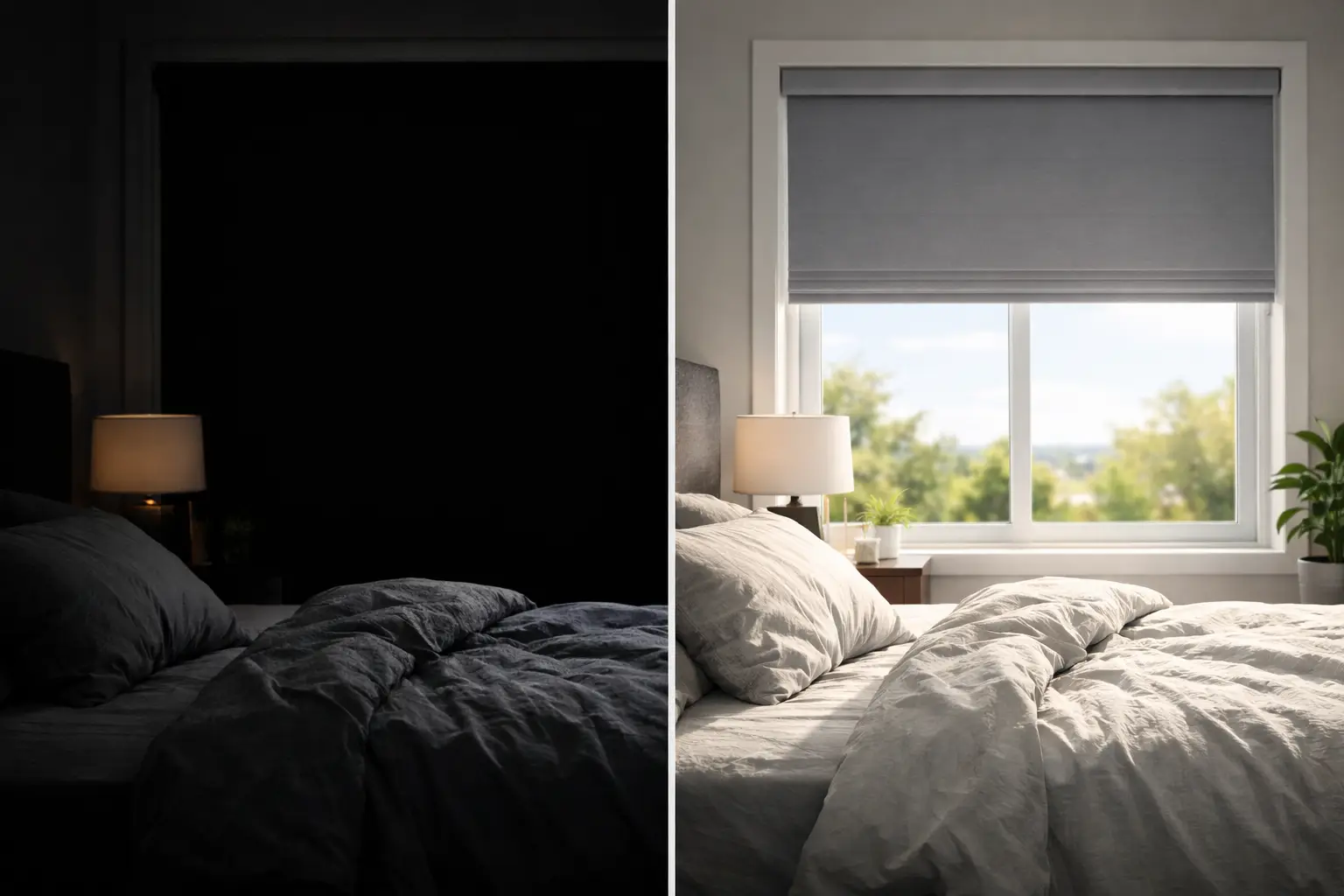
If you’ve ever been woken at 5am by summer daylight or dealt with screen glare in the middle of a working day, you’ve probably asked yourself: are blackout blinds worth it? For many homes and businesses, the answer is yes – but not always for the reasons people first think.
Blackout blinds are often associated with bedrooms and better sleep, and they do that job well. But they can also help with privacy, temperature control and making a room feel more finished. At the same time, they are not a one-size-fits-all choice. The value depends on the room, the way you use it and how well the blind is measured and fitted.
Are blackout blinds worth it for every room?
Not necessarily. Blackout blinds work best where light control is a priority. Bedrooms are the obvious example, especially for children, shift workers and anyone who struggles with early sunrises or street lighting. In those rooms, the difference can be immediate. Less light usually means fewer interruptions and a better chance of proper rest.
They also make sense in nurseries, where nap times rarely line up with daylight hours. Parents often want a room that feels calm and darker during the day, without having to rely on makeshift curtains or temporary coverings.
In living rooms, home offices and media rooms, blackout blinds can also be worthwhile, but the reason changes. Here, it’s often less about sleep and more about reducing glare on screens, improving comfort and giving you more control over the atmosphere. If you watch films during the day, work on a monitor near a sunny window or simply want more privacy in the evening, blackout fabric can be a smart choice.
For kitchens and some dining spaces, though, full blackout may be more than you need. Many people prefer a lighter-filtering blind in these rooms so they still get brightness without harsh glare. The best option is often about balance rather than maximum darkness.
What do blackout blinds actually do?
A good blackout blind is made with fabric designed to block most incoming light. That does not always mean a room becomes completely pitch black. A small amount of light can still come in around the edges, especially if the blind is recessed inside the window or the measurements are not exact.
This is where made-to-measure blinds have a clear advantage. A better fit means fewer gaps, a neater finish and stronger overall performance. Off-the-shelf blinds can help, but if there is too much space at the sides, you lose part of the benefit you are paying for.
Blackout blinds can also help reduce heat gain in summer and keep warmth in during colder months, depending on the fabric and blind style. They are not a replacement for insulation, but they can support a more comfortable room. In busy households and commercial settings, that extra control over light and temperature can make the space easier to use throughout the day.
The main benefits that make blackout blinds worth considering
The most obvious benefit is better sleep. Bedrooms that stay darker for longer are often more comfortable, particularly in spring and summer when mornings start early. If someone in your household works nights, that can move blackout blinds from a nice extra to a practical necessity.
Privacy is another strong reason. In ground-floor rooms, street-facing properties and overlooked spaces, blackout blinds create a solid visual barrier. That matters just as much in offices and meeting rooms as it does at home.
There is also the issue of glare. Sunlight bouncing off a laptop screen, television or tablet is frustrating and tiring. Blackout blinds can make a room much more usable, especially in south-facing spaces where daylight is intense for long stretches.
Style should not be overlooked either. Modern blackout blinds are available in a wide range of colours, textures and finishes, so choosing a practical fabric does not mean giving up on appearance. A made-to-measure blind can look clean and tailored, helping the room feel considered rather than purely functional.
Where blackout blinds may not be the best choice
The answer to are blackout blinds worth it becomes less straightforward when the room depends on natural daylight. In a kitchen where you cook most of the day, or a lounge where you want a bright, airy feel, total light block may feel too heavy.
Some people also assume blackout blinds will solve every issue with heat or noise. They can help with comfort, but they are not a cure-all. If your main concern is draughts, condensation or street noise, you may need to look at the wider room setup, not just the window covering.
There is also a design consideration. In some interiors, a very dense blackout fabric may feel out of place if you are aiming for softness and filtered light. That does not mean you should rule them out, only that the fabric, colour and blind type need to suit the room rather than work against it.
Are blackout blinds worth it compared with curtains?
This usually comes down to space, finish and the level of control you want. Curtains can create a softer look and, when lined properly, can also darken a room well. But blinds tend to be neater, easier to maintain and often better for smaller windows or more modern interiors.
A blackout roller blind, for example, sits close to the window and gives a simple, practical finish. That makes it popular in bedrooms, offices and rental properties where low maintenance matters. Curtains may still be the right choice if you want a more traditional look or extra layering, but they take up more room and may not always offer the same streamlined fit.
Some homeowners choose both – a blackout blind for function and curtains for softness and decoration. That can work particularly well in bedrooms where you want stronger light control and a more dressed window.
Why fitting matters more than many people realise
The performance of any blackout blind depends heavily on measuring and installation. This is often where people feel disappointed with cheaper or ready-made options. The fabric may be labelled blackout, but if the blind is too narrow or hangs awkwardly, light still spills in from the sides.
Accurate measuring makes a noticeable difference. So does choosing the right mounting position for the window and room layout. In other words, the product alone is only part of the answer. The right recommendation and professional fitting often make the blind feel worth the investment.
That is one reason many customers across Coventry and the West Midlands prefer a tailored service rather than trying to estimate sizes themselves. A proper fit gives you a better finish and helps the blind do the job it was chosen for.
Are blackout blinds worth it in commercial spaces?
Very often, yes. Offices, clinics, schools, salons and meeting rooms all benefit from controlled light at certain times of day. In some workplaces, glare reduction is not just about comfort – it helps staff work more effectively and keeps rooms presentable for customers or clients.
Blackout blinds can also support privacy in treatment rooms, consulting spaces and street-level premises. If your business needs a clean, professional look with practical day-to-day performance, they are often a sensible investment.
The key is choosing a solution that suits how the room is used. A full blackout blind in every commercial room may be unnecessary, but in selected spaces it can improve both appearance and function.
So, are blackout blinds worth it?
If you want better sleep, more privacy, reduced glare and a room that feels more comfortable to use, blackout blinds are often well worth it. They are especially valuable in bedrooms, nurseries, home offices and any space where light control matters. Their value goes up again when they are made to measure and fitted properly.
If your priority is keeping a room bright and airy, or you only need mild light filtering, a standard blind may be a better fit. The right choice is not always the one with the most features. It is the one that suits the room, the property and the way you live or work.
For many customers, that is exactly why a tailored approach matters. A well-chosen blackout blind should not just block light. It should make the room work better, look better and feel easier to live with every day.