


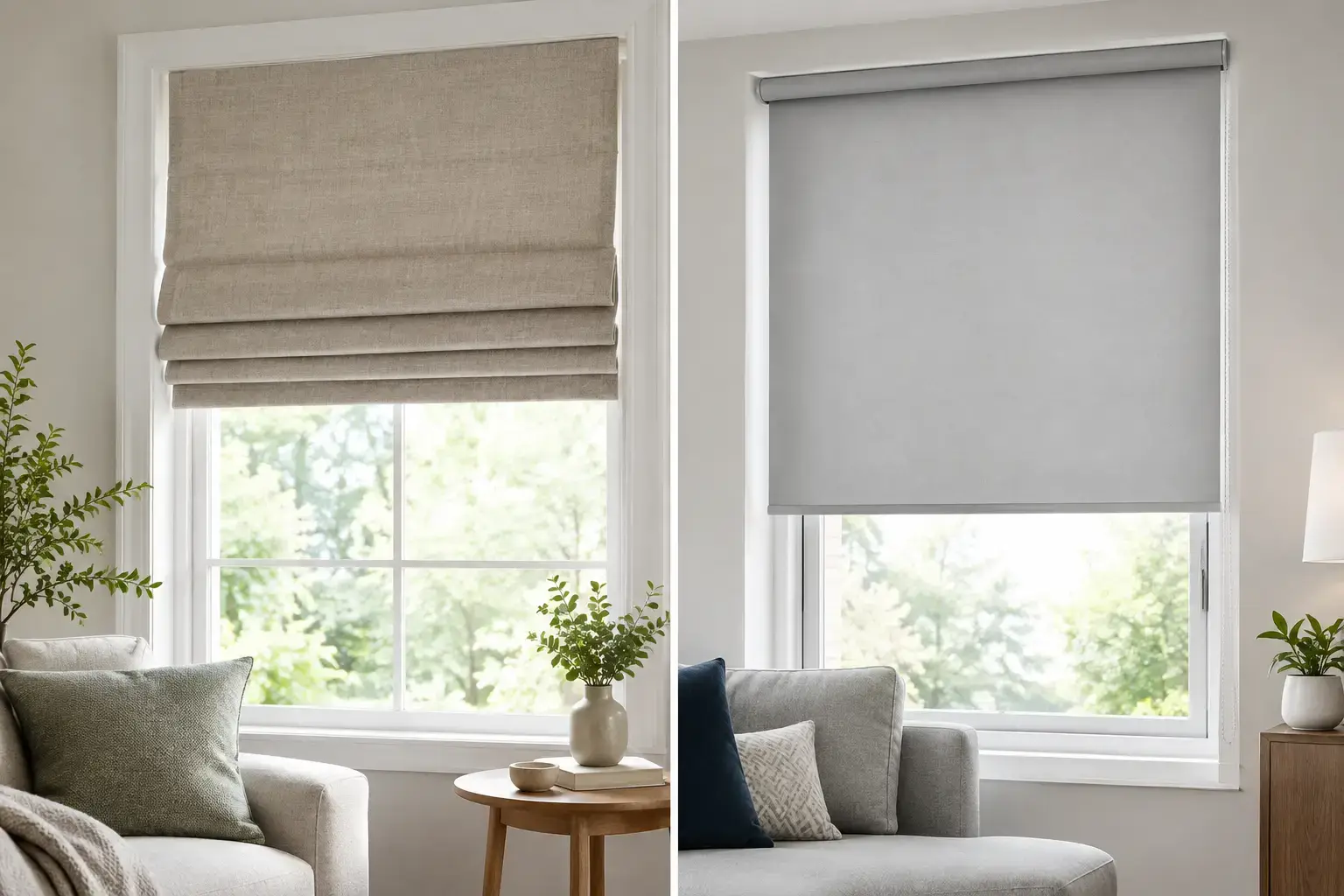
A window can look completely different once the right blind is fitted. When weighing up Roman blinds versus rollers, the choice is usually less about which is ‘best’ and more about how you use the room. A soft, fabric-led Roman blind can make a lounge feel warmer and more finished, while a neat roller blind may be the practical answer for a busy kitchen, bathroom, rental property or office.
Both styles can be made to measure, available in a wide choice of colours and fabrics, and designed around your priorities for privacy, light control and appearance. The key is understanding where their strengths differ before deciding what belongs at your window.
Roman blinds versus rollers: the main difference
Roman blinds are fabric blinds that fold into horizontal pleats as they are raised. When lowered, they sit flat against the window and bring the texture, pattern and softness of a curtain fabric, but in a more compact form. They are often chosen where the blind is a visible part of the interior scheme.
Roller blinds are a single piece of fabric that rolls neatly around a tube at the top of the window. Their clean profile makes them particularly versatile. They suit contemporary homes, practical family spaces and commercial settings, where easy operation and a tidy finish matter as much as decoration.
In simple terms, Roman blinds tend to make more of a design statement. Roller blinds tend to offer a more streamlined, hard-working solution. That distinction is useful, but it should not be the only factor in your decision.
Choose Roman blinds for warmth and a more decorative finish
Roman blinds work especially well in lounges, bedrooms, dining rooms and home offices where you want the window covering to add character. Their folds create depth at the window, which can soften rooms with hard flooring, plain walls or modern furniture. A neutral linen-look fabric can feel calm and understated, while a patterned material can introduce colour without committing to a full set of curtains.
They are also a strong choice for smaller windows. Rather than overwhelming the space with long curtains, a Roman blind gives the room a tailored, considered look. When raised, it stacks at the top of the window, so it is worth allowing for that gathered fabric if preserving every bit of glass is important.
Lined Roman blinds can help make rooms feel more comfortable, particularly in cooler months. Depending on the fabric and lining selected, they can offer useful insulation and reduce the chill that can come from older or exposed windows. Blackout linings are a popular option in bedrooms, nurseries and media rooms, although some light may still appear around the edges of the blind.
The trade-off is maintenance. Fabric folds can hold dust, and Roman blinds generally need a gentler clean than rollers. Regular vacuuming with a soft brush attachment helps, but they are not the most convenient option beside a hob, sink or children’s messy play area. In damp rooms, moisture and condensation can also make them less suitable.
Choose roller blinds for practical, everyday performance
Roller blinds are one of the most flexible choices for homes and workplaces across the West Midlands. Their simple design works with almost any décor, from a newly renovated Coventry terrace to a modern office or rental flat. Because the fabric sits close to the glass, roller blinds give a crisp, uncluttered finish without taking up much visual space.
The fabric options are a major advantage. Blackout rollers can help bedrooms stay darker for sleep, while moisture-resistant fabrics are ideal for kitchens and bathrooms. Sunscreen and UV-filtering fabrics can soften glare in conservatories, studies and commercial premises without completely blocking the daylight or the view outside. For a south-facing room, that can make a noticeable difference to comfort during brighter months.
Roller blinds are generally easier to look after, too. Many fabrics can be wiped clean with a damp cloth, making them a sensible choice where cooking vapour, splashes, fingerprints or regular use are expected. This is one reason they are frequently specified for offices, clinics, schools, kitchens and busy family homes.
Their clean operation also suits larger windows and doors. A chain-operated roller offers straightforward control, while motorised options can make tall or hard-to-reach windows much easier to manage. Motorisation is particularly useful when several blinds need to be operated regularly, or where avoiding hanging control chains is a priority in a family home.
Light control and privacy are not quite the same thing
It is easy to assume a blind that looks opaque will provide full privacy and complete darkness. In reality, fabric choice, fitting and the direction a room faces all affect the result.
A standard Roman or roller blind provides good privacy when lowered, but light can enter around the sides and bottom. This is normal with most inside-recess fittings. If your bedroom needs the darkest possible environment, a blackout roller fabric combined with a close, accurate fit is often the more practical route. Side channels or specialist systems may be worth discussing for windows where light leakage is a concern.
For living areas, a dim-out rather than blackout fabric may be preferable. It reduces glare and offers privacy without making the room feel shut away during the day. Roller blinds give more choice in this area, particularly with translucent and sunscreen materials. Roman blinds can still provide excellent control, but the emphasis is usually on the look and feel of the fabric rather than finely filtering daylight.
Consider the room before the style
The best blind often becomes clear when you start with the room’s demands rather than a favourite colour. A Roman blind can be a beautiful finishing touch in a lounge, but a wipe-clean roller may save time and frustration in a kitchen. Likewise, a roller blind may be ideal for a bathroom, but it may feel too minimal in a formal dining room that needs a little more texture.
For bedrooms, either style can work well. Choose a lined Roman blind if softness and a more luxurious appearance matter most. Choose a blackout roller if darkness, simple cleaning and reliable daily operation are the priority. In children’s rooms, cordless or motorised options can also support a safer, tidier finish.
In commercial settings, roller blinds are usually the natural choice. They are discreet, durable and available in fabrics that manage glare on screens while maintaining a professional appearance. Roman blinds can suit hospitality spaces, boutique offices or client-facing rooms where a more residential, decorative atmosphere is wanted.
Fitting makes a bigger difference than many people expect
Even the right blind will underperform if it is poorly measured or fitted. A made-to-measure blind should account for the recess depth, window handle position, opening direction and any obstacles such as tiles, radiators or alarm sensors. These details influence whether the blind rolls, folds and sits properly every day.
For Roman blinds, accurate fitting keeps the folds even and the fabric hanging neatly. For roller blinds, it helps prevent unnecessary light gaps, awkward chain placement and fabric catching on handles. This is particularly important for bay windows, wide openings and older properties where windows are not always perfectly square.
A professional home appointment also makes it easier to compare samples in the actual light of your room. A fabric that looks warm in a showroom can appear cooler against your wall colour at home, while a pale roller fabric may offer less privacy after dark than expected. Queen Blinds can measure the space, talk through those practical points and recommend an option that suits the room rather than simply the photograph.
Which option offers better value?
Value is not only about the initial price. A well-chosen roller blind may offer excellent long-term value in a high-use room because it is easy to clean and built for daily operation. A Roman blind may justify a higher investment in a key living space because it brings a richer finish that ties the whole room together.
Think about how often the blind will be used, who will use it, and what it needs to cope with. If the answer includes steam, splashes, pets, children or frequent cleaning, a roller is often the safer choice. If the answer is comfort, fabric texture and a more dressed look, a Roman blind is likely to earn its place.
The most satisfying choice is one that looks right on day one and still works for your routine months later. Seeing fabrics at home, having the window measured properly and choosing the right lining or control system can turn a straightforward blind into a lasting improvement to the room.