


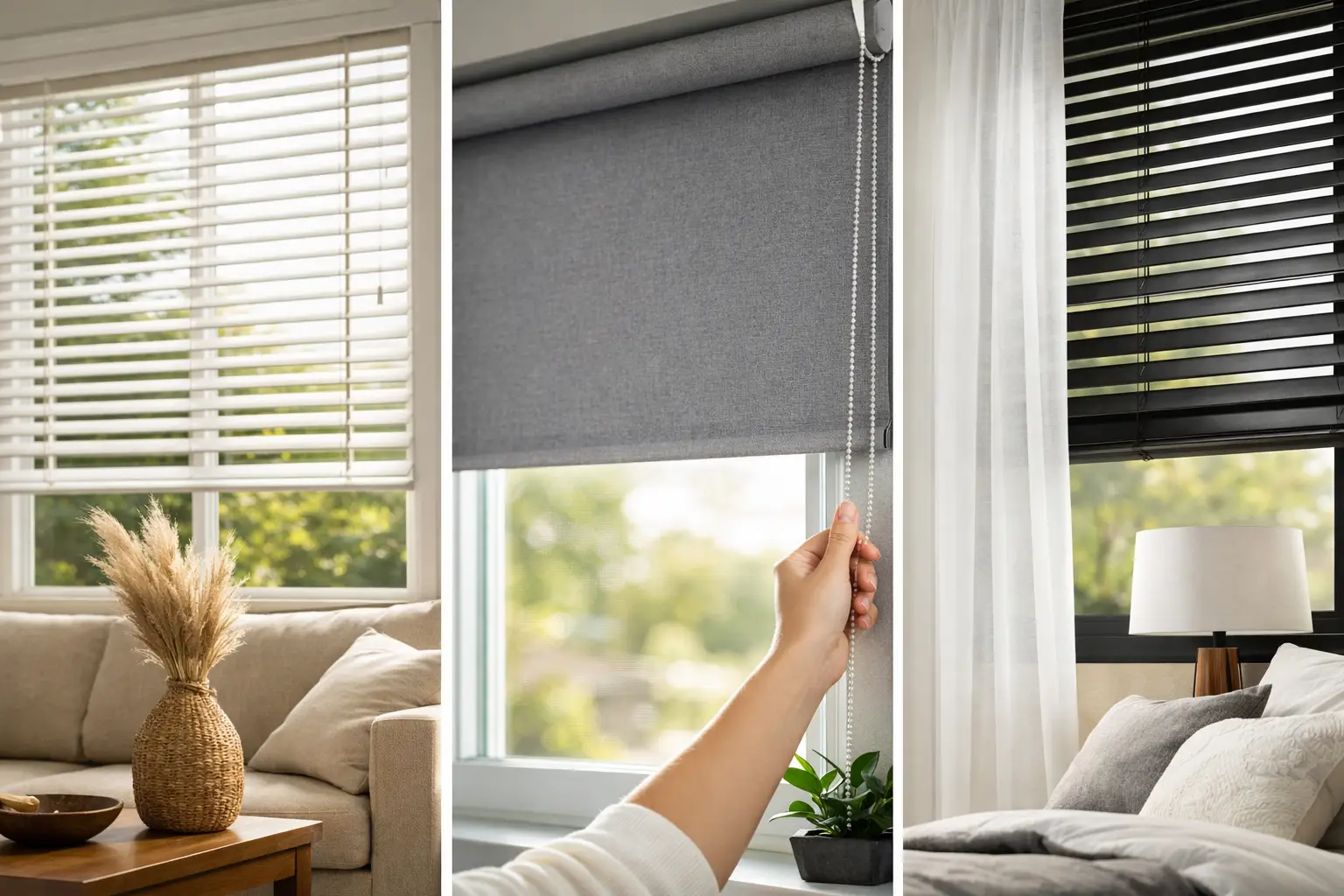
A blind can look perfect in a showroom and still be the wrong choice once it is up at your window. Kitchens need something different from bedrooms. Offices have different demands from bay-fronted living rooms. And if the fit is even slightly off, the finished result never feels quite right.
That is why knowing how to choose window blinds starts with the room itself, not just the colour or the latest trend. The best blinds do two jobs at once: they suit the space visually and they solve a practical problem, whether that is glare on a screen, lack of privacy, poor insulation or early morning light.
How to choose window blinds by room
Every room asks something different from a blind. Start there, and the rest becomes much easier.
In a bedroom, blackout performance is often the priority. A fabric that blocks light properly can make a real difference to sleep, especially in summer or for children’s rooms. If the room also feels cold in winter, it is worth considering blinds with added thermal benefit rather than focusing on appearance alone.
Living rooms usually need more balance. You may want privacy in the evening, softer light during the day and a finish that works with the rest of the décor. Roller blinds are a popular choice here because they offer a clean look and a wide range of fabrics, from subtle neutrals to more textured designs. Venetian blinds can also work well if you want more flexible light control throughout the day.
Bathrooms and kitchens are more about durability. Steam, splashes and regular cleaning all matter, so moisture-resistant materials tend to be the safer option. A wooden blind may look appealing, but in a high-humidity space a composite or PVC alternative is often the more practical long-term decision.
For offices, clinics and other commercial spaces, the priority is usually glare reduction, privacy and a neat professional finish. Vertical blinds are often a strong option for larger windows, while roller blinds suit meeting rooms and reception areas where a simpler look is preferred.
Pick the blind type before the finish
A lot of people begin by choosing a colour. In practice, blind type has a bigger effect on how the room works.
Roller blinds are one of the most versatile options. They suit modern homes, rental properties and commercial settings because they are simple, tidy and easy to operate. They are especially useful when you want to choose between light-filtering and blackout fabrics without complicating the look of the room.
Venetian blinds give you more control over light direction. That can be useful in living areas, home offices and front-facing rooms where privacy matters but you do not want to lose daylight entirely. Aluminium styles have a crisp, contemporary feel, while wood-effect finishes bring a warmer look without all the maintenance concerns of real timber.
Vertical blinds are often underestimated. They work particularly well on wide windows and patio doors, and they make sense in both homes and commercial premises. If you need a practical blind for a larger opening, they are often easier to live with than heavier or more decorative alternatives.
The right style depends on what the room needs from day to day. A blind that looks good but does not manage light or privacy properly will quickly become frustrating.
Think about light, privacy and comfort together
One of the most common mistakes when deciding how to choose window blinds is treating each requirement separately. In reality, light control, privacy and comfort all overlap.
A blackout blind is useful, but not every room needs complete darkness. In a lounge or dining room, a softer light-filtering fabric may create a better atmosphere while still reducing glare. In a street-facing room, privacy could be the main concern, especially in the evening when interior lights are on.
Comfort is often the overlooked factor. Well-fitted blinds can help reduce heat loss in colder months and limit solar gain in bright south-facing rooms. That does not mean every blind is an insulation product, but material choice and close fitting can make a noticeable difference to how a room feels.
UV protection is also worth considering in rooms with strong daylight. It can help reduce fading on flooring, furniture and soft furnishings, which matters more than many people realise until the damage is already visible.
Measure carefully or avoid guessing entirely
Even the best blind will not perform properly if it is poorly measured. Gaps at the edges let in light, privacy is reduced and the overall finish can look untidy.
This is particularly important for blackout blinds, bay windows and made-to-measure installations where precision affects both appearance and function. Recess depth, handle clearance and opening direction all need to be considered. These details are easy to miss when measuring yourself in a hurry.
That is why many customers prefer a full measuring and fitting service rather than trying to estimate sizes from a tape measure alone. It removes the guesswork and helps avoid expensive mistakes, especially when ordering blinds for several rooms or a commercial property.
Materials matter more than most people expect
Fabric and finish are not just about appearance. They affect maintenance, longevity and how suitable the blind is for the environment.
In a busy family home, easy-clean surfaces can save time and frustration. In kitchens and bathrooms, moisture resistance should be near the top of the list. In rental properties, landlords often prefer practical, hard-wearing options that still look smart between tenancies.
If child safety is a consideration, operation method matters as well. Modern blinds can be designed with safer controls and cleaner mechanisms that suit family homes without compromising on style. Motorised options can be especially useful here, and they also appeal to customers who want a more convenient everyday solution.
Smart or motorised blinds are not just a luxury feature. They are practical in hard-to-reach windows, useful for office settings and helpful when you want consistent control over light and privacy across several rooms. The trade-off, naturally, is cost. For some spaces they are well worth it, while for others a manual blind does the job perfectly well.
Style should support the room, not dominate it
Blinds make a strong visual impact because they sit at eye level and cover a large area. Even so, the best choice is not always the one that stands out most.
If your room already has bold flooring, patterned wallpaper or statement furniture, a simpler blind usually keeps the space balanced. Neutral tones, soft textures and clean finishes tend to have more staying power than trend-led prints that date quickly.
That said, there are rooms where a blind can add character. A plain interior may benefit from a richer fabric, a subtle pattern or a warmer wood-look finish. The trick is choosing something that still works when daylight changes and the room is being used normally, not just when you first sample it.
For commercial interiors, style often means looking polished and consistent rather than decorative. A smart, understated blind can help a workspace feel more professional while still being practical for staff and visitors.
How to choose window blinds without overcomplicating it
If the choice feels overwhelming, narrow it down to five questions. What does the room need most – privacy, blackout, moisture resistance, glare control or insulation? How much daylight do you want to keep? Is the window straightforward or awkwardly shaped? How much maintenance will you realistically want to do? And do you want the blind to blend in or add definition?
Once those answers are clear, the right options tend to reveal themselves quite quickly. A made-to-measure approach also helps because you are choosing from solutions that actually fit the space, rather than trying to force a standard product to work.
For homeowners and businesses across Coventry and the West Midlands, that is often where expert guidance makes the biggest difference. A good consultation does not just show samples. It helps you weigh up trade-offs, spot practical issues early and choose something you will still be happy with long after installation.
Blinds are one of those details that affect a room every single day. Get them right, and the space feels more comfortable, more polished and easier to live or work in.