


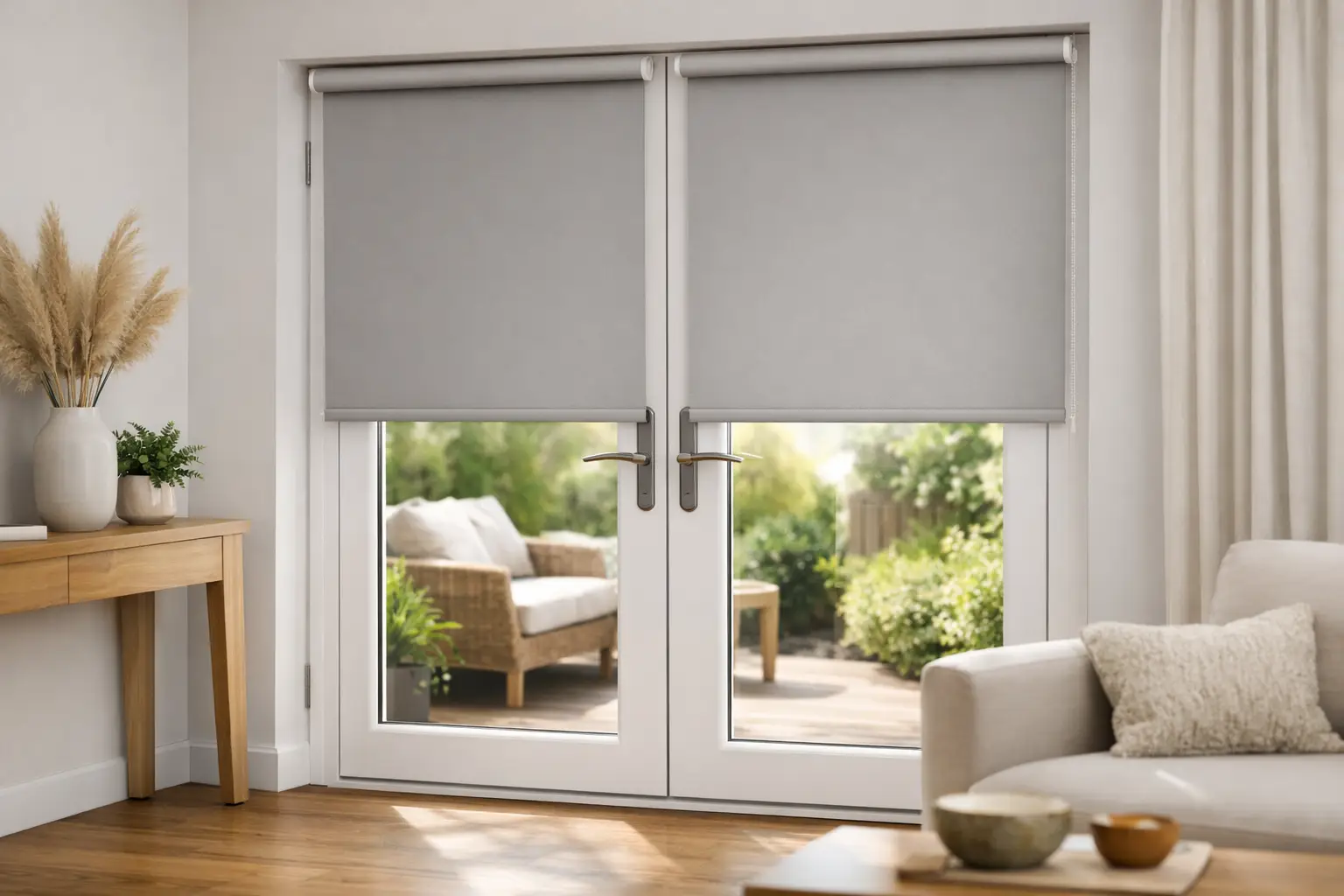
French doors look brilliant when they are left clear, but they can be awkward to dress well. Standard blinds often catch on handles, sit too wide, or leave gaps that affect privacy. That is why roller blinds for french doors need a more considered approach. When they are measured properly and matched to the right fabric and fixing method, they give you a clean finish, practical light control and a much neater result than an off-the-shelf option.
Are roller blinds for french doors a good idea?
In many homes, yes. Roller blinds are one of the simplest ways to keep French doors looking tidy without adding bulk. They suit modern interiors, work well in kitchens, lounges and bedrooms, and can be made in a wide choice of colours, patterns and performance fabrics.
What makes them especially useful is how compact they are. Unlike heavier curtains or more structured blind styles, roller blinds sit close to the glass and do not dominate the doors. That matters when your doors open out into the garden or when you want to keep the room feeling open and bright.
That said, the answer depends on how the doors are used. If the doors open and close constantly throughout the day, the blind needs to be positioned carefully so it does not interfere with handles or movement. In some cases, a different style may suit better, but well-fitted roller blinds remain a popular and practical option for most households.
The main challenge with French doors
French doors are not the same as standard windows. You are dealing with moving panels, glazed sections, handles, frames and often limited recess depth. That means the blind has to do more than look good. It has to work around daily use.
One common mistake is choosing a blind based only on fabric or price. The real issue is fit. A blind that is even slightly too wide can knock against the door frame. One that hangs too loosely may swing when the door opens. If the drop or bracket position is wrong, it can catch on the handle every time someone goes outside.
This is where made-to-measure matters. Accurate measuring allows the blind to be sized and positioned around the exact shape of the door, including handle clearance and opening direction. It removes the guesswork and usually avoids the problems people associate with blinds on doors.
Recess fit or face fit?
For roller blinds for french doors, this is one of the most important decisions. A recess fit places the blind inside the opening. A face fit places it outside the recess, above or over the door area.
A recess fit can look very smart, but only if there is enough depth and enough clearance for the blind to roll freely without touching handles. On some French doors, especially uPVC designs with protruding hardware, the recess is simply too tight. In those cases, forcing a recess fit usually creates frustration later.
A face fit often gives more flexibility. It lets the blind clear the handles and can improve light coverage by extending beyond the glazed area. The trade-off is that it becomes more visible when raised, so the proportions need to be right. Done properly, it still looks neat and often performs better.
There is no single best answer. It comes down to the door design, surrounding wall space and the finish you want.
Choosing the right fabric
Fabric choice changes how the blind performs just as much as the fitting does. If your French doors face a garden, road or neighbouring property, privacy is usually the first priority. A standard dim-out fabric gives a good balance of privacy and daylight, especially in living areas where you still want a softer natural light.
For bedrooms or rooms that get strong sun, blackout fabric makes more sense. It helps reduce glare, supports better sleep and can improve comfort in warmer months. It is also a sensible option for media rooms or offices where screen reflection is a problem.
If the doors are in a kitchen or busy family space, easy-clean and moisture-resistant fabrics are worth considering. They keep maintenance simple and hold up better in rooms where blinds are handled more often. Some fabrics also offer thermal or UV benefits, which can help protect furnishings and improve energy efficiency.
Colour matters too. Lighter shades keep the space airy and can make large doors feel less imposing. Darker fabrics create stronger contrast and a more defined look, but they will naturally block more light when lowered. The best choice depends on whether you want the blind to blend into the room or stand out as a design feature.
What about handles and door use?
This is where poor planning shows up quickly. French door handles sit proud of the frame, so blind clearance is essential. If the blind hangs too close, it can rub or snag. If the bottom edge is not secured, it may move every time the door opens.
For doors used regularly, a tensioned or neatly positioned blind can help reduce movement. In some installations, fitting one blind per door leaf works better than trying to cover the whole width with a single unit. That gives each door its own blind and keeps operation more straightforward.
The practical details matter here. How often the doors are opened, whether they open inwards or outwards, and where the handles sit all affect the final setup. This is why measured advice tends to save time and money. What looks simple on paper is often more technical once the fitting starts.
Style and finish in real homes
Roller blinds suit French doors because they do not compete with the frame. They give a flat, uncluttered look that works well in newer extensions, renovated period homes and commercial spaces alike. If you want a soft, modern finish, plain fabrics in white, stone or grey are reliable choices. If you want to bring in more personality, subtle textures or printed designs can make the doors feel more integrated with the rest of the room.
In open-plan spaces, matching the blind fabric to nearby window blinds often creates a more polished result. It helps the doors sit naturally within the overall scheme rather than feeling like a separate feature. In offices or commercial settings, neutral roller blinds also give a smart appearance while keeping glare and privacy under control.
The key is keeping proportion in mind. French doors already draw attention, so the blind should complement rather than overwhelm them.
Why made-to-measure is usually worth it
With French doors, the difference between an average fit and a proper fit is obvious. Small errors become daily annoyances. A blind that catches, leaves wide gaps or hangs unevenly is not just disappointing – it makes the doors harder to use.
Made-to-measure roller blinds for french doors solve that by taking the exact width, drop and fixing position into account from the start. They also allow you to choose a fabric and finish that fits the room properly, rather than settling for the nearest available size.
For many homeowners and landlords, the real benefit is convenience. Professional measuring and fitting remove the risk of ordering the wrong size and dealing with returns or drilling mistakes. For commercial clients, it also means a cleaner, more consistent finish across larger spaces.
That local, start-to-finish service is often what makes the process feel easier. A company such as Queen Blinds can assess the doors in person, recommend the right fitting method and install everything neatly, which is especially helpful when the layout is not straightforward.
When roller blinds may not be the best option
Although roller blinds work very well in most cases, there are times when another style may suit better. If you want adjustable privacy throughout the day without fully raising the blind, Venetian blinds offer more flexibility. If the room has an especially traditional look, you may prefer a softer treatment.
There are also situations where the door frame or surrounding space limits how a roller blind can be fitted. Very shallow recesses, unusually placed handles or awkward architraves may require a different solution. That does not mean roller blinds are ruled out, only that they should not be chosen blindly.
The best results come from matching the blind to the way the room is actually used.
Making the right choice for your doors
If you are considering roller blinds for French doors, start with function before style. Think about privacy, sunlight, insulation and how often the doors are opened. Then look at the practical details – handle clearance, fitting position and fabric type. Once those decisions are right, the visual side becomes much easier.
A well-fitted roller blind should feel effortless. It should open cleanly, sit neatly and do its job without getting in the way. When that balance is right, French doors stay elegant and become more comfortable to live with every day.
If you are unsure which setup will work best, it is worth getting expert advice before you order. A proper measure and a tailored recommendation usually lead to a better finish and fewer compromises.