


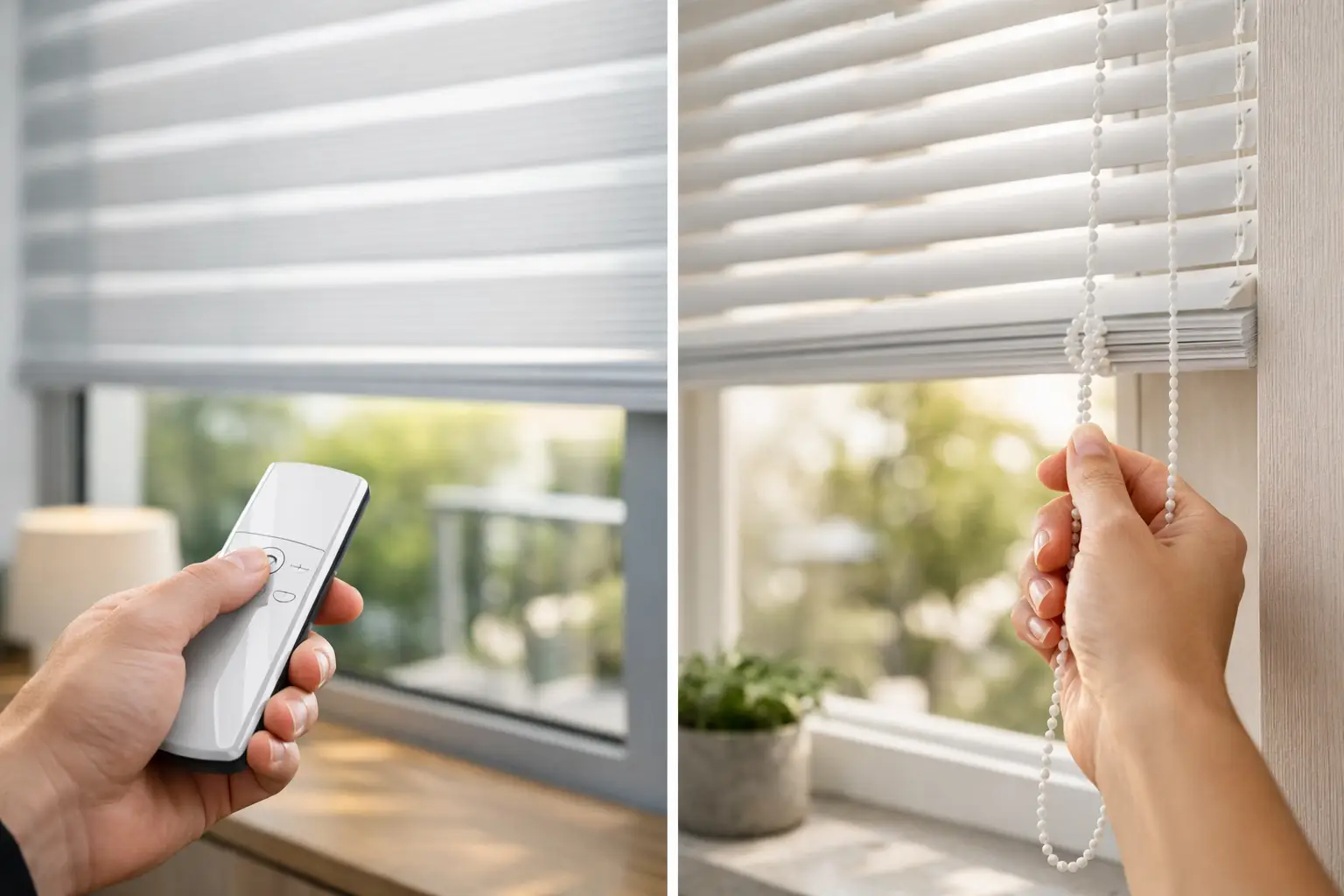
You usually notice the difference between motorised and manual blinds at the busiest points of the day – when the sun is hitting the room, your hands are full, or you are trying to adjust several windows at once. That is when the question of motorised blinds vs manual blinds stops being a design preference and starts becoming a practical one.
For some rooms, a simple chain or wand is exactly what you need. For others, especially larger windows, family homes and commercial spaces, motorisation can make everyday use far easier. The right choice depends on how you use the room, who uses it, and what matters most to you: lower upfront cost, convenience, child safety, cleaner styling or better control over light and privacy.
Motorised blinds vs manual blinds: what is the real difference?
At the most basic level, manual blinds are operated by hand using a chain, cord, wand or spring mechanism. They are familiar, straightforward and available across most blind styles. Motorised blinds use a powered system to raise, lower or tilt the blinds at the touch of a button, by remote control, wall switch or smart home setup.
That might sound like a simple choice between traditional and modern, but in practice it is more about how the blind performs in the room. A manual blind can be ideal for a standard bedroom window that is easy to reach. A motorised blind makes far more sense for wide bi-fold doors, tall stairwell windows, skylights or office spaces where multiple blinds need adjusting regularly.
The bigger the window and the more often you use the blind, the more valuable motorisation tends to become.
Cost matters, but so does long-term value
Manual blinds usually cost less upfront. If you are fitting out several rooms on a budget, that lower initial spend can be the deciding factor. For landlords, first-time buyers or anyone refreshing a property room by room, manual options often provide the most practical route to a smart, made-to-measure finish without stretching the budget.
Motorised blinds cost more because the system includes a motor, controls and sometimes rechargeable or hardwired power options. That higher price can put some buyers off at first, but it is worth looking beyond the initial figure. If the blind covers a hard-to-reach window, a manual system may be inconvenient from day one. If the blind is used constantly in a busy household or workplace, the extra spend on motorisation can feel justified very quickly.
There is also the question of perceived value. In contemporary homes, extensions and commercial interiors, motorised blinds can give the room a more premium feel. They look cleaner, operate smoothly and suit the kind of large glazed areas that are now common in modern properties.
Convenience is where motorised blinds stand out
This is the clearest advantage of motorisation. Pressing a button to control your blinds is not just about comfort – it can change how often you actually use them. In many homes, blinds on awkward windows are left half-open or half-closed simply because adjusting them is a nuisance. Motorised operation removes that friction.
That matters for everyday living. You can reduce glare in a home office without leaving your desk. You can close blackout blinds in a bedroom without stretching across furniture. In a commercial setting, staff can manage light levels quickly in meeting rooms, receptions or shopfronts without interrupting the working day.
Manual blinds still have a place, of course. They are easy to understand, simple to operate and perfectly convenient when the window is accessible. In a guest bedroom, bathroom or smaller office, manual control may do the job just as well without adding cost you do not need.
Safety can make the decision for families
For homes with young children, safety is often a major factor. Traditional manual blinds can involve chains or cords, and although modern safety measures are available, some households prefer to remove that concern altogether. Motorised blinds help by reducing or eliminating accessible operating cords, which creates a cleaner and safer finish.
That is one reason they are increasingly popular in nurseries, family rooms and schools. It is not only about compliance or best practice. It is about day-to-day peace of mind.
Manual blinds can still be a suitable option in family homes when the right safety devices and fittings are used, but if child safety is high on your priority list, motorisation has a clear advantage.
Style and finish are closer than many people think
Some customers assume motorised blinds look noticeably more technical, while manual blinds look more traditional. In reality, both can look equally smart when they are made to measure and properly fitted.
The difference is often in the detail. Motorised blinds tend to offer a neater appearance because there is no hanging chain or control wand. That makes them especially appealing in minimalist interiors, open-plan kitchens and contemporary commercial spaces. If you want the window area to feel uncluttered, motorisation supports that look very well.
Manual blinds, however, are available in a huge range of fabrics, finishes and styles and can be just as elegant. A well-chosen roller blind, Venetian blind or vertical blind can look polished and high quality without any motor at all. The overall result depends less on the operating method and more on choosing the right style, fabric and fit for the room.
Motorised blinds vs manual blinds in different rooms
The best choice often changes from room to room.
In bedrooms, both options work well. If blackout control and ease of use matter most, motorised blinds can be a strong upgrade, especially in main bedrooms or children’s rooms. In spare rooms, manual blinds are often more than enough.
In living rooms and extensions, motorisation becomes more attractive when windows are large or there are several blinds side by side. It is much easier to manage light consistently across the whole space.
In kitchens and bathrooms, the decision often comes down to practicality. If the blind is above a sink, worktop or bath, motorised control can make awkward access much easier. If the window is clear and easy to reach, manual operation is usually perfectly suitable.
In offices, schools, clinics and other commercial settings, motorised blinds can save time and improve presentation, particularly in meeting spaces and front-facing rooms. Manual blinds remain a sensible option for standard windows where simplicity and budget are the priority.
Maintenance and reliability
Manual blinds are mechanically simple, which many customers like. Fewer components can mean fewer things to go wrong, and operation is easy to understand. If you want a straightforward solution with minimal technology, manual blinds are naturally appealing.
Motorised blinds are reliable when supplied and fitted properly, but they do involve more components. Depending on the system, you may need to recharge a battery, replace one after a long period, or consider wiring options during a renovation. None of that is difficult when planned properly, but it is part of the ownership picture.
This is where expert advice makes a real difference. Choosing the right system for the size of the blind, the position of the window and the way the room is used is just as important as choosing the fabric.
Which option gives better everyday performance?
There is no universal winner in motorised blinds vs manual blinds because performance depends on what you need from the blind. If your priority is affordability, simplicity and dependable day-to-day use on standard windows, manual blinds are hard to beat. They remain a strong choice for many homes and business premises.
If your priority is convenience, safety, clean styling and easier operation across larger or harder-to-reach windows, motorised blinds usually offer the better experience. They are particularly effective in modern homes, family spaces and commercial environments where regular light control matters.
For many properties, the smartest answer is a mix of both. You might choose motorised blinds for the main living area, bi-fold doors or a nursery, and manual blinds for secondary bedrooms or less frequently used spaces. That gives you the benefits of automation where it counts most, while keeping the wider project cost under control.
A made-to-measure approach also changes the quality of the result. Whether you choose motorised or manual operation, accurate measuring, tailored recommendations and proper fitting make the blinds look better and work better. That is often the difference between a blind that simply covers a window and one that genuinely improves the room.
If you are weighing up the right option for your home or business, it helps to think less about which type sounds better and more about which one will feel right six months from now. The best blind is the one that suits your windows, your routine and the way you want the space to work every day.