


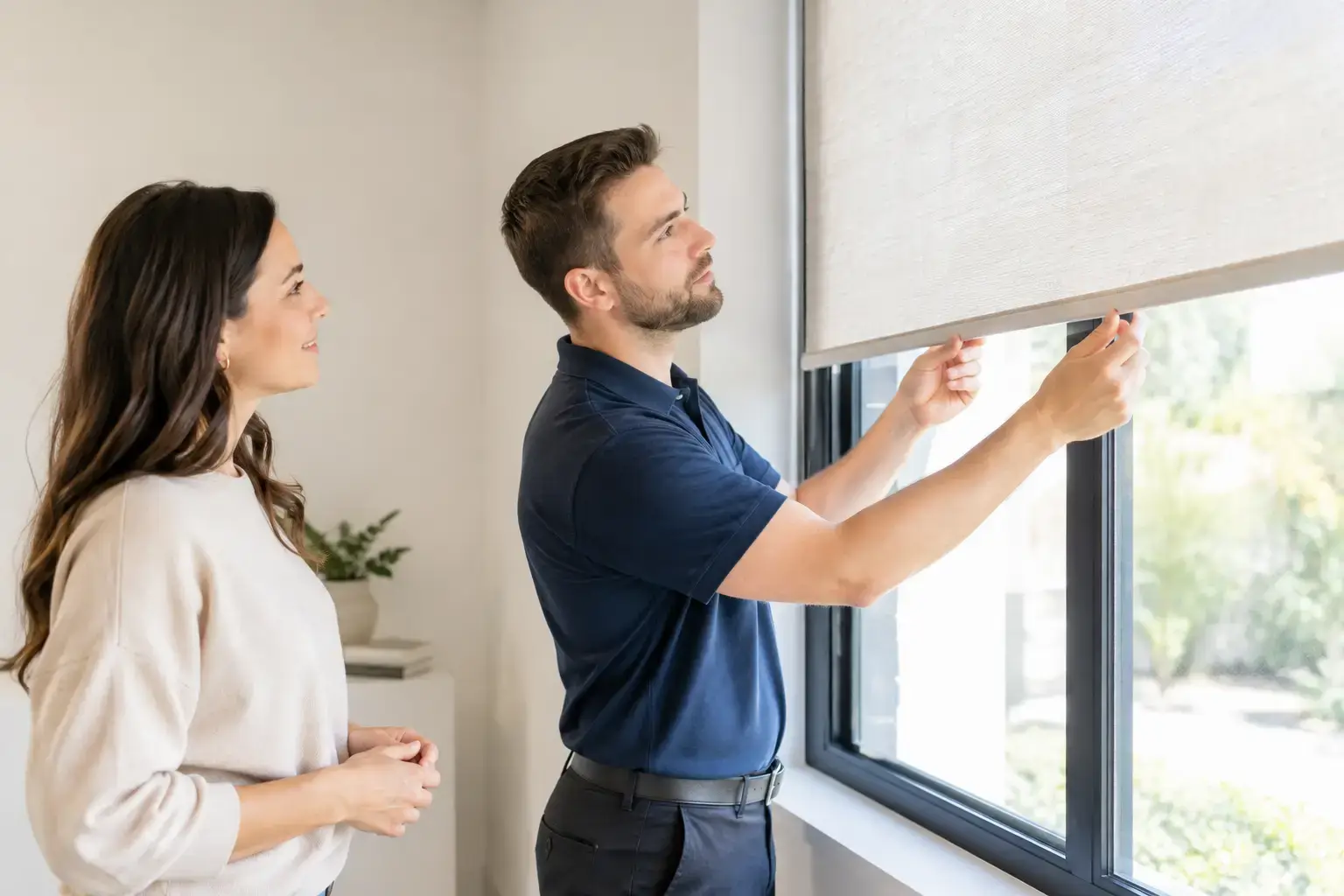
A blind fitting experience should make improving your windows feel straightforward, not like another job on the renovation list. The difference between blinds that merely cover a window and blinds that look right, operate properly and last well usually comes down to the measuring, product advice and fitting behind them.
For homeowners, landlords and business owners across Coventry and the West Midlands, professional fitting removes the uncertainty around recess depths, unusual window shapes, mounting options and fabric choices. It also means the finished blind is chosen for how you actually use the room – whether that means a darker nursery, better privacy in a street-facing lounge, glare control in an office or insulation at a draughty window.
Why professional fitting makes a difference
Made-to-measure blinds are designed around the exact dimensions and practical details of your window. A few millimetres can affect whether a blind sits neatly within a recess, clears a handle or opens without catching. This is particularly relevant in older properties, bay windows, patio doors and rooms where not every opening is perfectly square.
Measuring yourself can work for a simple replacement, provided you are confident about the blind type and fixing position. However, it leaves little room for error. Ordering a blind that is too narrow may leave unwanted gaps; one that is too wide may not fit the recess at all. A professional survey identifies these issues before an order is placed.
The fitting itself matters just as much. The installer checks the surface, uses suitable fixings and makes sure the blind raises, lowers, tilts or rolls smoothly. For homes with young children, safe positioning of chains and cords is also part of a responsible installation.
The blind fitting experience, step by step
Start with the room, not the catalogue
A useful appointment begins with a conversation about the room. You may know that you want blinds, but not whether roller, Venetian or vertical blinds are the best choice. That is where practical advice is valuable.
In a bedroom, blackout roller blinds may be the priority. In a kitchen or bathroom, easy-clean, moisture-resistant materials are often a better fit. A living room may suit the warmth of wooden-look composite Venetian slats, while a large office window could benefit from vertical blinds that make it easy to control daylight across a wide opening.
The best choice depends on more than appearance. Consider who uses the room, the direction the window faces, how much privacy you need and whether heat retention is a concern. South-facing rooms can need stronger glare and UV control, while colder rooms may benefit from fabrics or constructions that add an insulating layer.
Precise measuring and checking the details
Once a style has been narrowed down, the window is measured carefully. The fitter will assess width, drop and recess depth, but will also look for details that are easy to miss when measuring alone. These can include window handles, tiles, alarm sensors, vents, radiators, door swing, skirting and the position of existing curtain poles.
At this stage, you can decide whether the blind should sit inside the recess or outside it. Recess fitting creates a tidy, built-in look and can be ideal where there is sufficient depth. Face fixing above or around the recess is often the better option when you want to reduce light gaps, cover a shallow recess or make a smaller window appear more substantial.
For bay windows, several blinds may need to work together without overlapping or leaving awkward gaps. For bifold doors and patio doors, clearance and access are key. These are not reasons to avoid blinds; they are reasons to have the right product specified before it is made.
Choosing colour, finish and operation
A sample viewed in your own room is far more useful than a small image on a screen. Natural light changes throughout the day, and the same shade can look very different against your wall colour, flooring and furniture. Looking at fabric or slat samples in place helps you choose with confidence.
Practical operation is also discussed during the appointment. Standard chain controls remain a popular, dependable option, while wand controls can suit many Venetian and vertical styles. Motorised blinds are worth considering for hard-to-reach windows, large installations or anyone who wants convenient control at the touch of a button.
Motorisation is not essential for every room, and it does add to the overall cost. Yet for a skylight, a tall stairwell window or a busy commercial space, it can be a sensible investment in day-to-day convenience. The right recommendation should reflect your needs rather than pushing the most expensive option.
Made to measure, then fitted properly
After the design and measurements are confirmed, your blinds are made to order. This is where bespoke service differs from taking a boxed product home and hoping it works. The dimensions, selected fabric or slat finish, control position and fitting type are all based on the agreed specification.
On fitting day, the installer secures each blind, tests its movement and checks that it sits level. With roller blinds, that means a smooth roll and an even bottom bar. With Venetian blinds, the slats should tilt cleanly and raise evenly. With vertical blinds, the louvres should travel and turn without snagging.
You should also be shown how to use and care for your blinds. This need not take long, but it is useful. Knowing how to clean the material, operate the mechanism correctly and deal with a minor issue such as a twisted vertical louvre helps keep the blinds looking their best.
What to prepare before your appointment
There is no need to empty the room, but clear access to the windows makes the visit quicker and safer. Move fragile items from the sill, shift furniture where possible and let the fitter know about any access restrictions, parking arrangements or pets in the property.
It is also helpful to think about the outcome you want before the appointment. If privacy is your main concern, say so. If early-morning light wakes your child, mention it. If your office screen is affected by glare every afternoon, explain when it happens. Specific problems lead to more useful recommendations than simply asking for a colour match.
For commercial properties, it can help to confirm whether work needs to take place outside customer hours, whether there are site sign-in procedures, and who will approve the final choice. A well-planned fitting keeps disruption to a minimum.
Questions worth asking your blind fitter
Ask whether your chosen blind will leave light gaps, particularly if you are considering it for a bedroom. No standard blind system can guarantee total darkness around every edge, and the answer may depend on the recess and fitting position. Blackout fabric blocks light through the material, but light can still enter around the sides unless the window and system allow for additional measures.
Ask how the blind will be fixed and whether the surface needs special consideration. This is relevant for plasterboard, tiled areas, uPVC frames and lintels. You can also ask which control method is most suitable for the room and how child safety will be addressed.
Finally, ask about care. Some fabrics are best dusted or gently vacuumed, while Venetian and vertical blinds can usually be wiped with an appropriate soft cloth. The correct advice protects the finish and avoids damaging delicate components.
A tailored service without the guesswork
A good fitting experience is not about making the process complicated. It is about replacing guesswork with clear advice, accurate measuring and a finished result that suits the property. That matters whether you are updating one bedroom, dressing every window in a new home or improving a commercial workspace.
Queen Blinds provides free home appointments, tailored recommendations and professional fitting across Coventry and the wider West Midlands. The aim is simple: blinds that complement your space, perform properly and are fitted with care.
When you are ready to change a room, start with how you want it to feel and function. The right blind, measured and fitted for that purpose, can make the result feel considered from the first day you use it.