


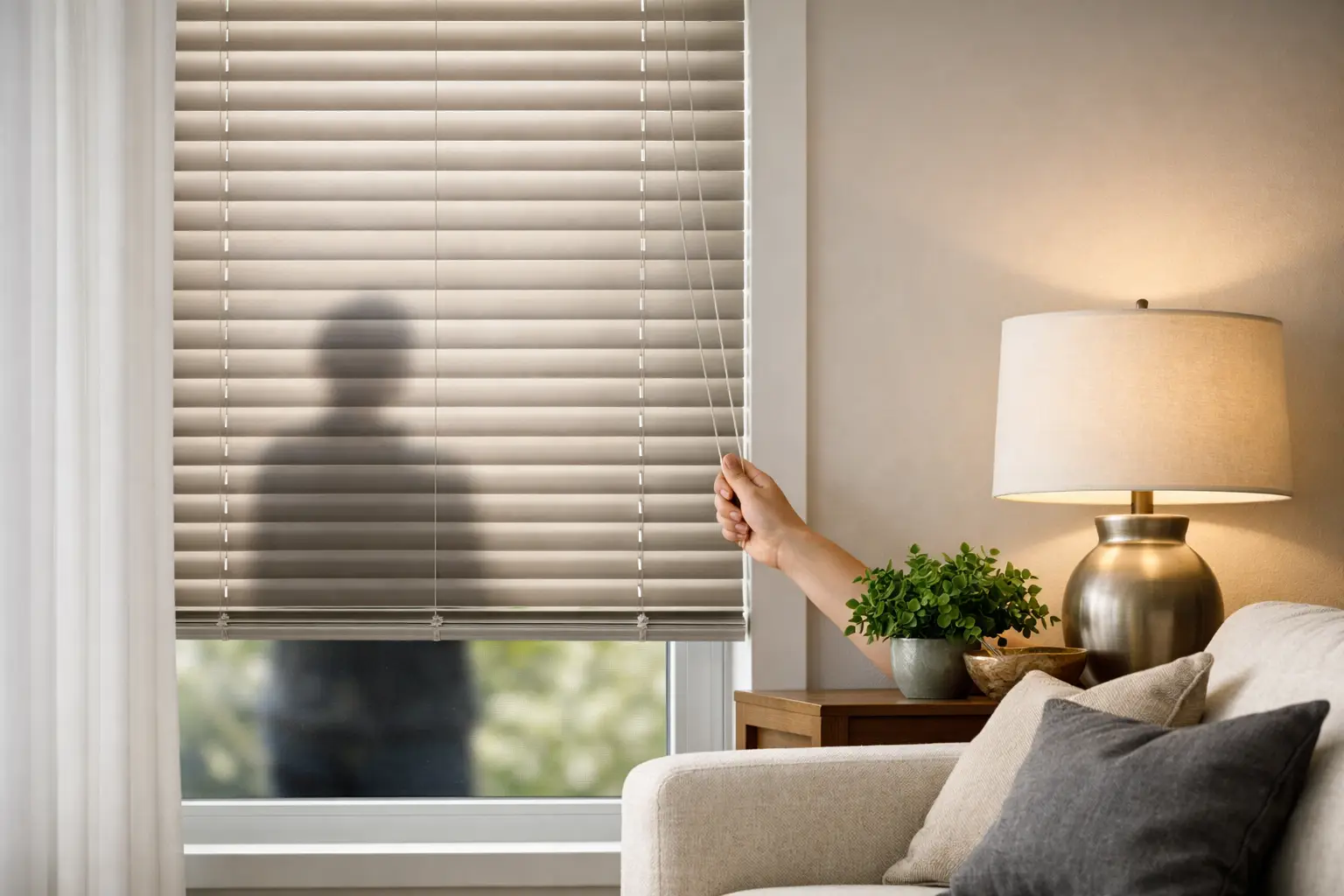
When a room feels overlooked, privacy stops being a small design detail and becomes something you notice every day. Choosing the best blinds for privacy is not just about blocking the view from outside. It is also about keeping rooms comfortable, controlling light properly and making sure the finish still suits your space.
For most homes and commercial settings, there is no single blind that works best in every window. A bathroom has different demands from a front lounge, and an office meeting room needs a different balance again. The right choice depends on how much privacy you need, whether you still want daylight, and how precise the fit is around the window.
What makes the best blinds for privacy?
Privacy comes down to more than fabric thickness. The way a blind fits, the direction of the slats, the size of any gaps and how the blind is used throughout the day all make a difference.
A made-to-measure blind will almost always give better privacy than an off-the-shelf option because it reduces light gaps at the sides and sits correctly within the window space. That matters most in street-facing rooms, ground-floor bays and any area where neighbouring properties look directly in.
It is also worth separating daytime privacy from evening privacy. During the day, some blinds can stop people seeing in while still letting natural light through. At night, when interior lights are on, that changes. If strong privacy is the priority after dark, denser fabrics or blackout options tend to perform better.
Roller blinds for simple, dependable privacy
Roller blinds are one of the most practical options if you want a clean look and reliable coverage. With the right fabric, they provide strong privacy and can work in bedrooms, bathrooms, kitchens and offices.
Blackout roller blinds are especially effective where complete screening is needed. They are a good fit for front-facing bedrooms, children’s rooms and any space where you do not want silhouettes visible from outside in the evening. If total blackout is not necessary, a dim-out or privacy fabric can still soften incoming light while limiting visibility.
Their main advantage is simplicity. When lowered, they cover the glass in one smooth panel, which means fewer sightlines than slatted blinds. The trade-off is flexibility. A roller blind is either up, down or set somewhere in between, so you do not get the same fine control over light and privacy that you would with tilting slats.
Venetian blinds for adjustable privacy
If you want more control during the day, Venetian blinds are often among the best blinds for privacy. Because the slats tilt, you can angle them to reduce visibility from outside while still letting light into the room.
This makes them a strong choice for living rooms, home offices and street-level spaces where you do not want to sit behind a fully lowered blackout blind all day. Aluminium Venetian blinds are neat, durable and easy to wipe clean, while wooden or wood-look finishes bring a warmer, more decorative feel.
The key with Venetians is adjustment. If the slats are left too open, privacy drops quickly, especially at night. They also tend to show small gaps between slats, so they are better for managed privacy than complete screening. In bathrooms and kitchens, moisture-resistant finishes are the safer option for long-term performance.
Vertical blinds for larger windows and workspaces
Vertical blinds are often overlooked in favour of more decorative styles, but they remain one of the most effective choices for privacy on wide windows and patio doors. They are particularly useful in commercial settings, conservatories and larger living areas.
Because the louvres rotate, vertical blinds let you control both privacy and glare without closing off the whole room. That is useful in offices where screen glare needs managing, or in dining spaces where you want light without feeling exposed.
Their appearance is more functional than soft fabric styles, so they may not be every homeowner’s first choice in a cosy lounge or bedroom. Even so, modern vertical blinds come in smarter finishes and neutral colours that feel far more polished than older versions many people remember.
Which blinds work best by room?
The best option often becomes clearer when you think room by room rather than trying to choose one style for the whole property.
In bedrooms, blackout roller blinds are hard to beat for privacy and light reduction. They suit both adult bedrooms and nurseries, especially where houses are closely spaced. If you prefer adjustable light during the day, layering blinds with curtains can give you both softness and stronger coverage at night.
In bathrooms, privacy is usually non-negotiable, but so is practicality. Moisture-resistant roller blinds and Venetian blinds both work well here. The deciding factor is often the look you want and whether you prefer a full screen or adjustable slats.
In living rooms, Venetian blinds are often the better all-rounder because they let you keep natural light while reducing the view in from outside. For bay windows or heavily overlooked front rooms, made-to-measure fitting becomes especially important.
In kitchens, easy-clean materials matter just as much as privacy. Faux wood or aluminium Venetians can work well, and roller blinds in suitable performance fabrics are another strong option.
In offices, clinics and other commercial spaces, vertical blinds and roller blinds are usually the most practical choices. They give a neat appearance, straightforward control and reliable privacy for staff and visitors.
Fabric, colour and fit all matter
People often focus on blind style first, but fabric and finish can change how private a blind really feels. A lighter sunscreen fabric may soften glare, but it will not offer the same screening as a denser privacy fabric or blackout material.
Colour also plays a part. Very pale fabrics can still provide privacy, but some weaves allow more shadowing at night than customers expect. Darker or coated fabrics tend to offer stronger coverage, though they can affect how much daylight reaches the room.
Fit is the detail that brings everything together. Even a blackout fabric can disappoint if the blind leaves wide gaps at the sides. Accurate measuring and professional fitting help reduce those problem areas and make the blind look better as well as perform better.
Privacy versus light – finding the right balance
Most customers are not trying to make a room feel closed off. They want privacy without losing the parts they like about the space, especially natural light. That balance is where expert advice makes a real difference.
For example, a front sitting room may benefit from Venetians that can be tilted during the day, while a bedroom may need a blackout roller blind because evening privacy matters more than daylight control. A bathroom window may require a water-resistant blind that fully covers the glass, whereas patio doors might suit vertical blinds that can be angled as the sun changes.
This is why tailored recommendations matter more than broad rules. The best blinds for privacy are the ones that match the window, the room and how you actually use it.
Why made-to-measure privacy blinds are worth it
Privacy is one of the clearest reasons to choose made-to-measure blinds. Standard sizes rarely account for unusual recesses, wide openings or shallow window spaces, and those small inaccuracies create the gaps people notice straight away.
A properly measured and fitted blind sits better, operates more smoothly and gives a tidier finish overall. It also saves the trial and error of guessing sizes, returning unsuitable products and still ending up with a result that feels compromised.
For homeowners, landlords and business customers across Coventry and the West Midlands, that full-service approach is often the simplest route. Queen Blinds helps customers choose a practical style, measure accurately and ensure the finished blind delivers the privacy, appearance and everyday ease they need.
A smart choice starts with the room, not the trend
The most popular blind on social media is not necessarily the right one for your window. Privacy needs are specific. A family bathroom, a ground-floor flat, a shopfront office and a rear bedroom all call for different solutions.
If you start by asking who can see in, when privacy matters most and how much light you want to keep, the right blind style becomes much easier to identify. Get that part right, and your blinds do more than cover a window. They make the room feel calmer, more comfortable and properly your own.