


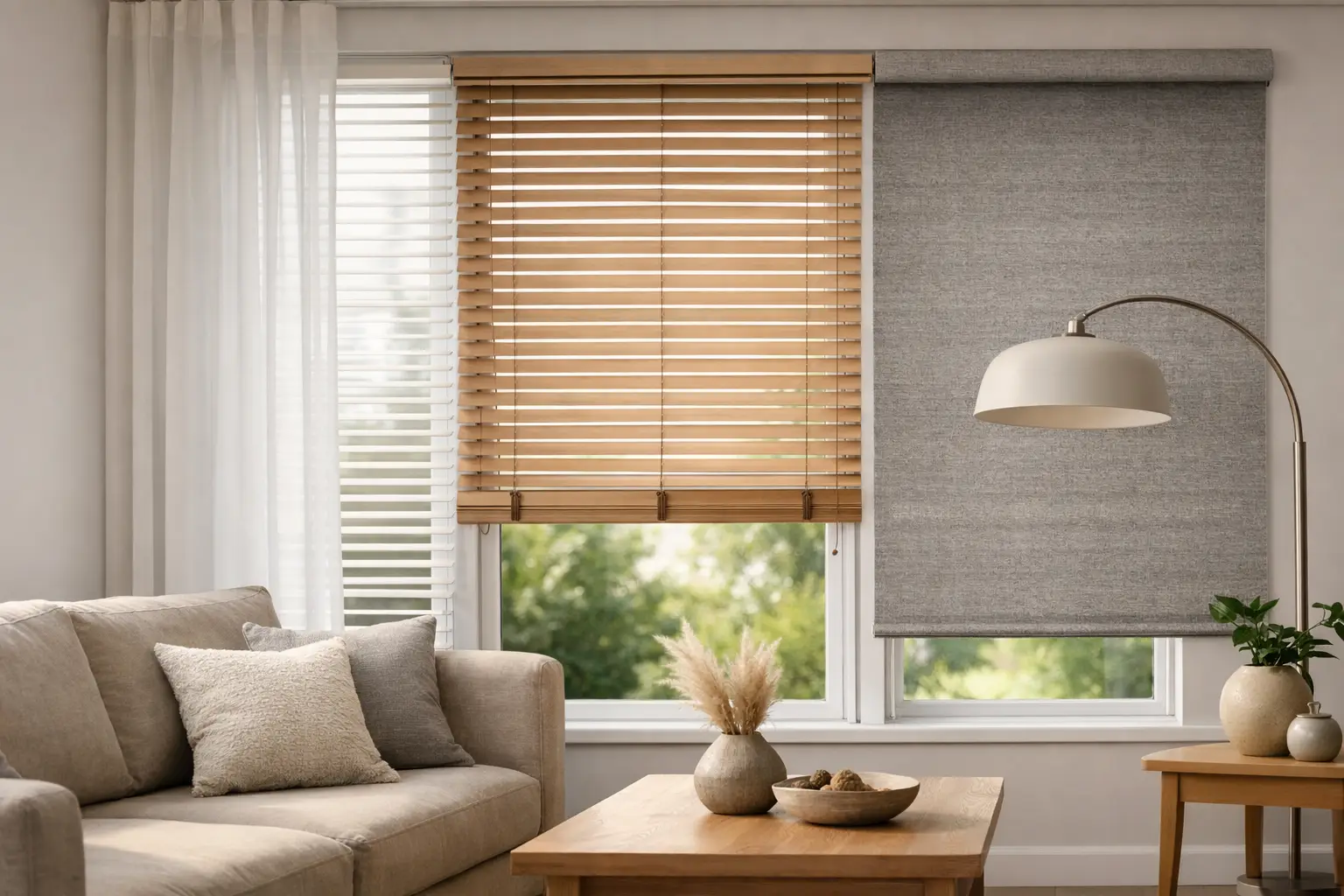
The living room usually has the hardest-working windows in the house. They need to let in natural light during the day, give enough privacy in the evening, and still look right with the rest of the room. That is why choosing the right blinds for living room windows is rarely just about colour or fabric. It is about how the room is used, how much sun it gets, and how much day-to-day convenience matters to you.
A good blind should make the room feel more comfortable, not create another compromise. In some homes, that means soft filtered light and a clean modern finish. In others, it means better insulation, less glare on the television, or safer operation around children and pets. Made-to-measure blinds are often the difference between something that simply covers the glass and something that properly finishes the room.
What to consider before choosing blinds for living room windows
The first question is not which style you like most. It is how the room needs to function. A south-facing living room has very different demands from one that gets limited daylight. Strong sun can cause glare, fade furnishings and make the room feel too warm, while a darker space may benefit from blinds that keep the window area looking open and bright.
Privacy is the next factor. Many living rooms face the street or overlook neighbouring properties, so you may want a blind that softens visibility from outside without making the room feel closed in. This is where fabric choice, slat size and operating style all matter.
Then there is the look of the room itself. A contemporary lounge with large bi-folds may suit sleek roller blinds or motorised options, while a more traditional room may benefit from Venetian blinds or a wood-look finish that adds warmth. The best result is usually practical first, decorative second. Once the blind works well, the style choices become much easier.
Roller blinds for living room windows
Roller blinds are one of the most versatile options for living rooms because they are simple, neat and available in a wide range of fabrics. They work particularly well if you want a clean finish that does not compete with the rest of the décor. In open-plan homes and modern extensions, that understated look is often exactly what is needed.
The real advantage is fabric choice. A light-filtering roller blind can reduce glare while still keeping the room bright. If your television sits opposite the window, or if direct afternoon sun makes the space uncomfortable, a dimout or blackout fabric may be more suitable. That does not mean the room has to feel heavy. Many modern blackout fabrics still look refined and can sit neatly within a stylish scheme.
Roller blinds are also a strong option for larger windows because they stack away compactly when raised. If convenience is high on your list, motorised operation is worth considering. It is especially useful for wide windows or for homes where you want to adjust light levels quickly without cords or chains in reach of children.
Venetian blinds for light control
If you want more control throughout the day, Venetian blinds are often the better fit. Rather than fully up or fully down, they let you angle the slats to manage both privacy and sunlight. That flexibility makes them ideal for front-facing living rooms or spaces where the light changes constantly.
Aluminium Venetian blinds suit modern interiors and are easy to maintain, while composite or wooden-look slats can soften the room and bring in a more premium feel. In family homes, moisture-resistant composite options can be particularly practical because they are durable, wipe-clean and less prone to warping than real wood in more changeable conditions.
The trade-off is that Venetians create a more structured look than fabric blinds. Some homeowners like that crisp finish, while others prefer something softer. It depends on the room, the furniture and whether you want the blinds to stand out or blend in.
Vertical blinds for larger living room windows
Vertical blinds are often associated with offices, but in the right living room they can be an excellent choice. They work particularly well on wide windows, patio doors and glazed areas where easy movement and adjustable light control are important.
Modern vertical blinds are available in far more attractive fabrics and finishes than many people expect. In a living room, they can offer a tidy, practical solution that feels less bulky than curtains and easier to manage across bigger spans of glass. They are also useful if you want to keep access clear to doors leading into the garden.
For some interiors, though, vertical blinds can feel more functional than decorative. That is why fabric and colour selection matters so much. With the right choice, they can look smart and understated rather than purely utilitarian.
Style matters, but performance matters more
The best blinds for living room windows need to do more than look good on installation day. They should continue to perform well through changing seasons, busy family life and everyday use. That is where features such as UV protection, insulation and child-safe operating systems come into their own.
If your living room gets cold in winter, blinds with thermal or insulating properties can help reduce heat loss at the window. While blinds are not a replacement for proper glazing, they can make the room feel noticeably more comfortable and support better energy efficiency. In sunnier rooms, UV-resistant materials can help protect flooring, sofas and soft furnishings from fading.
Safety should also be part of the decision, especially in homes with younger children. A made-to-measure supplier can recommend safer control options and ensure the finished installation is both practical and compliant.
Why made-to-measure is worth it
Living room windows are often the most visible in the home, so poor fitting tends to show straight away. Gaps at the edges, blinds that sit unevenly, or materials that look too short or too bulky can undermine the whole room. Off-the-shelf sizes can work in some cases, but they rarely deliver the same finish as a blind that has been measured and made specifically for the space.
Accurate measuring also affects performance. A blind fitted properly will control light more effectively, sit more neatly within or above the recess, and operate more smoothly over time. This is particularly important for bay windows, extra-wide openings and properties where walls or frames are not perfectly square.
That is why many homeowners prefer a full measuring and fitting service rather than trying to judge everything themselves. It removes the guesswork and gives you expert advice on what will actually work in the room, not just what looks appealing in a sample book.
Matching blinds to the way you live
A living room used mainly for relaxing in the evening may need a different solution from one that doubles as a playroom, home office or entertaining space. If glare is your biggest issue, choose a blind that manages sunlight without making the room too dark. If appearance is the priority, focus on materials and finishes that complement the room rather than dominate it.
For busy households, low-maintenance options are often the smartest choice. Wipe-clean surfaces, durable slats and reliable operating systems can save time and keep the room looking polished with very little effort. For homeowners renovating or updating multiple rooms, it can also make sense to think about consistency across the property while still choosing the right blind for each space.
This is where tailored advice makes a real difference. A local specialist such as Queen Blinds can assess the room properly, talk through the benefits of each style, and recommend an option that balances design, privacy and practicality.
Getting the right finish for your living room
Colour and texture should support the room rather than fight with it. Neutral blinds remain popular because they are easy to live with and work across a wide range of interiors, but that does not mean everything has to be plain. Soft patterns, textured weaves and wood-look finishes can all add interest without overwhelming the space.
If your living room already has bold furniture, statement wallpaper or strong paint colours, a simpler blind often creates balance. In a more minimal room, the blind can do a little more visual work. The key is proportion. The window covering should feel considered, not like an afterthought.
Natural light also changes how colours read throughout the day, so samples viewed in the room itself are usually more helpful than showroom impressions alone. What looks warm and soft in one home may look quite different in another.
Choosing blinds for a living room is not about following a trend. It is about finding the option that suits your windows, your style and the way you use the room every day. When the fit is right and the performance matches the space, the whole room feels calmer, smarter and easier to enjoy. If you are weighing up the options, the best next step is to see the materials in person and get advice based on your actual windows, not standard sizes on a shelf.