


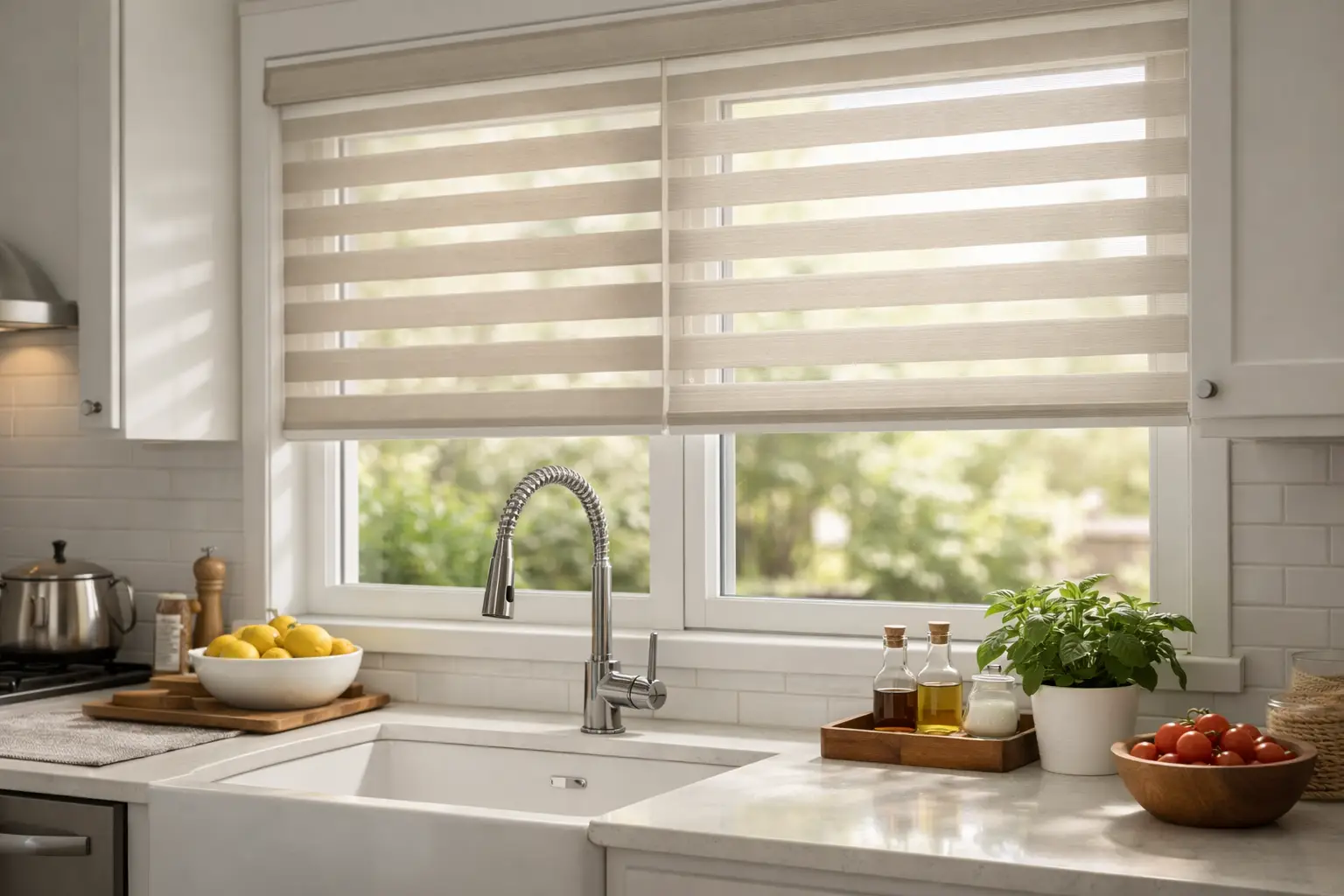
Steam from the kettle, splashes from the sink and bright afternoon sun all put kitchen window coverings under more pressure than blinds in almost any other room. That is why choosing the best blinds for kitchen windows is less about following trends and more about finding a practical fit for how your kitchen is used every day.
A blind that looks perfect in a showroom can feel less impressive once it is dealing with grease in the air, condensation on the glass and constant opening and closing. In kitchens, the right choice needs to balance appearance with easy maintenance, privacy and durability. If you are updating a family kitchen, a rental property or a staff break area, the same rule applies – blinds need to work hard without making life harder.
What makes the best blinds for kitchen windows?
Kitchens ask a lot from window coverings. They need to cope with moisture, changing temperatures and regular cleaning, while still looking neat and in keeping with the room. That usually rules out anything too delicate or high maintenance, especially near sinks and hobs.
Light control matters too. Some kitchens need soft filtered daylight for most of the day, while others get harsh sun that makes the room uncomfortably bright or warm. Then there is privacy. If your kitchen faces the street or backs onto neighbouring homes, you may want a blind that lets in light without leaving the room exposed.
The window position also affects what will work best. A blind over a sink, next to a cooker or behind a dining bench may need a different solution from one on a clear wall. This is where made-to-measure blinds can make a real difference, because the fit is tailored to the space rather than forced to work around it.
Roller blinds are often the best all-round option
For many homes, roller blinds are the best blinds for kitchen windows because they are simple, neat and easy to live with. Their streamlined design suits both modern and traditional kitchens, and they do not take up much visual space, which helps if the room already feels busy with cupboards, tiles and appliances.
They are also practical. Moisture-resistant and wipe-clean fabrics are well suited to kitchen conditions, and there is a wide range of colours, patterns and finishes available. If you want something understated, a plain neutral fabric keeps the room feeling clean and bright. If the kitchen needs more personality, a patterned roller blind can add interest without overwhelming the space.
Roller blinds are especially useful when you want straightforward light control. You can raise them fully to let in maximum daylight or lower them for privacy. Some fabrics also help reduce glare and protect interiors from strong UV exposure, which is useful in sun-facing kitchens.
That said, roller blinds are not always the perfect answer. If you want to adjust light levels very precisely throughout the day, slatted blinds may offer more flexibility.
Venetian blinds give you more control over light
Venetian blinds are a strong option if your kitchen gets varied light or if privacy is a concern. Because the slats can be tilted, you can let daylight in while limiting direct views into the room. That level of control is one reason they remain a popular kitchen choice.
In kitchens, material matters. Real wood is not usually the best fit in rooms with high humidity, but aluminium and wooden-look composite Venetian blinds are much better suited. Composite styles are particularly appealing if you like the warmer appearance of timber but want something more durable and easier to maintain.
They do need a little more cleaning than a roller blind because each slat can collect dust and cooking residue over time. For many homeowners, that is a fair trade-off for the improved light control. In a kitchen that faces the road or catches strong morning sun, Venetian blinds can be a very sensible choice.
Vertical blinds can work well in larger kitchen spaces
Vertical blinds are not always the first style people think of for kitchens, but they can work very well on larger windows, glazed doors or combined kitchen-diner areas. They offer good light management and are easy to adjust, particularly where you need coverage across a wider span.
Their clean lines suit contemporary spaces, and practical fabric options are available that are designed for everyday durability. If your kitchen opens onto a garden or patio, vertical blinds can also be a useful solution where frequent access is needed.
The trade-off is appearance. In a compact domestic kitchen, some people find vertical blinds slightly more office-like than other styles. They tend to look best in larger, more open rooms where the scale feels right.
Moisture resistance and easy cleaning should be high on the list
A kitchen blind may look stylish on day one, but if it is awkward to clean or reacts badly to moisture, that style can lose its appeal quickly. This is why practical performance should carry just as much weight as design.
Wipe-clean finishes are particularly useful near cooking areas and sinks. Composite and aluminium options are often strong performers here, and many roller blind fabrics are designed to be low maintenance too. If you know the room gets a lot of condensation, it makes sense to avoid materials that may warp, stain or hold odours.
This is also where expert advice can help. A blind positioned above a sink may need a different material from one fitted to a kitchen side window, even within the same room. A good recommendation is based on the exact location, not just the overall kitchen style.
Style still matters, especially in open-plan homes
Practical does not have to mean plain. Kitchens are now central living spaces, and in open-plan layouts the blinds need to sit comfortably with the rest of the home. A blind that feels too functional can look out of place if the kitchen flows into a dining or lounge area.
Roller blinds often give the cleanest finish if you want a simple, contemporary look. Venetian blinds add more texture and structure, which can suit shaker kitchens, timber accents or darker cabinetry. Colour choice matters as well. Light shades keep smaller kitchens feeling open, while darker tones can add contrast in brighter, larger rooms.
If the room already has plenty going on, subtle blinds usually work best. If the kitchen is more minimal, the window covering can do a little more design work. It depends on whether you want the blind to blend in or stand out.
Safety and convenience are worth thinking about early
If you have young children at home, blind safety should be part of the decision from the start. Kitchens are busy spaces, and safe operation matters just as much here as it does in a bedroom or lounge. Well-fitted blinds with appropriate child-safe features help reduce risk and keep the room practical for family life.
Convenience is another factor people often appreciate more after installation than before. A blind that is awkward to reach or use soon becomes irritating, particularly over a sink or worktop. In some kitchens, motorised options are worth considering, especially for hard-to-access windows or for a cleaner, more streamlined finish.
Why made-to-measure blinds usually work better in kitchens
Kitchen windows are rarely as straightforward as they seem. Tiles, deep sills, taps, nearby cupboards and unusual recesses can all affect how a blind should be measured and fitted. Off-the-shelf options may seem cheaper at first, but they often leave gaps, fit poorly or simply do not look right once installed.
Made-to-measure blinds solve those problems by matching the exact dimensions of the window and the way the space is used. They also give you more control over fabric, finish and operating style, which is important in a room where performance matters.
For homeowners and landlords who want a straightforward result, professional measuring and fitting remove much of the guesswork. That is one reason many customers across Coventry and the West Midlands choose a service-led approach from companies such as Queen Blinds rather than trying to piece the job together themselves.
So, which blind is best?
If you want the simplest answer, roller blinds are often the best all-round choice for kitchen windows because they are neat, versatile and easy to clean. If light control and privacy are your top priorities, Venetian blinds may suit you better. If you are covering a wider glazed area, vertical blinds can make more sense than either.
The best choice depends on where the window sits, how much moisture the area gets, how often the blind will be used and how you want the kitchen to feel. A busy family kitchen, a compact rental and a stylish open-plan extension may all need something slightly different.
The smartest starting point is not asking which blind is most popular. It is asking which one will still look good, work properly and feel easy to live with six months from now.