


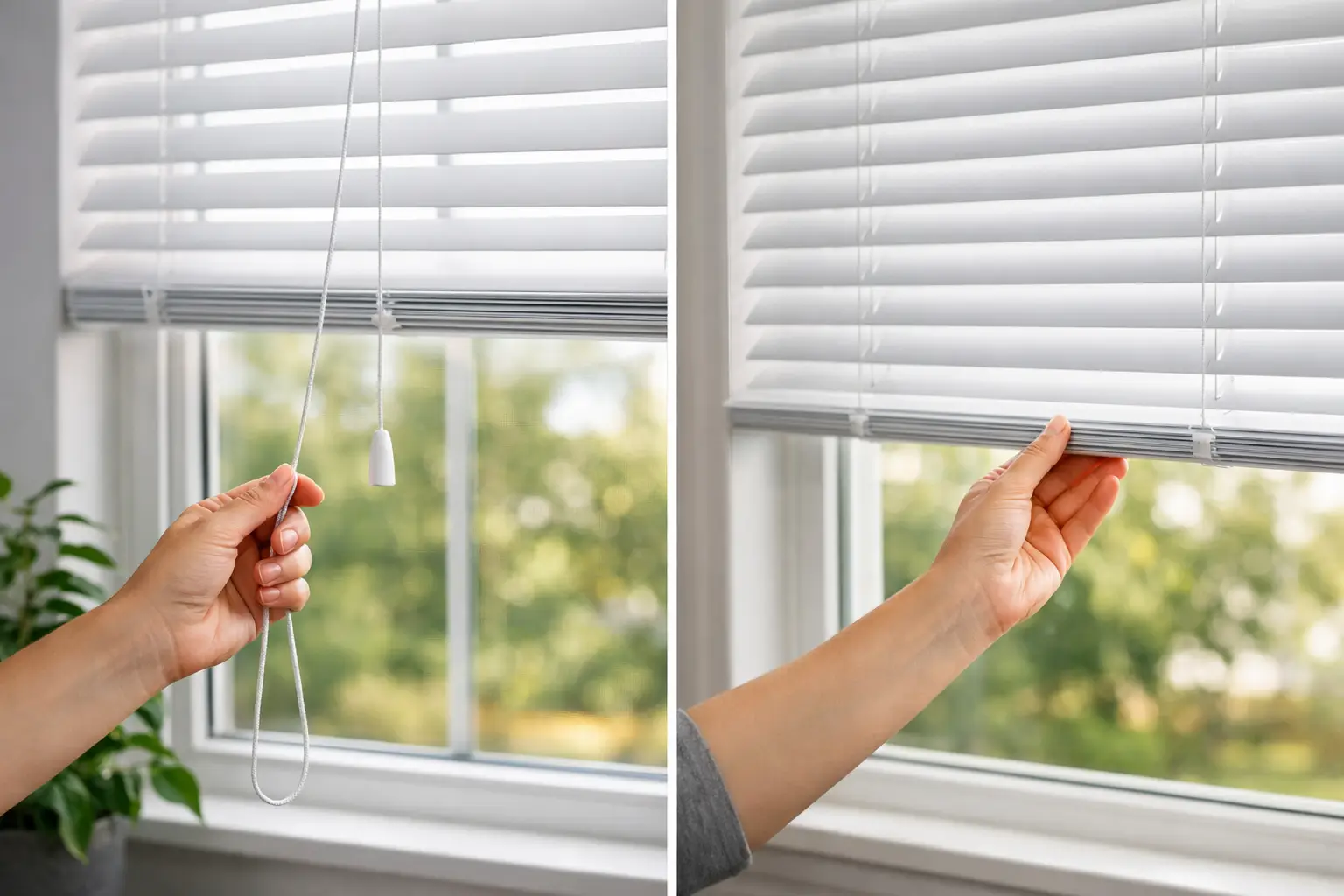
A blind can look perfect on a fabric sample yet feel frustrating if it is not right for the way you use the room. When choosing corded versus cordless blinds, the practical details matter: who uses the space, how often the blind will be adjusted, the size of the window and the level of child safety required. The best choice is rarely about one system being universally better. It is about choosing a control method that suits your property and daily routine.
For homes and businesses across Coventry and the West Midlands, both options can provide excellent privacy, light control and a tailored finish. The difference lies in how the blind operates, how it looks at the window and what works best for your individual setting.
What is the difference between corded and cordless blinds?
Corded blinds use a visible control, usually a chain, cord or wand, to raise, lower or tilt the blind. Roller blinds commonly operate with a side chain, while Venetian and vertical blinds may use cords and wands to control the slats. These familiar systems are straightforward, dependable and available across a wide range of blind styles.
Cordless blinds are operated without a hanging cord or chain. Depending on the product, you may gently pull the bottom bar to the required height, use a discreet pull tab, or choose a motorised control. Cordless does not automatically mean smart or electric. Many cordless systems are manually operated, with an internal spring or tension mechanism doing the work.
The neater appearance of cordless blinds is a major attraction, particularly in contemporary rooms. However, a well-fitted corded blind can be equally smart, especially when its controls are positioned thoughtfully and finished with a matching chain or wand.
Corded versus cordless blinds for family safety
For families with young children or visiting grandchildren, cordless operation is often the first option worth considering. There are no loose looped chains or cords at the window, helping to reduce a recognised safety risk. This can make cordless blinds especially suitable for nurseries, children’s bedrooms, playrooms and ground-floor living spaces where children spend a lot of time.
Corded blinds can still be a safe and practical choice when supplied and fitted with the correct child-safety devices. Chain tensioners, cord cleats and breakaway components are designed to keep operating controls secured and out of reach. Professional fitting is important here. A safety device only works as intended when it is installed at the appropriate height and fixed securely to the wall or window frame.
If you are furnishing a rental property, it is sensible to consider both safety and ease of use. A cordless blind may offer a simple solution in family-focused lets, while a properly secured chain-operated blind can be a cost-effective choice in other rooms. The right answer depends on the tenants, the window layout and the blind type.
Child safety is more than the control system
Window furniture, nearby beds, chairs and cots can all affect safe blind placement. During a home appointment, measuring the window properly also gives you the chance to discuss where controls should sit and whether a cordless or motorised option is more appropriate. This avoids relying on a one-size-fits-all decision made from a photo online.
Light control and everyday convenience
Corded systems give precise, familiar control. With a chain-operated roller blind, you can stop the fabric at almost any point, making it easy to soften glare on a screen while keeping daylight in the room. On Venetians and vertical blinds, a wand lets you angle the slats for privacy without fully closing the blind.
This control can be particularly useful in offices, shops and south-facing rooms. A commercial space with several windows may benefit from corded or wand-operated blinds because staff can quickly adjust each window as the light changes through the day. They are also an effective option for taller windows, where a chain offers a comfortable way to operate the blind without stretching.
Cordless blinds create a cleaner window line and are very easy to use at standard window heights. They work well in bedrooms, kitchens and living rooms where you want to raise the blind quickly without a chain hanging to one side. Good-quality systems should hold their position securely, but they still need to be specified for the blind’s size and weight. A large blackout roller blind or a wide blind with heavier materials may be better suited to a chain control or motorised operation.
For hard-to-reach windows, motorisation is often the most convenient cordless-style solution. A remote, wall switch or smart control can operate blinds above a stairwell, behind furniture or across a wide glazed area. It also allows several blinds to be moved together, which can be useful in a conservatory, meeting room or modern open-plan home.
Style and suitability for different blind types
The style of blind often narrows the decision. Roller blinds are available with both chain-operated and cordless mechanisms, and motorised rollers offer an especially sleek finish. A blackout roller blind in a bedroom can work well with any of these options, provided the fabric and fitting are chosen to minimise light gaps around the edges.
Venetian blinds usually use a combination of lift control and slat tilt. A wand is a tidy, practical way to angle slats, while the lift mechanism depends on the design. Venetian blinds remain popular where adjustable privacy is the priority, such as street-facing lounges, kitchens and workspaces. Wooden-look composite slats are particularly useful in rooms that need the warmth of a timber effect with easier maintenance.
Vertical blinds are often chosen for patio doors, bay windows and larger commercial windows. Their wands keep the operation simple and help you direct light without losing access through the door. In these settings, the question is not always corded or cordless in the usual sense. It is about selecting a safe, durable control arrangement that suits the scale of the window and the people using it.
A cordless system has a visual advantage in minimalist interiors, where fewer visible fittings help the window feel less busy. That said, fabric colour, slat finish, accurate measuring and a clean installation will have a far greater effect on the finished look than the control type alone.
Cost, durability and maintenance
Corded blinds are generally the more budget-friendly option. Their mechanisms are established, widely available and easy to operate. For landlords fitting several properties, offices with multiple windows or homeowners working to a clear renovation budget, this can make them an attractive choice.
Cordless mechanisms and motorised systems usually cost more because of the additional internal components or electrical controls. The price can be worthwhile where child safety, clean styling or convenience are priorities. It is better to see this as a practical investment in how the room functions rather than a purely decorative upgrade.
Neither option is maintenance-free, but both are straightforward to look after. Keep fabrics dust-free with a light vacuum attachment or soft cloth, and wipe Venetian or vertical slats regularly. Avoid pulling any blind sharply or at an angle. With corded blinds, check that safety devices remain firmly fixed. With cordless systems, operate the blind evenly from the centre of the bottom bar or the designated pull point to help maintain smooth movement.
How to decide which control is right for your window
Start with the people who will use the room. A child’s bedroom has different priorities from a first-floor home office, a rental flat or a busy reception area. Then consider the window itself. Its width, height, position and exposure to sunlight can affect whether manual cordless control, a chain system, a wand or motorisation will be most comfortable.
Think about the result you want each day. If you regularly fine-tune light levels, adjustable slats or a chain-operated roller blind may suit you. If you want a clear, uncluttered finish with no dangling controls, cordless is likely to appeal. If the blind will be used frequently on a large or inaccessible window, motorisation may save effort and give a more consistent result.
Made-to-measure advice is valuable because the control mechanism should be selected alongside the fabric, blind size and fitting position. Queen Blinds can measure your windows, explain the options in plain terms and fit a solution that looks right and operates safely in your home or business. A short consultation before ordering can prevent the common frustration of a blind that is attractive but awkward to live with.
The best blind is the one you can use easily every morning and evening, not simply the one that looks best in a showroom. Choose the control method around your room, your household and your windows, then let the fabric and finish bring the space together.