


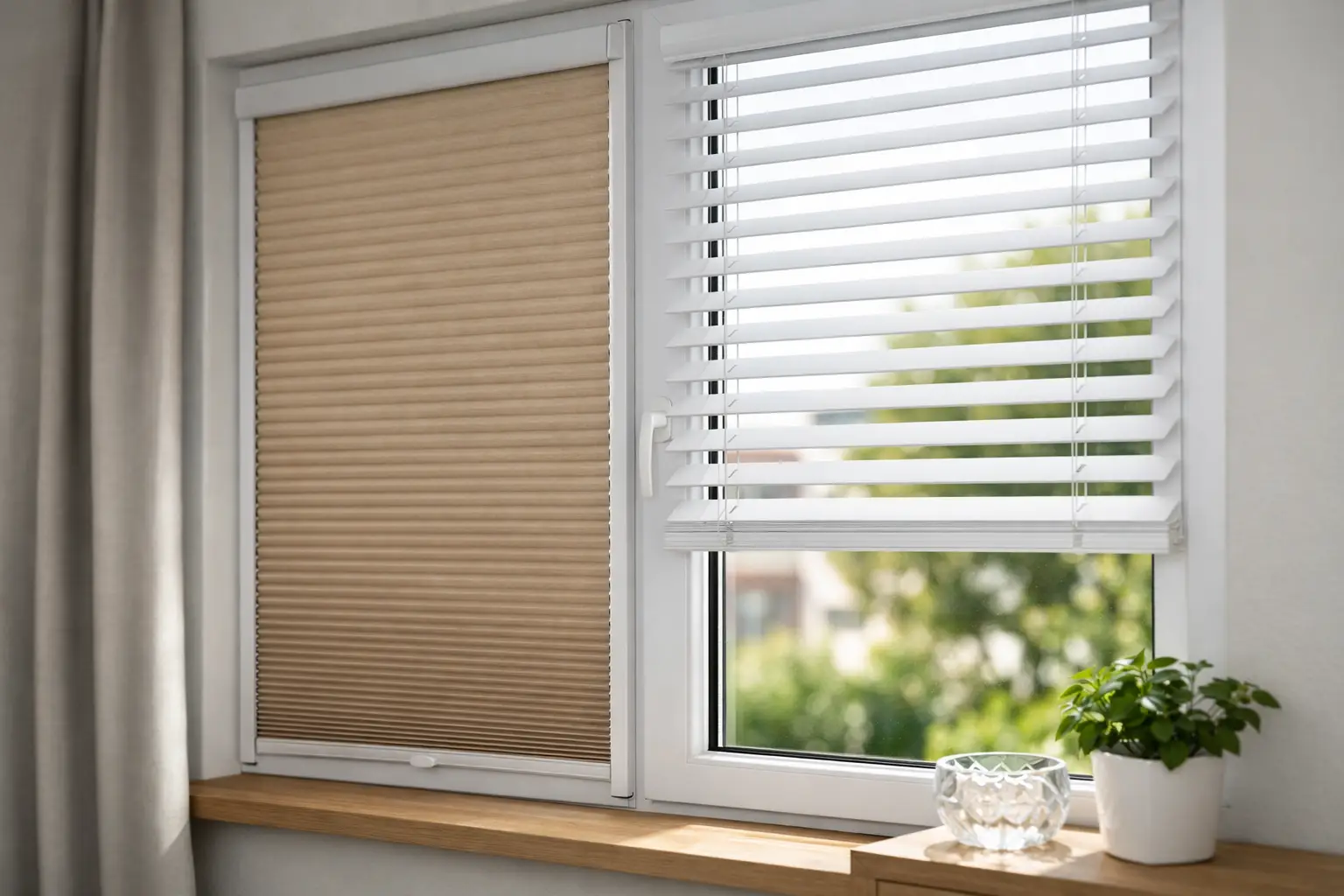
A blind that leaves a bright strip at the edge of the window can be frustrating at 6am, particularly in a child’s bedroom, a south-facing lounge or a home office. So, are fitted blinds better? For most homes and commercial spaces, the answer is yes – provided they are measured, specified and installed properly. They offer a neater finish, more dependable light control and fewer day-to-day annoyances than a ready-made option chosen from a shelf.
That does not mean every window needs the most expensive solution. The best blind depends on the room, the shape of the window, how you use the space and what you need it to do. A made-to-measure fitting makes those choices easier because the blind is built around your window rather than asking your window to work around the blind.
Are fitted blinds better than ready-made blinds?
Fitted blinds are usually better where appearance, privacy and precise light control matter. They are made to the exact width and drop of the window recess or frame, allowing for handles, tiles, sill depth and other details that generic sizes cannot account for.
Ready-made blinds can be a sensible choice for a temporary solution, a low-priority room or a standard-sized window where a small gap will not matter. They are quick to buy and may cost less upfront. However, cutting a blind down incorrectly, choosing the wrong bracket position or overlooking an uneven recess can quickly reduce that saving.
With a professionally fitted blind, the result should look considered rather than improvised. The brackets are secure, the blind runs smoothly and the fabric or slats sit proportionately within the window. This is particularly valuable in bay windows, large patio doors, shallow recesses and older Coventry properties where windows are not always perfectly square.
The practical advantages of made-to-measure blinds
The biggest benefit is accuracy. A specialist measures more than the obvious width and height. They assess whether the blind should fit inside or outside the recess, check for obstructions and allow for the type of blind being installed. These details affect how well the blind closes, how much light enters and how the finished window looks.
Better privacy and light control
Gaps around a blind are not only a design issue. They can let in early morning light, create glare on screens and reduce privacy after dark. A close-fitting roller blind, Venetian blind or vertical blind gives you more control over what enters the room and what can be seen from outside.
For bedrooms, blackout fabrics can make a marked difference to sleep quality, especially for children and shift workers. It is worth being realistic, though: a standard blackout roller blind blocks light through the fabric but may still allow a small amount of light around the edges. If near-total darkness is the priority, the fitting method and any side channels matter as much as the fabric itself.
In kitchens and living rooms, filtered daylight may be more useful than full blackout. Venetian slats allow you to angle the light away from a television or work surface while keeping the room bright. Vertical blinds are often a practical choice for wide windows and doors, where they can be tilted for privacy or drawn back for a clear view.
A cleaner, more balanced look
Windows are a major visual feature in a room. When a blind is too narrow, too short or mounted awkwardly, it draws attention for the wrong reasons. Fitted blinds bring balance to the window, helping a newly decorated room feel finished without adding unnecessary bulk.
This matters in rental properties and commercial premises too. A tidy, durable window covering can make a flat more appealing to tenants, give a reception area a professional appearance and create a consistent finish across offices or meeting rooms.
Colour and texture are easier to choose when you can see samples in the actual room. Daylight changes fabrics significantly. A warm white that looks ideal in a showroom may look cool in a north-facing room, while a darker shade may feel richer and softer once it is seen beside your flooring and paintwork.
Improved comfort through the seasons
Blinds are not a replacement for quality glazing or insulation, but they can support a more comfortable room. A well-fitted blind creates an additional layer at the window, helping to reduce the feeling of cold radiating from glass in winter. Thermal and insulating fabrics can be especially useful in bedrooms, conservatories and rooms with large areas of glazing.
In summer, reflective or light-filtering fabrics can reduce glare and help limit solar gain. That is helpful in south- and west-facing rooms, where strong afternoon sun can make a lounge or office uncomfortable. UV-protective options can also help reduce fading on furnishings, flooring and displays.
The benefit depends on the product and how it is fitted. A loose blind with wide gaps will not perform in the same way as one designed around the window dimensions. For homes concerned about energy bills, it is sensible to discuss the room’s orientation and glazing at the appointment rather than choosing on colour alone.
Safer, more reliable everyday use
A blind should be easy to open, close and clean. Correct fitting helps prevent snagging cords, uneven rolling and slats catching against the frame. It also ensures brackets are attached securely to a suitable surface.
For families, child safety should be part of the decision from the outset. Cordless options, tensioned safety devices and motorised controls can reduce risks associated with loose operating cords. Motorised blinds can also be useful for tall windows, hard-to-reach areas and commercial settings where several blinds need to be adjusted regularly.
Motorisation is not essential for every room, and it adds to the cost. Yet for a large window, a skylight or a busy office, the convenience can be worth it. The right option is the one that fits how the space is actually used.
When ready-made blinds can still make sense
Made-to-measure is not automatically the right answer for every situation. If you need a quick, short-term covering before moving home or renovating, a ready-made blind may do the job. It can also be useful for a utility room, shed or other space where exact finish is less important.
The trade-off is that you may need to compromise on width, drop, fabric, fitting position and operation. Ready-made blinds often come in limited sizes, so a window may be covered without being properly framed. In some cases, trimming is possible, but not all blinds can be cut safely or evenly, and cutting may affect the manufacturer’s warranty.
If your window is a common size and the blind will be outside the recess with generous overlap, a ready-made option can look acceptable. The more unusual the window, the more valuable professional measuring becomes.
Choosing the right fitted blind for each room
The blind style should suit the job as well as the décor. Roller blinds are clean, versatile and available in blackout, moisture-resistant and screen fabrics, making them popular in bedrooms, kitchens and bathrooms. Venetian blinds offer adjustable light control and work well in living areas, offices and kitchens. Wooden-look composite slats can provide the appearance of timber while being more practical around moisture.
Vertical blinds remain a strong option for larger windows, sliding doors and commercial spaces. Their wide coverage and easy adjustment make them useful where privacy and daylight need to change throughout the day. For awkwardly shaped or particularly large windows, a consultation can identify a practical solution before you commit to a style.
Do not overlook the fitting location. Recess fitting creates a neat, integrated appearance when there is enough depth and clearance. Face fitting, where the blind sits outside the recess, can cover more of the window and reduce edge gaps. Both can look excellent when selected for the right reason.
Why professional measuring makes the difference
Accurate measuring is not simply about reading a tape measure. A professional considers recess depth, window handles, tiling, architraves, opening direction, controls and the strength of the fixing surface. They can also advise whether a particular fabric, slat width or mechanism suits the room.
This saves customers from the common problems of ordering the wrong size, drilling in the wrong place or discovering that a new blind catches on a handle. It also gives you the confidence that the product has been chosen to work in the room, not just to look good in a photograph.
Queen Blinds provides a free home appointment across Coventry and the wider West Midlands, so customers can compare suitable options, receive tailored advice and have measuring and fitting handled as part of one straightforward service.
A fitted blind is most worthwhile when it solves a real problem: waking light in a bedroom, overlooked windows, a glare-filled workspace or a room that never quite feels finished. Start with that need, then choose the style and fabric that will make your window work better every day.