


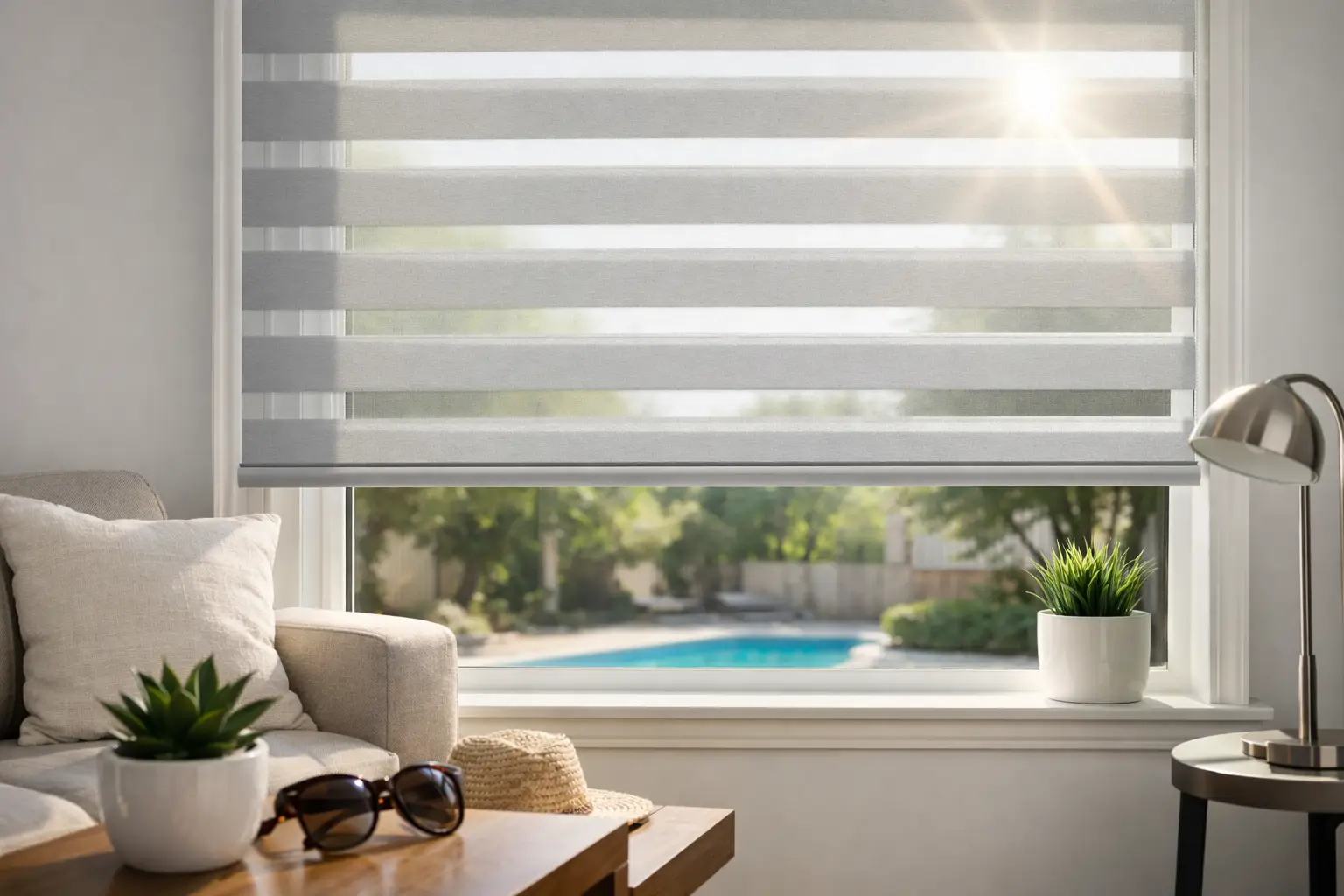
A bright, south-facing lounge can look its best at 10am and feel harsh by mid-afternoon. Sunlight bleaching a sofa, glare across the television and a room that heats up too quickly are familiar problems in homes and workplaces across Coventry and the West Midlands. This guide to UV protective blinds explains how to reduce those effects without turning a light, welcoming room into a dark one.
UV-protective blinds are not just about blocking the sun. The right made-to-measure blind can preserve flooring and furnishings, make screens easier to use, improve privacy and give you much better control over the atmosphere of a room. The best choice depends on the direction of the window, how the space is used and how much natural light you want to retain.
What UV protective blinds do
Ultraviolet radiation is the part of daylight most associated with fading and material damage. It can gradually affect upholstery, wooden furniture, artwork, carpets and merchandise near shop windows. You may not notice the change week to week, but a rug exposed to direct sunlight can develop noticeably uneven colour over time.
UV protective blinds use specially selected fabrics, coatings or slat materials to filter a high proportion of UV rays before they reach the room. They also soften visible light and reduce glare. That makes them especially useful in conservatories, home offices, living rooms with large glazing, south- and west-facing bedrooms, and commercial spaces where products or displays sit close to windows.
It is worth separating UV protection from blackout. A blackout blind is designed to stop light entering the room as fully as possible. A UV-filtering blind can still allow daylight and an outside view, depending on its fabric, while helping to protect interiors. Some products offer both benefits, but they serve different priorities.
Choosing the right level of light control
The practical question is not simply whether you need UV protection. It is how you want the room to feel once the blind is in place.
Screen fabrics for daylight and visibility
Screen or solar fabrics are a popular option where daylight matters. Their woven construction filters sunlight while allowing a degree of outward visibility during the day. They can be a strong choice for kitchens, lounges, offices and garden-facing rooms where you do not want to lose the sense of space created by the window.
These fabrics are commonly described by an openness factor. A lower openness factor has a tighter weave, offering more privacy, glare reduction and UV control. A higher openness factor admits more light and provides a clearer view out. There is a trade-off: the more open the fabric, the less privacy it generally provides, particularly after dark when indoor lights are on.
Dim-out and blackout fabrics for stronger protection
For bedrooms, media rooms and spaces that become uncomfortably hot in direct sun, dim-out or blackout roller blinds may be more suitable. They reduce light significantly and can provide excellent protection for furnishings. A cassette and side guides can improve coverage around the edges, although the exact result depends on the window shape and fitting position.
Blackout fabrics are particularly useful for shift workers, young children and rooms with early morning sun. However, if you enjoy a naturally bright room during the day, using blackout fabric on every window may feel more restrictive than necessary. A lighter filtering blind can be the better everyday solution, with curtains or a second blind added where full darkness is needed.
Venetian and vertical blinds for adjustable coverage
Venetian blinds give you control that fabric blinds cannot always match. Tilting the slats can direct harsh sunlight away from seating or computer screens while retaining daylight and airflow. Aluminium slats are practical in kitchens and offices, while wood-effect composite slats offer a warmer finish and cope well with moisture and changing temperatures.
Vertical blinds are often well suited to wide windows, patio doors and commercial settings. By rotating the louvres, you can manage glare as the sun moves across the room. They are a sensible option where flexibility matters more than a fully unobstructed view.
A guide to UV protective blinds by room
A blind should work with the way you use the room, rather than simply match the window.
In a lounge, consider a solar roller blind if preserving daylight and the view is important. Choose a fabric colour that complements the room, but remember that darker fabrics can sometimes improve outward visibility and glare control during the day. For a television area, a denser fabric or blackout roller blind may prevent reflections more effectively.
In bedrooms, blackout roller blinds are often the most practical choice, especially on east-facing windows. If heat is also a concern, ask about fabrics with thermal or reflective properties. These can help moderate solar gain, though blinds alone will not replace proper ventilation or insulation.
For a home office, glare is usually the main frustration. A screen fabric fitted close to the glass can reduce reflections on monitors without leaving you reliant on artificial lighting. If video calls are common, it can also create a more balanced light level across the room.
In kitchens and bathrooms, prioritise materials that are easy to clean and suited to humidity. Moisture-resistant roller fabrics, aluminium Venetians and composite Venetian slats are practical options. UV protection remains valuable where sunlight reaches worktops, cabinetry or flooring for long periods.
For offices, salons, clinics and retail premises, the decision often comes down to comfort, presentation and consistency. Blinds need to control glare for staff and visitors, protect furnishings or stock, and look professional from both inside and outside. Made-to-measure vertical, Venetian and roller blinds can all meet these needs when specified properly.
Fabric colour, fit and other details that matter
It is easy to focus on fabric alone, but several smaller decisions affect performance.
A blind fitted inside the recess looks neat and keeps close to the glass, which can help with light control. An outside-recess fitting may be better where the recess is shallow, the window opens inwards, or greater light coverage is required. Accurate measuring is essential, especially for bay windows, bifold doors, shaped recesses and large commercial glazing.
Colour also affects the finish of the room. Pale fabrics can keep a space feeling airy, while deeper tones can provide stronger visual definition and reduce glare. Neither is automatically better. A light-filtering neutral may suit a family lounge, whereas a charcoal screen blind can be a practical choice for a sunlit office.
For homes with children or pets, safe operation should be part of the specification. Motorised blinds remove the need for operating cords and are useful for difficult-to-reach windows. They can also be convenient for large banks of blinds, conservatories and commercial spaces where several windows need to be adjusted together.
Do UV blinds help with heat?
They can help, particularly when fitted close to the window and used before the room becomes hot. By reducing direct solar radiation, UV protective fabrics can make a noticeable difference to comfort on sunny days. Thermal backing, reflective coatings and appropriately chosen colours can contribute further.
Still, expectations should be realistic. The amount of heat reduction depends on the size and orientation of the glazing, the type of glass, the blind fabric and the rest of the building. A west-facing conservatory with extensive glazing faces a different challenge from a small north-facing bedroom. During a consultation, discussing when the sun reaches the room is often more useful than choosing a product from a sample book alone.
Why made-to-measure fitting is worth considering
Ready-made blinds can be tempting for straightforward windows, but small gaps, awkward recesses and uneven measurements can reduce their effectiveness. Gaps allow light around the edges and can make a carefully chosen fabric less successful at controlling glare or preserving privacy.
A made-to-measure service gives you the opportunity to compare fabrics in your own light, assess how the blind will operate and choose a fitting method that suits the window. It also avoids the uncertainty of measuring and drilling yourself. For larger or more complex installations, professional fitting helps ensure blinds hang correctly, operate smoothly and look proportionate to the room.
UV protection works best when it is planned around real life: the sofa that catches the afternoon sun, the desk facing the garden, the shop display that fades in the window, or the bedroom that warms up before breakfast. Queen Blinds can help turn those everyday problems into a tailored window-covering choice that still feels right for your space.