


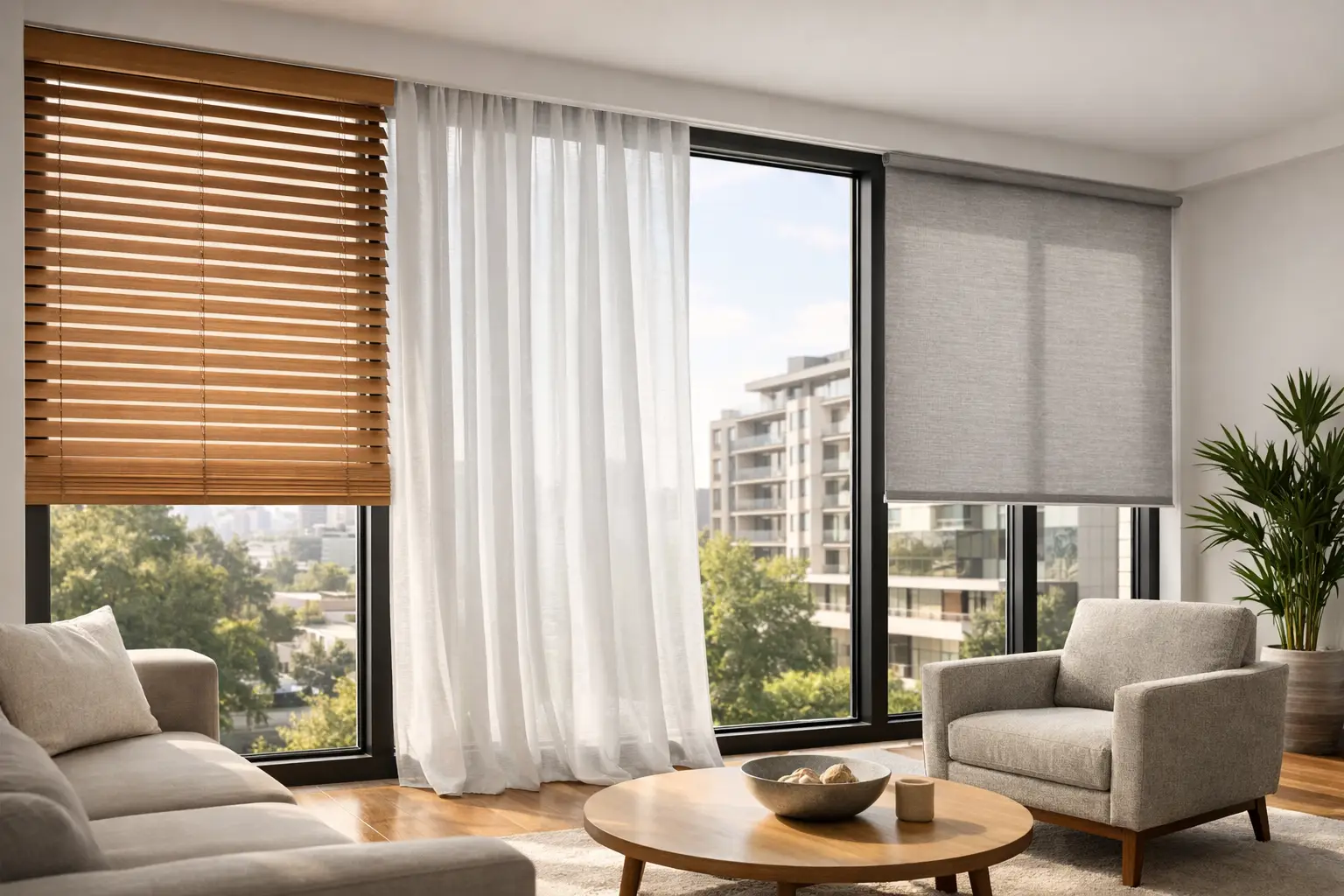
A wide expanse of glass can make a room feel brighter, more open and more connected to the garden or view outside. It can also bring glare, heat loss, reduced privacy and a difficult measuring job. The question, “what blinds suit large windows?”, is less about finding one universal style and more about choosing a made-to-measure solution that works with the size, use and position of your window.
Large windows place more demand on a blind than standard openings. The fabric or slats must hang neatly across a wider span, the controls need to be easy to use, and the finished look should complement rather than overwhelm the room. For many homes and workplaces in Coventry and across the West Midlands, roller, vertical and Venetian blinds are all strong options – but each suits a different priority.
Start with how the room needs to work
Before choosing a colour or finish, consider what the window has to do every day. A south-facing lounge may need glare reduction while preserving daylight. A bedroom with a large bay or patio door may need dependable blackout. In an office, staff may need to adjust light throughout the day without shutting the room away from the outside.
Privacy matters too. Ground-floor windows facing a road or neighbouring property often need flexible coverage, while high-level windows may mainly need help managing sunshine and temperature. These practical details shape the right blind style far more than fashion alone.
A large window can also be one opening or several separate sections. Treating a run of windows individually can make operation simpler and give a more balanced result. In other rooms, a single wide blind creates a clean, uncluttered appearance. The best answer depends on the window’s dimensions, where the handles sit and how you use the space.
Roller blinds for large windows
Roller blinds are a popular choice for wide windows because they offer a neat, contemporary finish with a wide choice of fabrics. When raised, the blind rolls away compactly, leaving as much of the glass visible as possible. This makes them especially effective in kitchens, lounges, conservatories and modern commercial spaces.
For large windows, the fabric choice is key. A dim-out or sunscreen fabric can soften strong daylight and reduce glare while keeping the room bright. A blackout fabric is better suited to bedrooms, media rooms and any space where light needs to be blocked more effectively. Thermal or insulating fabrics can also help reduce the chill felt near larger glazed areas during colder months.
One very wide roller blind can look smart, but it is not always the most practical option. The wider and heavier the blind becomes, the more important a strong mechanism and correct fitting are. Dividing the opening into two or three matched roller blinds often gives better day-to-day control. You can lower only the section catching the sun, open one side for a door, or create privacy without covering every pane.
Motorised roller blinds are particularly useful for high, awkward or frequently used large windows. At the touch of a button, you can adjust several blinds together and avoid repeated pulling on chains. They are a convenient choice for large living spaces, glazed extensions and offices, and they can also help keep loose operating chains out of reach of young children.
Why vertical blinds suit wide openings
Vertical blinds are one of the most practical answers to what blinds suit large windows, particularly for patio doors, wide living-room windows and commercial premises. Their individual vertical louvres are designed to cover broad spans without the visual weight of a large sheet of fabric.
The biggest advantage is flexible light control. The louvres can be tilted to direct sunlight away from screens or seating while still allowing daylight into the room. When you want a clear view or easy access through a patio door, they draw to one or both sides. This is often more convenient than lifting a large blind fully upwards.
Vertical blinds are available in a broad range of colours, textures and practical fabrics. Light-filtering styles create a softer feel in a lounge, while dim-out options offer more privacy. They are also a sensible choice for offices, clinics and rental properties because they are hard-wearing, straightforward to operate and easy to maintain.
There is a design trade-off to consider. Vertical blinds have a more structured appearance than roller blinds and may not suit every period interior. However, modern louvre fabrics and slim headrails can give them a far more polished finish than many people expect. Correct measurement ensures the louvres stack neatly and do not interfere with handles, radiators or door access.
Venetian blinds for adjustable privacy and light
Venetian blinds work well on large windows where precise control matters. By tilting the slats, you can limit glare and maintain daytime privacy without losing all natural light. This makes them a useful option for street-facing lounges, home offices and workplaces with computer screens.
For a wider window, wooden-look composite Venetian blinds are worth considering. They provide the warmth and texture associated with wood while being more resistant to moisture and easier to care for. This can be helpful in kitchens, bathrooms and conservatories, where changing temperatures or humidity can be a concern.
The weight of a Venetian blind must be taken into account on very wide openings. Wider slats and larger drops can create a heavier blind, so splitting the window into separate blinds is often the better route. The divisions can align with the window frame, making the result look intentional while allowing each section to be raised and tilted independently.
Venetians give a crisp, tailored finish, but they do need more regular dusting than a roller blind. If low maintenance is your main concern, a smooth roller fabric may be the easier choice. If you value the ability to angle light precisely, Venetian slats are difficult to beat.
Consider insulation, glare and UV protection
Large windows are often the brightest feature in a property, but they can also be the point where a room feels too warm in summer or colder in winter. The right blind helps manage this without losing the benefit of the glass.
Thermal roller fabrics add an insulating layer at the window, which can improve comfort near large panes. For sunny rooms, sunscreen and UV-protective fabrics can reduce harsh glare and help protect furnishings, flooring and artwork from fading. They are especially useful where the view is worth keeping, as they can soften the sun without making the room feel closed in.
Blackout blinds have a different role. They are designed for stronger light reduction rather than a complete seal of darkness, as some light can still enter around the edges of the blind. In a bedroom, fitting the blind carefully and choosing an appropriate recess or face-fix position makes a noticeable difference to the result.
The value of made-to-measure fitting
Ready-made blinds rarely give the same result on large windows. Even a small measuring error can leave unwanted gaps, make a blind sit unevenly or create problems around handles and doors. Larger sizes also require suitable brackets, secure fixings and a mechanism capable of supporting the blind’s weight.
A professional survey looks beyond the width and drop. It considers recess depth, opening direction, wall or ceiling fixing points, frame projections and whether the window is likely to need regular access. This is particularly useful for bay windows, bifold doors, conservatories and older properties where no two openings are quite the same.
At Queen Blinds, a free home appointment gives you the chance to see suitable samples in your own light and receive advice based on the room, rather than a standard online size chart. Expert measuring and fitting help ensure wide blinds operate smoothly and look right from every angle.
Choosing the right finish for the space
For a calm, modern room, neutral roller fabrics in soft grey, cream or warm white keep the focus on the window and the view. A textured weave can add interest without feeling busy. In a family room, darker fabrics may be more forgiving of everyday marks, while blackout materials are a practical addition to bedrooms.
For traditional interiors, wood-effect Venetians add definition and warmth. In offices and commercial settings, vertical blinds in a clean neutral shade offer a professional look with useful light control. It is also worth thinking about whether the blinds will be viewed from outside, particularly on a front-facing elevation.
The right blind for a large window should feel easy to live with, not like another job to manage. Choosing a style that matches your light, privacy and access needs – then having it accurately measured and fitted – turns a difficult window into one of the most comfortable features of the room.