


A window that looks straightforward can be surprisingly difficult to dress well. Recess depth, opening direction, nearby radiators and the amount of daylight all affect the result. This made-to-measure blinds guide explains what to consider before choosing, so your blinds look right, work properly and are fitted with precision.
Why made-to-measure blinds are worth it
Ready-made blinds can suit a standard-sized window when budget is the only concern. However, they often leave uneven gaps, require trimming or do not sit comfortably within the recess. On a bay window, patio door, unusually shaped opening or large commercial window, those compromises become even more noticeable.
Made-to-measure blinds are built around the exact dimensions and practical needs of your space. That means a neater finish, better privacy and more dependable light control. It also gives you a far wider choice of fabrics, slat finishes, control options and fittings than is normally available off the shelf.
The value is not only visual. A well-fitted blind can reduce glare on screens, help retain warmth at the window and make a bedroom, living room or office more comfortable to use. The best option depends on the room, how the window is used and the result you want each day.
Made-to-measure blinds guide: start with the room
Before comparing colours or fabrics, consider what the room needs from its window covering. A blind that is ideal for a sunny kitchen may be less suitable for a child’s bedroom, while a home office has different requirements again.
In bedrooms, blackout fabrics are often the priority. They reduce incoming light far more effectively than standard fabrics and can be particularly useful for children’s rooms, shift workers and street-facing windows. Blackout blinds still need to be measured and fitted carefully, as small edge gaps can allow light through. If near-total darkness matters, the fitting position and window recess must be assessed as well as the fabric.
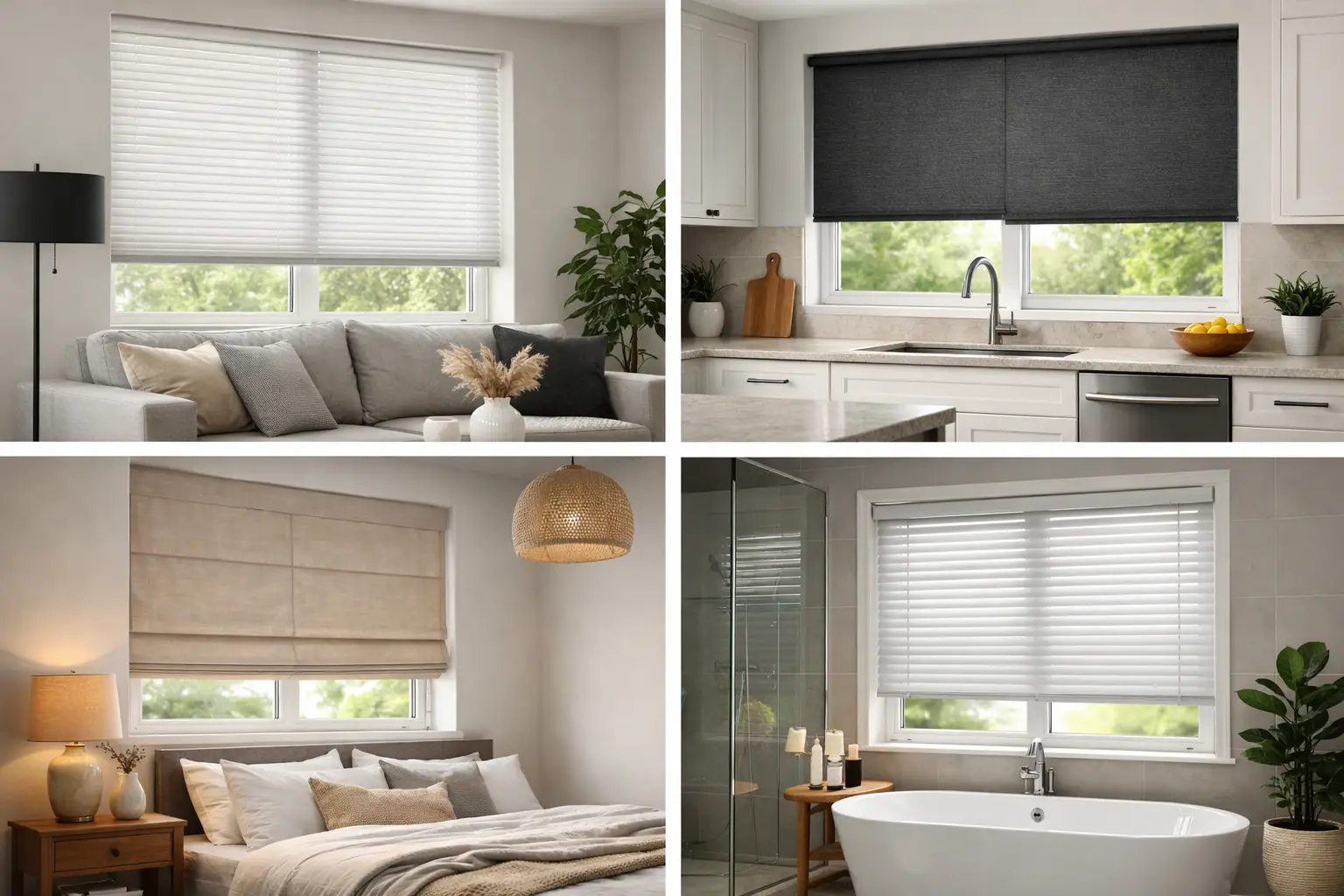
Living rooms usually call for a balance of privacy, daylight and style. A soft neutral roller blind can keep the room bright while providing privacy in the evening. Venetian blinds give more day-to-day control, allowing you to angle the slats rather than fully raise the blind.
Kitchens and bathrooms need materials that are practical around moisture, splashes and regular cleaning. Roller blinds in suitable wipe-clean fabrics are a popular choice. Venetian blinds can also work well, particularly with moisture-resistant, wooden-look composite slats that bring warmth without the maintenance concerns associated with natural wood.
For offices, clinics, shops and other commercial settings, glare control and consistency are often more important than decorative detail. Vertical blinds remain a practical choice for wide windows and doors, while roller blinds offer a clean, professional appearance and can be specified with screen-friendly or UV-reducing fabrics.
Choosing between roller, Venetian and vertical blinds
Each blind type solves a slightly different problem. The right one is not necessarily the most fashionable option, but the one that suits the window and the way you live or work.
Roller blinds
Roller blinds are clean-lined, versatile and easy to operate. Their wide fabric choice makes them suitable for almost every room, from plain light-filtering finishes in a lounge to blackout fabrics in a bedroom. They are also a strong option where you want a simple, uncluttered look.
The trade-off is that a standard roller blind generally offers less fine adjustment than slatted blinds. It is either lowered to a chosen height or raised, rather than tilted to direct the light. That said, the right fabric can make a major difference. Solar-control and UV-protective fabrics can soften bright sunshine without making a room feel closed in.
Venetian blinds
Venetian blinds offer excellent control over privacy and daylight. By tilting the horizontal slats, you can reduce glare or prevent overlooking while keeping some natural light in the room. They suit kitchens, bathrooms, offices and contemporary living spaces particularly well.
Consider the finish carefully. Aluminium slats create a crisp, modern look and are easy to maintain. Wooden-look composite slats offer a more substantial, homely appearance and are well suited to rooms where humidity or changing temperatures make natural wood less practical.
Vertical blinds
Vertical blinds are especially useful for broad windows, bay windows and patio doors. Their vertical louvres can be tilted for privacy and light control, then drawn to one side when you need a clear view or access through a door.
They are often chosen for commercial premises because they cover large areas efficiently and look tidy across a bank of windows. For homes, the fabric and colour make the difference between a purely functional finish and one that feels considered and stylish.
Do not overlook insulation, privacy and safety
Blinds do more than finish a room. At windows where heat escapes easily, a suitable blind can add another layer between the room and the glass. Some fabrics and constructions are designed with insulation in mind, helping to make rooms feel more comfortable during colder months. They are not a replacement for good glazing, but they can support better everyday energy efficiency.
Privacy deserves equal attention. A light-filtering blind may obscure the view into your home during the day, but when lights are on after dark, the effect can change. Bedrooms, bathrooms and ground-floor rooms often benefit from more opaque fabrics or adjustable slats.
For homes with young children, the control system must be chosen with safety in mind. Professionally fitted safety devices and suitable control options reduce the risk associated with loose operating cords. Motorised blinds can also be a practical choice where you want cordless operation, especially on difficult-to-reach windows.
Accurate measuring makes the difference
Measuring a window is more involved than taking its width and drop. A professional survey considers whether the blind will sit inside or outside the recess, whether handles protrude, how deep the recess is, and whether the window can still open freely. On bay windows, angles and the space between individual blinds must also be planned carefully.
Inside-recess fitting gives a tidy, built-in appearance, but only works when the recess is deep enough and reasonably square. Outside-recess fitting can cover more of the window area and is often useful where maximum light reduction is required. It can also hide an uneven window recess more effectively.
This is why a free home appointment can save time and avoid costly mistakes. Rather than relying on approximate measurements or online guesses, you can see samples in the actual light of the room and receive advice based on the window in front of you.
Match the finish to your home, not just a sample
A fabric or slat can look very different in a showroom, on a phone screen and at home in changing daylight. Hold samples beside wall colours, flooring and furniture where possible. Think about whether you want the blind to blend into the room or provide contrast.
Neutral shades are reliable for creating a calm, lasting finish, particularly in larger rooms or rental properties. A deeper colour can add definition to a pale room, while textured fabrics bring interest without overpowering the space. In commercial interiors, selecting a consistent finish across customer-facing areas can make the premises look more organised and professional.
Also consider cleaning before committing. Smooth aluminium and composite Venetian slats are straightforward to dust and wipe down. Many roller blind fabrics are low maintenance, but textured or delicate materials may need gentler care. The most attractive option is only the right option if it suits the amount of upkeep you are happy to give it.
When motorised blinds make sense
Motorised blinds are not only for high-end interiors. They are particularly useful for tall windows, skylights, wide banks of glazing and windows positioned behind furniture. With remote control or smart-home compatibility, they can make daily light control easier and remove the need for cords or chains.
They do cost more than manual operation, so they may not be necessary for every window. A sensible approach is to use motorisation where access, safety or convenience genuinely benefits from it, while choosing a dependable manual system elsewhere.
A better route from choice to fitting
The strongest results come from treating blind selection as part of the room design, rather than a final purchase made in a hurry. A professional consultation brings together the practical details – light, privacy, fitting space, safety and maintenance – with the finish you want to achieve.
For homeowners and businesses across Coventry and the West Midlands, Queen Blinds can measure, recommend and fit blinds around the needs of the property. The result should feel simple: a window covering that looks considered, operates smoothly and earns its place in the room every day.