


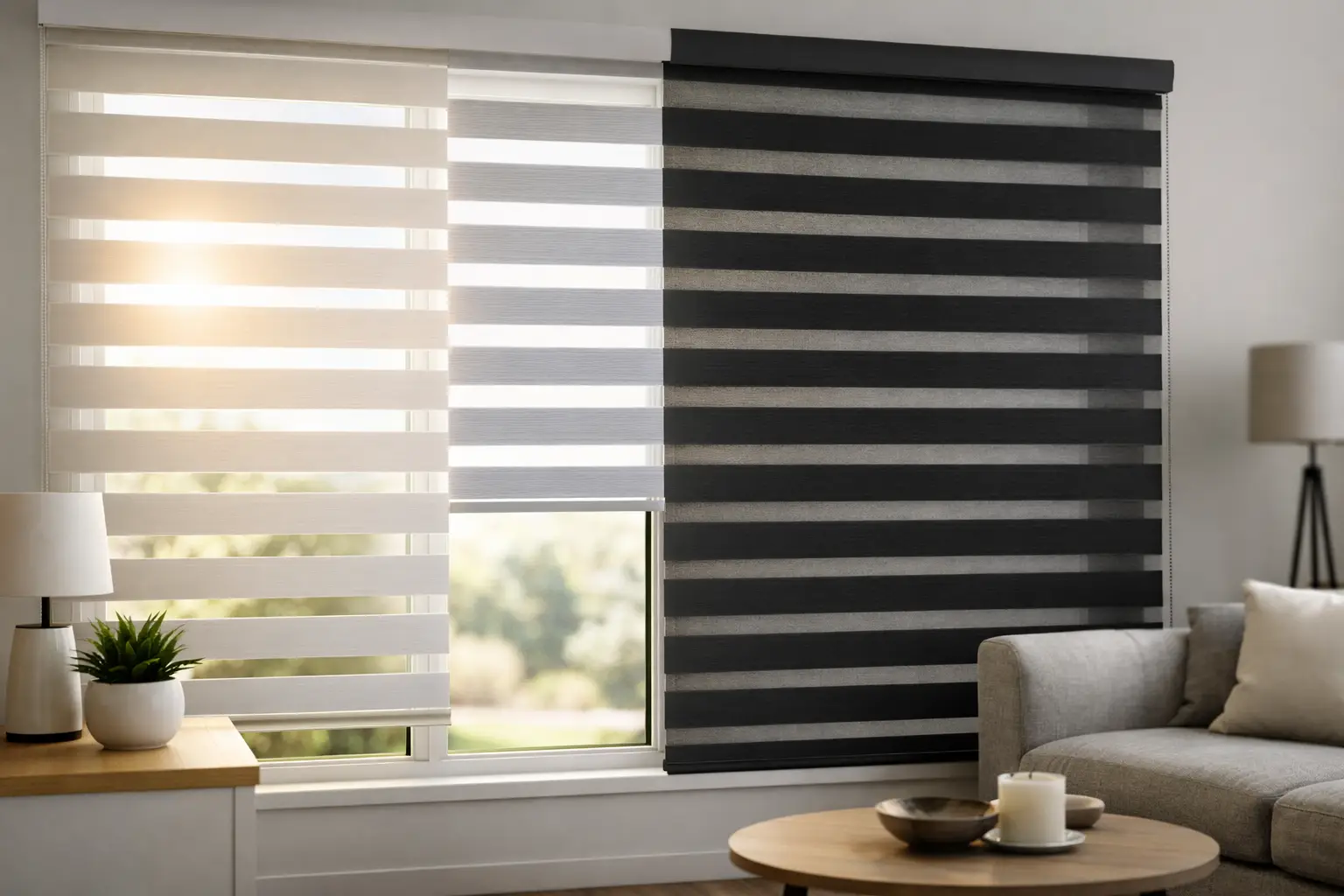
A bright south-facing lounge can feel welcoming at breakfast and uncomfortably exposed by lunchtime. A bedroom may need gentle daylight during the morning but dependable privacy once the lights are on. Day and night blinds are designed for exactly this kind of changing demand, giving you more control than a standard roller blind without making the window feel heavy.
Also known as vision blinds or zebra blinds, they suit homes and workplaces where light, privacy and a clean modern finish all matter. Their appeal is simple: one blind can soften the view, let in filtered light or close the room off, depending on how you position it.
How day and night blinds work
Day and night blinds use a continuous length of fabric made with alternating sheer and opaque horizontal strips. As the blind moves, these strips line up in different ways. Align the sheer sections and daylight can pass through while glare is reduced. Align the opaque sections and the view into the room is blocked for stronger privacy and shade.
The fabric can also be raised fully when you want an open window. This gives day and night blinds a useful middle ground between curtains and conventional roller blinds. You are not limited to choosing between fully open and fully closed every time the sun moves around the house.
That flexibility is particularly useful in living rooms, kitchens and home offices. You can keep a pleasant level of natural light while reducing screen glare, or protect a dining area from harsh afternoon sunshine without making it feel dark.
Where day and night blinds work best
These blinds are a strong choice for windows that are regularly overlooked, exposed to direct sunlight or used throughout the day. In Coventry and across the West Midlands, many properties have extensions, bay windows and rear-facing glazed doors where privacy can change quickly as evening falls. A made-to-measure blind allows the fabric and operating position to be tailored to the window rather than relying on a near-enough off-the-shelf size.
Living rooms and open-plan spaces
In a lounge, day and night blinds help retain daylight while taking the edge off bright sun. Neutral shades such as white, stone, grey and soft beige tend to sit easily with changing décor, while darker fabrics can give a sharper, more defined look around contemporary windows.
For open-plan kitchen-diners, they are practical because the blind can remain partially open during the day. You still get light into the room, but with more privacy than bare glass offers. Consider wipeable or easy-care fabric where the blind will sit close to cooking areas.
Bedrooms
A day and night blind can give a bedroom a calm, layered appearance and better control over early daylight than a sheer curtain alone. However, there is an important trade-off: standard day and night fabrics do not usually create total blackout. Light can pass through the sheer stripes, and a small amount can enter around the edges of any blind.
For a nursery, shift-working household or anyone sensitive to light, a blackout roller blind may be the more dependable option. Some customers choose a day and night blind for daytime privacy alongside curtains, or select a blackout solution where sleep is the priority. The right choice depends on whether flexible light control or the darkest possible room matters most.
Home offices and commercial premises
Screens, sunlight and privacy can be difficult to balance in offices, salons, clinics and meeting rooms. Day and night blinds make it easier to diffuse daylight rather than shutting it out altogether. This can create a more comfortable working environment and present a smart, consistent finish to customers and visitors.
For larger commercial windows, the size, bracket position and regular use of the blind all need careful consideration. Professional measuring is especially valuable here, as a blind that catches on a sill, handle or nearby fitting will quickly become frustrating in a busy workspace.
Choosing the right fabric, colour and finish
The fabric colour affects both the room’s appearance and the way light feels inside it. Light shades maintain an airy look and work well in smaller rooms, though they may offer less visual screening at night when indoor lights are on. Mid-tone and darker opaque bands generally provide a stronger sense of privacy and can work well with black frames, feature walls and modern interiors.
Texture matters too. A plain fabric creates a neat, understated result, while a subtle woven finish can add warmth without competing with wallpaper or furnishings. It is worth viewing samples against the window at different times of day. The same grey can look cool in a north-facing room and much warmer in afternoon sun.
Headrail and control options should be chosen for daily use, not just appearance. A chain-operated blind is straightforward and reliable. Motorised operation can be a worthwhile addition for hard-to-reach windows, wide openings or homes where convenience is a priority. It also removes hanging control chains, which may be preferable in family spaces.
Why accurate measuring makes a difference
Day and night blind fabric runs through a headrail and needs enough clearance to operate smoothly. The available space above the window, the depth of the recess, the position of handles and whether the blind is fitted inside or outside the recess all affect the finished result.
A recess fit can look tidy and integrated, but only when the recess is suitable and measurements are exact. An outside-recess fit is often a better solution where the window is shallow, uneven or likely to let too much light around the sides. It can also make a modest window appear larger.
This is why a home appointment is useful. Rather than working from a tape measure and a product photo, you can compare fabrics in the room, discuss how you use the space and get advice on the fitting method. Queen Blinds provides professional measuring and fitting as part of a straightforward made-to-measure service, helping avoid gaps, poor operation and costly ordering mistakes.
Day and night blinds versus other blind styles
No single blind is right for every room. Day and night blinds are often chosen for their adaptable light control and contemporary finish, but other styles may suit a specific need better.
Roller blinds are usually the better option when blackout, moisture resistance or a simple single-fabric look is the priority. They work particularly well in bathrooms, bedrooms and kitchens, depending on the fabric chosen. Venetian blinds offer precise tilt control and a more structured appearance, while vertical blinds remain a practical choice for wide windows and patio doors.
If insulation is a key concern, ask about fabric choices and the fit around the window. Blinds can help reduce glare and provide an extra layer at the glass, but they are not a substitute for good glazing or draught-proofing. Their effect on warmth will vary with the window, fabric and how closely the blind is fitted.
Care and everyday use
Day and night blinds are low-maintenance, but gentle care keeps the alternating fabric stripes looking their best. Regularly dust the blind with a soft brush attachment on low suction or use a clean, dry microfibre cloth. Avoid pulling the fabric sharply or using harsh cleaning products, as these can mark or damage the material.
Operate the blind steadily and make sure furniture does not catch the lower bar. If the blind is installed near a kitchen, deal with marks promptly using the cleaning advice supplied for the specific fabric. A well-fitted blind should move smoothly and sit evenly, making everyday use uncomplicated.
The best window covering is one that suits how the room actually works – not just how it looks in a photograph. If you want filtered daylight, privacy on demand and a neat made-to-measure finish, day and night blinds are well worth seeing in your own window before you decide.