


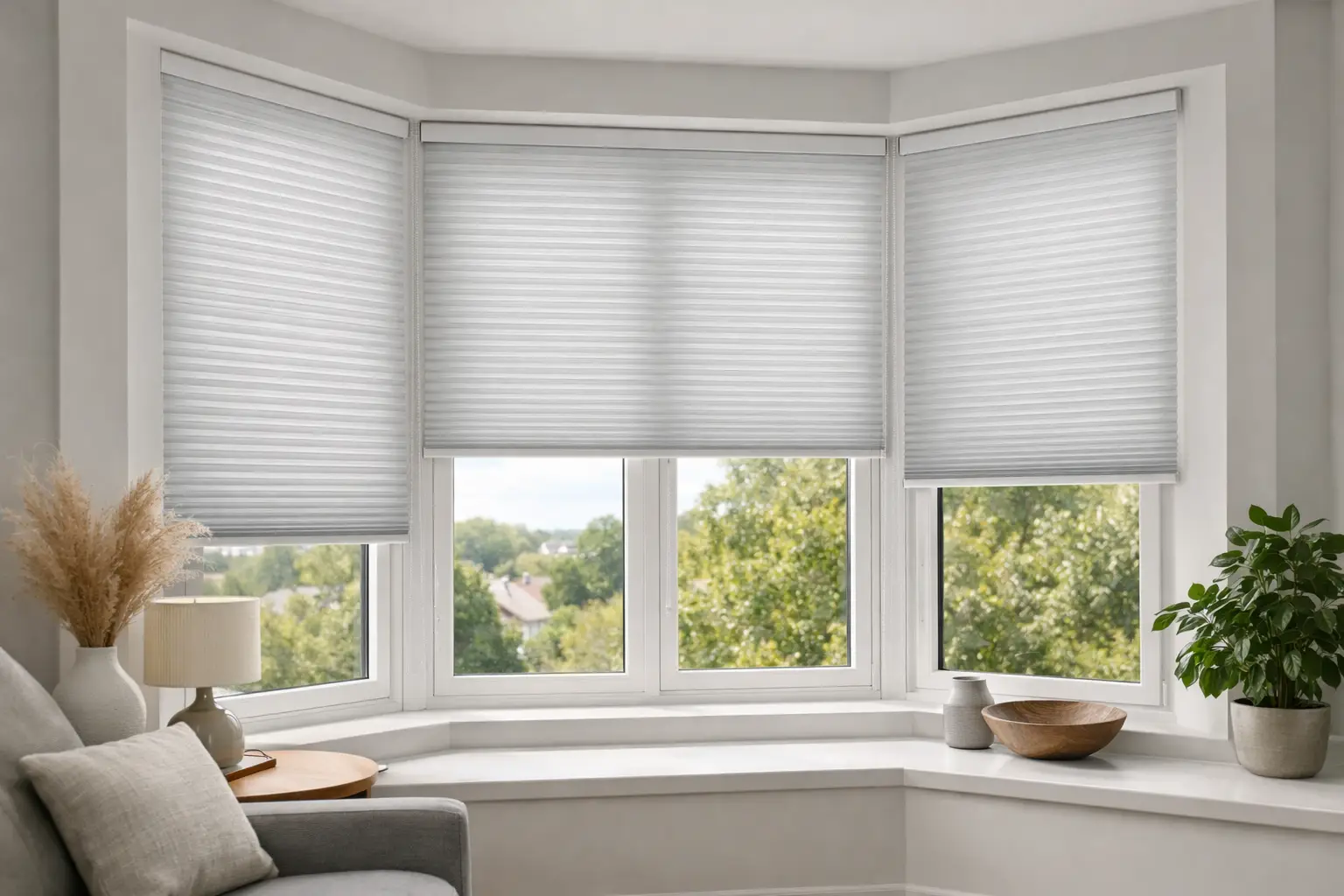
Bay windows can make a room feel bigger, brighter and more characterful, but they are rarely the easiest windows to dress. The angles, multiple panes and projecting shape mean off-the-shelf options often fall short. That is why fitted blinds for bay windows are usually the smartest choice if you want a clean look, reliable privacy and smooth day-to-day use.
A bay window needs more than a blind that simply covers glass. It needs a solution that respects the shape of the window, works with the room and gives you proper control over light and privacy. In practice, that usually means made-to-measure blinds fitted with care, rather than trying to force a standard product into an awkward space.
Why fitted blinds for bay windows make sense
The main benefit of a fitted blind is precision. Bay windows are made up of separate sections, and each section may need its own blind to follow the lines of the frame properly. When blinds are measured and fitted to suit each pane, you avoid the gaps, bunching and uneven finish that can happen with ready-made options.
There is also the issue of movement. Bay windows are often in living rooms, dining rooms and front bedrooms where blinds get used every day. A well-fitted blind should open and close smoothly without catching on handles, rubbing against walls or sitting at odd angles. That matters not only for appearance, but for long-term durability too.
From a style point of view, fitted blinds help a bay window look intentional. Rather than dominating the feature, they can work with it. The right choice will soften strong lines, keep the space tidy and still let the architecture of the bay stand out.
Which blinds suit a bay window best?
There is no single answer for every bay. The right option depends on the shape of the window, how much light you want, whether privacy is a priority and how the room is used.
Roller blinds for a neat, modern finish
Roller blinds are a popular option for bay windows because they are simple, compact and easy to tailor to each section. Fitted individually across the panes, they create a tidy look without adding bulk. They work especially well in living rooms, bedrooms and offices where a clean finish matters.
They also offer a lot of flexibility in fabric choice. If the bay is in a bedroom or a room that gets strong morning sun, blackout fabrics can make a real difference. In living spaces, a light-filtering fabric may feel better, giving privacy without making the room feel closed in.
The trade-off is that roller blinds tend to give a flatter, more minimal appearance. If you want more texture or a more classic look, another style may suit the room better.
Venetian blinds for adjustable light control
Venetian blinds are often a strong choice for bay windows because they let you angle the slats and manage light throughout the day. That is useful in bays that face the street or catch direct sunlight, where you may want privacy without losing every bit of daylight.
Aluminium and wooden-look composite styles both work well, depending on the room. Composite slats are particularly practical where you want the appearance of wood with easier maintenance and good resistance to moisture or everyday wear.
The point to consider with Venetian blinds is spacing. In a bay with several narrow sections, the stack and slat size need to be chosen carefully so the blinds do not feel too busy. Accurate measuring makes a big difference here.
Vertical blinds for wider bay sections
Vertical blinds are sometimes associated more with offices, but they can work very well in certain bay windows, especially wider ones. They offer excellent light control, practical coverage and a straightforward look that suits both commercial spaces and modern homes.
For commercial properties, meeting rooms and reception areas, vertical blinds can be particularly useful because they are easy to operate and maintain. In homes, they tend to work best where practicality comes first and where the bay is broad enough for the vanes to hang well.
They are less suited to very decorative bays or smaller period windows where a softer, more compact blind would feel more in keeping.
The details that matter more than people expect
When customers start looking at blinds, they often focus first on colour or fabric. That is understandable, but with bay windows the finer practical details can make or break the result.
Window handles are one of the most common examples. A blind may look perfect on paper, but if it catches on handles every time you use it, it quickly becomes frustrating. The depth of the recess, the opening style of the windows and the position of each handle all need to be taken into account.
Then there is the question of privacy. Bay windows usually sit at the front of a property, which means they bring in plenty of natural light but also expose the room more directly to passers-by. Some households want full privacy in the evening, while others want a softer daytime screen that still keeps the room bright. The best fitted blinds for bay windows are not just cut to size – they are chosen around how the room is actually lived in.
Insulation is another factor worth thinking about. Large bay windows can lose heat, particularly in older properties. The right blind will not replace proper glazing, but it can help reduce draughts and improve comfort. This is especially useful in bedrooms and living rooms where you notice temperature changes more.
Why measuring a bay window is rarely straightforward
Bay windows can look symmetrical while hiding small variations from one section to the next. A few millimetres can affect how a blind sits, especially if you want a fitted finish inside the recess or close to the frame. Angles, bead depth, frame shape and fixing positions all come into play.
This is why professional measuring is often the safest route. It removes the guesswork and helps avoid common problems such as overlapping blinds, uneven gaps or blinds that obstruct the opening of the windows. For many homeowners and landlords, it is not just about accuracy. It is also about saving time and avoiding the cost of getting it wrong.
For properties across Coventry and the wider West Midlands, having someone assess the bay in person can be particularly useful in older homes where window shapes are less standard. A tailored recommendation often gives a far better result than choosing by photo alone.
Style should suit the room, not just the window
A bay window is a feature, but it still needs to work with the wider room. In a contemporary space, a neutral roller blind can keep things crisp and understated. In a more traditional setting, a Venetian blind may add the structure and texture the room needs. In family homes, practicality often leads the decision, with easy-clean finishes, child-safe operation and durable materials higher on the list than trend-led looks.
Commercial settings need a slightly different approach. Offices, clinics and customer-facing spaces usually need blinds that look polished, reduce glare and stand up well to regular use. A bay window in a workspace still deserves a tailored solution, but the balance tends to lean more towards function and consistency.
At Queen Blinds, this is where a proper consultation makes a difference. Instead of choosing a blind in isolation, customers can match the product to the room, the building and the way the space is used every day.
Motorised options for hard-to-reach bays
Some bay windows include deep sills, furniture in front or sections that are simply awkward to reach. In those cases, motorised blinds can be a practical upgrade rather than a luxury. They make daily operation easier, help maintain a neat appearance and are particularly useful in bedrooms, lounges and commercial spaces where convenience matters.
They are not necessary for every bay window, and a manual blind may still be the most sensible choice where budgets are tighter. But where ease of use is a priority, motorisation is worth considering from the outset rather than as an afterthought.
Getting the finish right
The best bay window blinds do not call attention to the compromises behind them. They look balanced, sit neatly and feel easy to live with. That usually comes down to good advice, accurate measuring and proper fitting just as much as the product itself.
If you are choosing fitted blinds for bay windows, it helps to think beyond the first impression. Consider how much privacy you need, how the light changes through the day, whether the room needs blackout or insulation, and how often the blinds will be used. Once those practical questions are answered, the right style becomes much easier to choose.
A bay window should feel like one of the best parts of the room, not the part you keep meaning to sort out.