


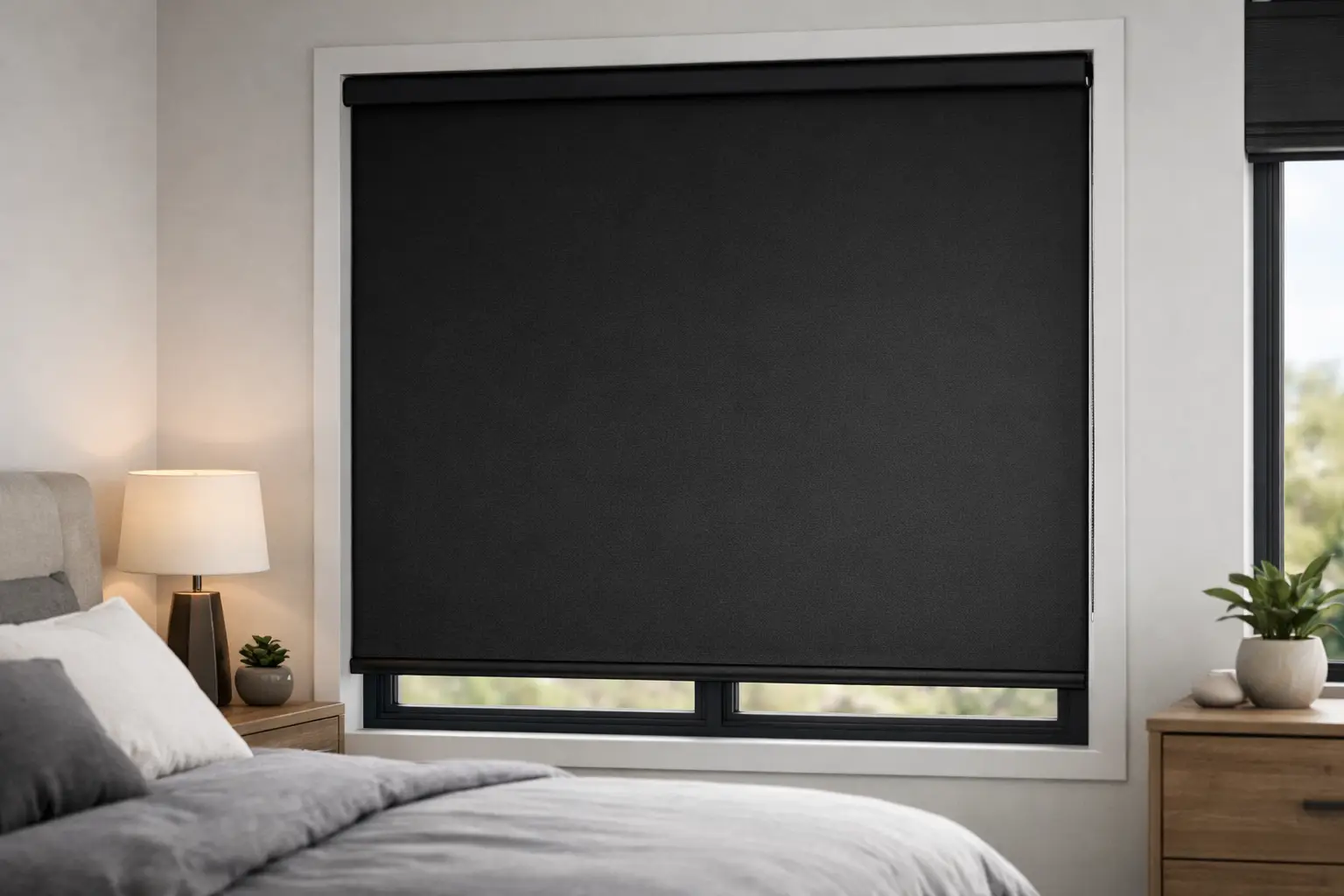
A bright streetlamp, an early summer sunrise or a neighbour’s security light can turn a well-decorated bedroom into a room that never properly settles. Custom blackout roller blinds are designed to solve that problem with a clean, practical finish: fabric chosen for light control, a blind made to your window’s dimensions, and fitting that avoids the gaps and awkward operation often associated with off-the-shelf options.
For homes across Coventry and the West Midlands, they are a popular choice for bedrooms, nurseries, loft rooms and media spaces. They also work well in offices, meeting rooms and hospitality settings where glare, privacy and a tidy appearance all matter. The difference is not simply having a darker fabric. It is choosing a blind that suits how the room is used and fits accurately from the start.
What custom blackout roller blinds actually do
Blackout roller blind fabric is made to block light passing through the material itself. This makes a noticeable difference compared with standard translucent or light-filtering fabrics, which soften daylight but still allow a glow into the room. A blackout fabric can help create the darker environment many people want for sleeping, shift work, children’s daytime naps or watching a film without reflections on the screen.
However, “blackout” does not always mean total darkness. Light can still enter around the edges of the blind, particularly where a window recess is uneven, the blind sits outside the recess, or there is a large gap at the top. This is where made-to-measure advice matters. Accurate measuring helps minimise edge gaps and ensures the blind is positioned for the best possible coverage.
Roller blinds also offer privacy when lowered, a simple wipe-clean surface and a neat profile that does not crowd the window. Unlike heavier curtains, they take up very little space and can suit everything from contemporary extensions to compact flats and rental properties.
Why made-to-measure fitting is worth it
It can be tempting to choose a ready-made blind and cut it down at home. For a small temporary window covering, that may be enough. But blackout performance is especially sensitive to fit, so a few millimetres can make a visible difference.
A bespoke blind is produced around the width and drop of your window, with the correct allowance for the fitting position. The chain or control can be placed on the side that is most convenient, and the finished blind is selected with the room’s use in mind. A bedroom overlooking a busy road may need the greatest light reduction, while a home office might need blackout capability only for presentations or screen glare.
Professional measuring also accounts for details that are easy to miss. Window handles, deep sills, tiles, opening direction, recess depth and nearby furniture can all influence whether a blind should sit inside or outside the recess. The right decision improves both daily use and the finished appearance.
At Queen Blinds, a free home appointment gives customers the chance to see suitable fabrics, discuss the level of darkness they need and receive a recommendation based on the actual window rather than an estimate taken online. Measuring and fitting are handled as part of the service, which removes much of the uncertainty.
Choosing the right blackout fabric and finish
Blackout roller blinds are available in far more than plain dark colours. In fact, a pale cream, soft grey or patterned fabric can still provide blackout performance when it has the correct backing. This means you do not have to make a room feel dark during the day in order to achieve better sleep at night.
For bedrooms, calmer shades often create a restful look while still giving strong coverage once the blind is down. Children’s rooms can take brighter colours or playful prints, but it is worth choosing a finish that will still suit the room as they grow. In a living room or cinema room, richer tones may help reduce glare and complement the rest of the décor.
The fabric should also be practical for its setting. Moisture-resistant, wipeable materials are useful in kitchens and bathrooms, although total blackout is not always necessary in those rooms. In a commercial setting, neutral colours can provide a professional appearance while helping staff work more comfortably near screens.
Recess fit or face fit?
A recess fit sits inside the window recess and gives a contained, tidy appearance. It is often the preferred option where the recess is deep enough and the window can still open comfortably. Because the blind sits within the opening, some light may remain visible at the sides.
A face fit is installed above and beyond the window recess. It can provide greater overlap, making it a strong option where reducing light around the edges is a priority. It is also useful where a recess is shallow, obstructed or uneven. The trade-off is that the blind becomes a more visible feature on the wall, so the chosen fabric and bracket position need to look considered.
Neither approach is automatically better. The most suitable choice depends on the window, the amount of light control required and the look you want in the room.
Comfort, insulation and privacy beyond bedtime
The main reason people choose blackout blinds is usually sleep, but the benefits do not stop there. Closed blackout fabric provides an additional layer at the window, which can help a room feel more comfortable when temperatures change. It will not replace proper insulation or double glazing, but it can reduce the feeling of cold radiating from glass in winter and limit harsh sunlight during warmer months.
That sunlight control also helps protect furnishings. Strong daylight can fade fabrics, flooring and artwork over time, particularly in south-facing rooms. Lowering a blackout blind during the brightest part of the day can help reduce direct exposure while giving the room a more comfortable atmosphere.
Privacy is another advantage, especially for ground-floor rooms and properties facing a road or neighbouring homes. When fully lowered, the opaque fabric prevents people from seeing through the window. If you need daylight and privacy at the same time, a blackout roller blind can be combined with curtains or a separate sheer solution, depending on the room layout.
Manual or motorised operation?
A standard side-chain roller blind is dependable, straightforward and well suited to most windows. It is easy to use and provides precise control over the blind height. For family homes, safety components are fitted to keep chains secure and out of reach of young children.
Motorised operation can be an excellent option for tall windows, hard-to-reach areas or customers who want more convenience. A motorised blackout blind can be controlled by remote, wall switch or smart-home system, depending on the selected product. It can be particularly useful in bedrooms, where a timed routine can lower blinds in the evening and raise them in the morning.
The choice comes down to budget, access and how often the blind will be used. Motorisation adds convenience and a polished finish, but a well-fitted manual blind remains a reliable, cost-effective option for many properties.
Where blackout roller blinds work best
Bedrooms are the obvious choice, particularly for light sleepers, young children and anyone working nights. Yet other rooms benefit too. A loft conversion with roof windows can become far more usable when bright morning light and summer heat are managed effectively. Home cinemas and gaming rooms benefit from reduced screen glare, while a study can feel more focused during video calls or presentations.
For commercial premises, blackout roller blinds are useful in boardrooms, training spaces, clinics and education settings. They allow staff to darken a room for a projector, protect privacy where needed and maintain a clean, professional look when raised.
Landlords can also find them a sensible upgrade. Roller blinds are compact, low-maintenance and easy for tenants to operate. Selecting a durable neutral fabric can give a property a finished appearance without relying on a one-size-fits-all solution.
Getting the best result from your installation
The strongest blackout effect comes from matching the product to the room rather than choosing by colour alone. Consider when light causes the most difficulty, whether the window is in a recess, and how much edge glow you are prepared to accept. If total darkness is the goal, discuss a face fit with adequate overlap and consider pairing the blind with curtains for additional coverage.
It is equally worth thinking about everyday use. A blind behind a bed frame or desk may be difficult to operate manually, while a blind installed near a radiator or in a humid room may require a more suitable fabric. These small decisions are easier to make during a proper survey than after installation.
A blackout roller blind should make a room easier to live in, not simply darker. With the right fabric, accurate measurements and professional fitting, it can bring better rest, greater privacy and a smart finish that feels made for the space.