


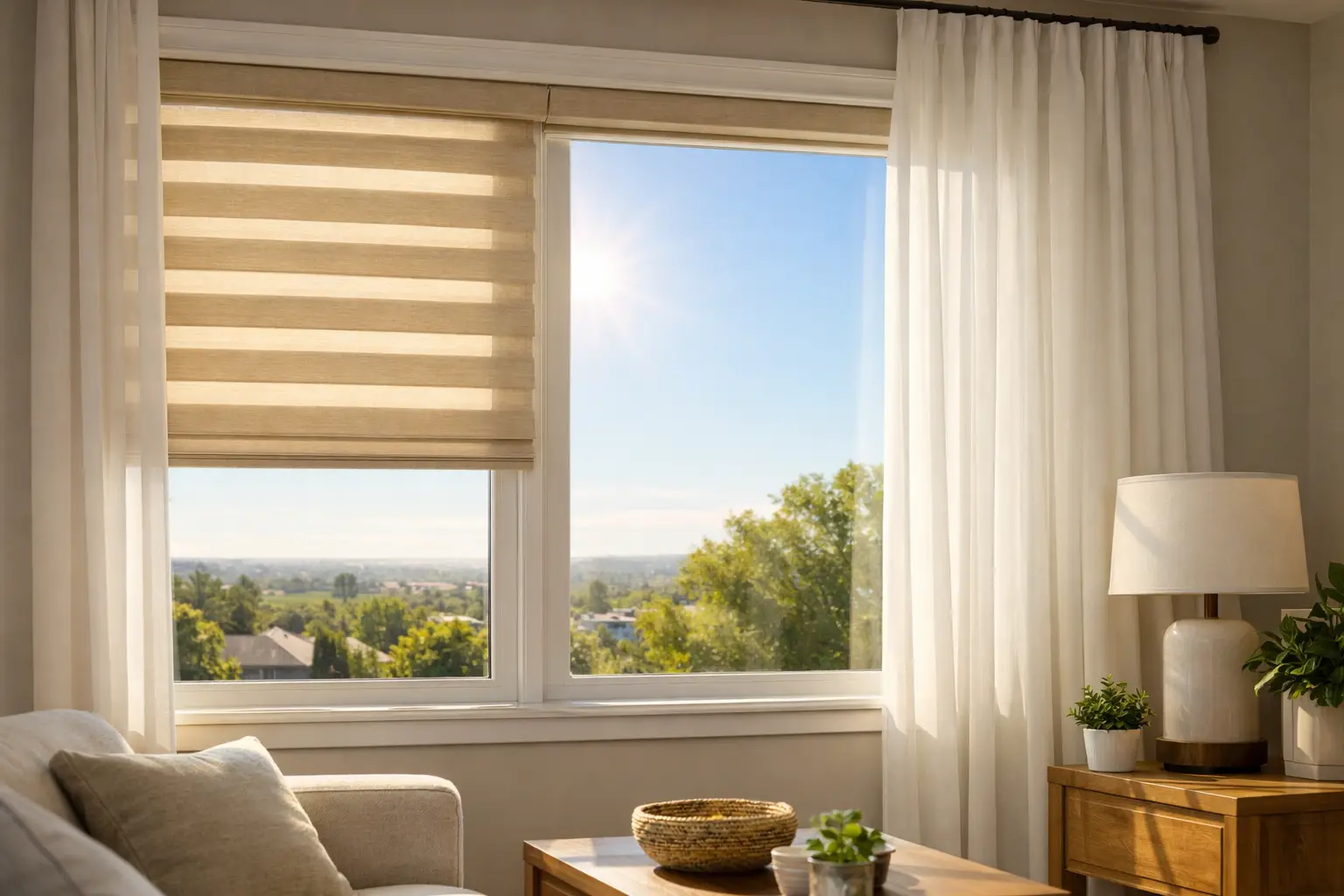
By mid-afternoon, a south-facing room can go from bright and welcoming to uncomfortably hot, full of glare and hard to use properly. Choosing the right blinds for south facing rooms is less about simply covering a window and more about managing heat, light, privacy and day-to-day comfort in a way that suits how the room is actually used.
That matters whether you are updating a family living room in Coventry, fitting out a garden-facing kitchen in Rugby, or improving a workspace where screens are hard to see once the sun moves round. South-facing windows bring plenty of natural light, which is a real asset, but they also put more pressure on your window coverings to perform well throughout the day.
Why south-facing rooms need a different approach
A south-facing room typically gets the strongest and most consistent sunlight. In practice, that means higher temperatures, more noticeable glare and greater UV exposure on flooring, furniture and soft furnishings. The room may feel pleasant in winter, when extra daylight and warmth are welcome, but in spring and summer the same window can make the space uncomfortable without effective shading.
This is why off-the-shelf blinds often fall short. A blind that looks good in a showroom may not cope well with direct sun, wide glass areas or awkward recess depths. The right choice depends on the balance you want between filtering daylight and blocking it, as well as how much insulation, privacy and visual softness you need.
Best blinds for south facing rooms
There is no single answer for every property, but some blind styles are especially well suited to sunny aspects.
Roller blinds for simple, effective control
Roller blinds are one of the most practical options for south-facing spaces because they can be tailored very precisely to the level of light control you need. A blackout roller blind is a strong choice for bedrooms, nurseries and media rooms where direct sun quickly becomes disruptive. In living areas or kitchens, a sunscreen or dimout fabric can work better if you want to cut glare without making the room feel closed in.
The fabric makes a big difference. Lighter reflective backings can help reduce solar gain, while specialist UV-protective materials help protect interiors from fading. Roller blinds also suit modern homes and commercial settings because the finish is clean and uncluttered.
Venetian blinds for adjustable light throughout the day
Venetian blinds are particularly useful when the main issue is glare rather than a need for full blackout. Because the slats can be tilted, you can soften direct sunlight while still allowing some daylight into the room. That flexibility is useful in home offices, kitchens and lounges where light levels change over the course of the day.
Aluminium Venetian blinds tend to suit contemporary and commercial interiors, while wooden-look composite designs offer a warmer appearance with good durability. Composite slats are often a sensible option in south-facing rooms because they cope well with heat and are low maintenance.
Vertical blinds for larger windows and doors
If the room has wide windows, patio doors or a glazed extension, vertical blinds are often worth considering. They give good control over both light and privacy, and they are especially effective on broad openings where smaller blind styles can feel visually busy.
Vertical blinds are sometimes overlooked in domestic settings, but modern fabric ranges are far more stylish than many people expect. They can soften harsh light without fully darkening the room, which makes them a practical option for dining spaces, conservatory-style rooms and offices.
What matters most when choosing blinds for south facing rooms
The blind style is only part of the decision. Performance comes down to materials, fit and how you plan to use the space.
Heat reduction
If the room becomes too warm in sunny weather, look for blinds with thermal or reflective properties. Blackout and lined fabrics can help, but the best result often comes from a made-to-measure fit that limits light gaps around the edges. Blinds alone will not turn a hot room cool, but they can noticeably reduce heat build-up and make the space easier to manage.
Glare control
In rooms with televisions, laptops or polished surfaces, glare can be more frustrating than brightness itself. Venetian and vertical blinds are often strong performers here because they let you redirect light rather than simply block it. In some rooms, that is more useful than full blackout.
Privacy without losing daylight
South-facing windows do not always mean a loss of privacy, but if the room faces a road or neighbouring property, you will need a blind that can do both jobs. Light-filtering roller fabrics and tilting slat systems can offer a better balance than heavy blackout options in daytime spaces.
Protection from fading
Strong sunlight can bleach wood floors, rugs, sofas and painted finishes over time. UV-resistant fabrics are worth considering in any room with prolonged direct sun, particularly if you have invested in furnishings you want to preserve.
The room makes a difference
The best blinds for south facing rooms depend heavily on what happens in the room each day.
In a bedroom, the priority is usually sleep quality and temperature control. Blackout roller blinds are often the most practical choice, especially when made to measure for close fitting. In a child’s room, safety features matter just as much as shading, so professionally fitted blinds with child-safe operation are well worth prioritising.
In a lounge, the goal is often more balanced. You may want to reduce glare on the television, protect furniture and keep the room comfortable, while still making the most of natural light. This is where Venetian blinds or a carefully chosen roller fabric can offer the best compromise.
In kitchens and dining areas, durability and easy cleaning tend to matter more. Composite Venetian blinds or wipe-clean roller blinds are often a good fit because they stand up well to everyday use. If the room opens onto the garden, vertical blinds can make larger glazed areas easier to manage.
In offices, clinics and other commercial settings, glare control and presentation are usually the key concerns. A blind that looks tidy and professional but also helps staff work comfortably can make a noticeable difference. Motorised options are worth considering in meeting rooms or on hard-to-reach windows where convenience matters.
Made-to-measure blinds are usually worth it here
South-facing rooms are one of the clearest examples of where precise fitting matters. Small gaps at the sides of a blind can let in a surprising amount of light and heat, especially during the brightest part of the day. A made-to-measure blind gives a cleaner finish and generally performs better than a standard-size alternative.
It also makes the design process easier. Window recess depth, handle clearance, door access and the direction of sunlight all affect what will work best. A professional measuring and fitting service helps avoid the common problem of choosing a blind that looks right on paper but is less practical once installed.
For many customers, that is the real value of a local specialist. Instead of guessing which fabric, slat width or fitting style might work, you get tailored advice based on the room, the window and your priorities. At Queen Blinds, that practical, start-to-finish approach is often what gives customers confidence to choose blinds that look right and work properly.
Style still matters
Performance is essential in a sunny room, but the blind still needs to suit the space. The good news is that practical blinds do not have to feel purely functional. Neutral roller fabrics can keep a room light and calm, while textured weaves add softness without fuss. Venetian blinds bring sharper lines and a more architectural look, especially in kitchens and modern extensions.
If your room already gets plenty of sunlight, you do not always need a bold blind to make an impact. Often, a quieter finish works better because it lets the shape of the room and the daylight do the work. In more traditional interiors, wood-effect finishes can add warmth without the maintenance concerns of real timber in hotter spaces.
A few trade-offs to keep in mind
There is always some compromise between light, heat control and openness. Blackout blinds are excellent for reducing brightness, but they can make a room feel more closed during the day. Slatted blinds offer flexibility, but they may not block as much heat or light as a close-fitting blackout fabric. Light-filtering blinds keep the room bright, but they will not give the same level of protection against strong afternoon sun.
That is why the best choice usually comes down to the room’s main problem. If overheating is the issue, prioritise thermal performance and coverage. If glare is the problem, adjustable slats may be more useful. If you want a balance of both, a carefully selected roller fabric often provides the neatest answer.
A south-facing room should be one of the best spaces in the property, not the one everyone avoids on hot days. With the right blind, you can keep the light you want, cut the discomfort you do not, and make the room far easier to enjoy all year round.