


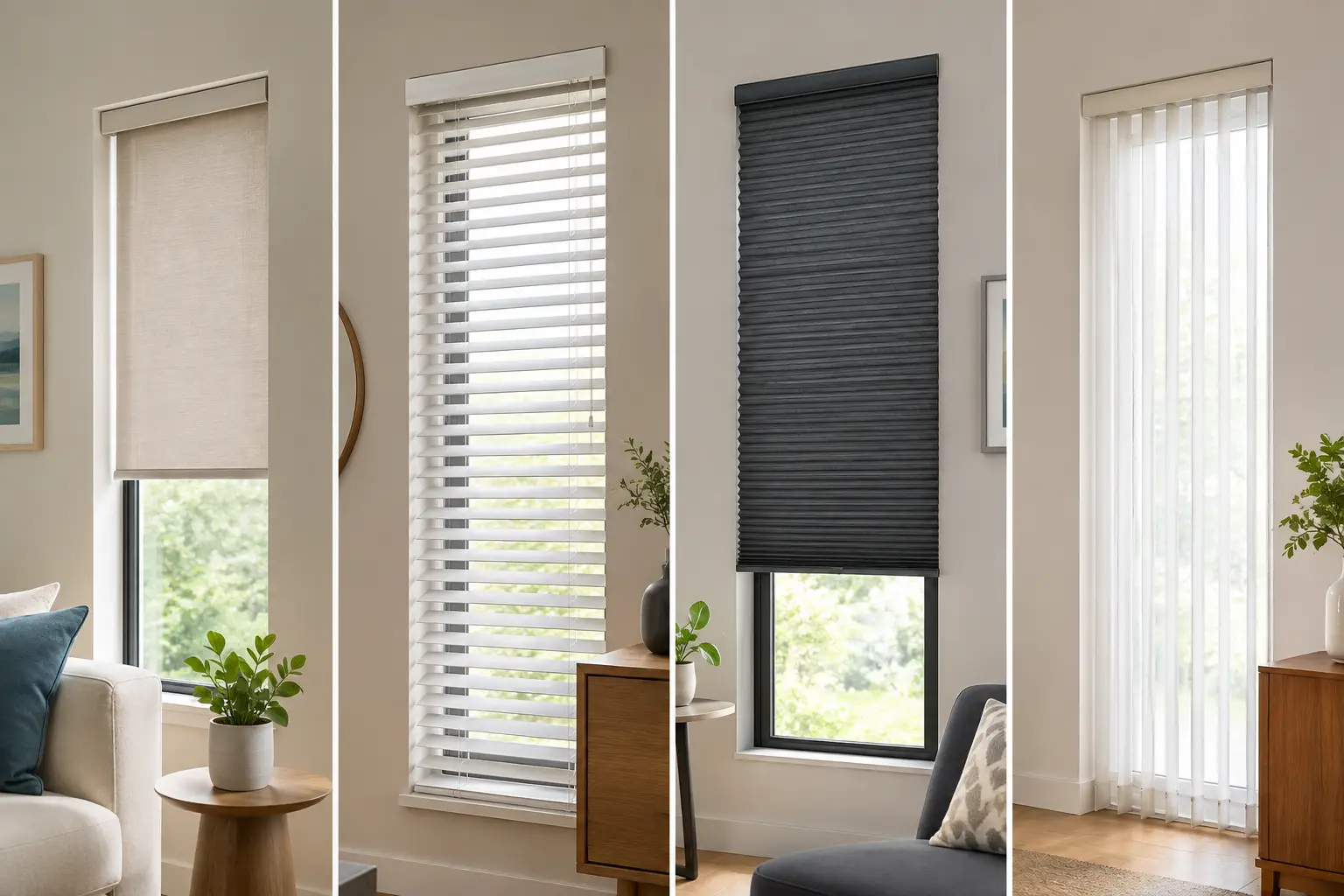
A narrow window can be one of the easiest details to overlook during a renovation, yet it can have a big effect on privacy, light and the finished look of a room. The best narrow window blind options are not simply the smallest standard blind available. They are made to the exact width, installed with enough clearance to operate properly, and chosen to suit how that particular room is used.
Whether the window sits beside a front door, above a kitchen worktop, in a bathroom or along a stairway, a tailored blind gives it a purposeful finish. It can soften harsh sunlight, stop neighbours looking in and make an awkwardly proportioned window feel like part of the overall design.
Why narrow windows need a more careful approach
Slim windows leave very little margin for error. A blind that is even slightly too wide may catch on surrounding tiles, a door frame or a window handle. One that is too narrow can leave visible gaps at the sides, reducing privacy and allowing unwanted light through.
The depth of the window recess matters as much as the width. Some recesses have limited space because of handles, vents or shallow frames. In those cases, the way the blind is mounted can be more important than the product itself. A professional measure considers the full opening, the clear operating space and where the blind will sit when raised or stacked.
Narrow windows also tend to be positioned where practical demands are high. A bathroom window needs moisture-resistant materials and privacy. A sidelight by the entrance may need daytime light without giving a clear view into the home. A small office window may need glare control without making the workspace feel closed in.
Narrow window blind options for different needs
Roller blinds for a clean, compact finish
Roller blinds are often the most straightforward choice for narrow windows. Their simple design makes good use of limited space, and when raised, the fabric rolls neatly at the top of the window rather than gathering at the sides. This is particularly useful for windows close to doors, cupboards or shelving.
A made-to-measure roller blind can be selected in a wide choice of colours, prints and fabric finishes. Light-filtering fabrics suit kitchens, hallways and living spaces where you want to reduce glare while keeping the room bright. Blackout roller blinds are a stronger option for bedrooms, nurseries and rooms where light control is the priority.
For bathrooms and utility rooms, moisture-resistant roller fabrics offer a practical, low-maintenance solution. They wipe clean easily and provide privacy without adding unnecessary bulk around a compact window.
Venetian blinds for adjustable light and privacy
Venetian blinds work especially well where privacy needs can change through the day. By tilting the slats, you can direct sunlight upwards, reduce glare or block direct views from outside while still allowing daylight into the room.
For narrow openings, a slimmer slat size can look more in proportion than broad slats. Aluminium Venetian blinds are a popular choice for kitchens, bathrooms and commercial spaces because they are durable, easy to maintain and available in colours that can complement modern or traditional interiors.
Wooden-look composite Venetian blinds bring a warmer appearance while offering a more practical finish for areas exposed to humidity. They can be a good fit for a bathroom with a timber-effect interior or a kitchen where real wood may be less suitable. The trade-off is that Venetian blinds need sufficient recess depth and room for the slats to stack when opened, so accurate measuring is essential.
Vertical blinds for taller, narrow openings
Vertical blinds are often associated with large patio doors, but they can also be an effective solution for tall, narrow windows. They suit stairwell windows, full-height glazing and narrow windows beside entrance doors, particularly where you need strong privacy control.
The vertical louvres can be tilted to control the view and light, then drawn to one side when you want the window fully clear. Their tall lines can make a narrow window appear more balanced, especially in spaces with high ceilings. For a very small window, however, a roller or Venetian blind may feel neater, as vertical blinds need enough width for the louvres to sit comfortably.
Choosing the right fabric, finish and control
The right blind is about more than its dimensions. Fabric and finish determine how the blind performs every day. A translucent roller fabric maintains a lighter feel in a hallway or landing, whereas blackout fabric is better suited to bedrooms where early morning light is unwelcome.
If the window receives strong sunshine, UV-protective materials can help reduce fading on flooring, furniture and soft furnishings. Insulating layers can also improve comfort around windows that feel cold in winter or warm in direct afternoon sun. On a narrow window, these practical features are often more valuable than a decorative extra because the blind may be serving a very specific purpose.
Consider how the blind will be used, too. A manually operated blind is simple and reliable for most smaller windows. Motorised control can be a useful choice for high, hard-to-reach or multiple narrow windows, such as those in an extension, stairwell or office. For family homes, child-safe operating options should always be considered, particularly in bedrooms and play areas.
Recess fit or face fit: what works best?
A recess fit places the blind within the window opening. This usually creates a tidy, built-in appearance and is a good choice where the recess is deep enough and clear of handles or obstructions. It can be particularly effective for a narrow bathroom or kitchen window, where keeping the blind close to the glass preserves wall space.
A face fit is mounted outside the recess, either on the wall above or directly onto the frame where suitable. This approach can cover more of the opening and reduce side light gaps. It is often the better answer when the recess is shallow, the window has protruding handles, or privacy is more important than a minimal look.
There is no one-size-fits-all answer. The same style of window can need a different fitting method depending on the frame, surrounding finishes and the blind type selected. Measuring only the glass is a common mistake and can lead to a blind that does not provide the coverage or clearance you expected.
Matching narrow blinds to each room
In kitchens, choose a finish that is easy to wipe and will not interfere with cupboards or taps. Roller and aluminium Venetian blinds are usually practical choices. For bathrooms, moisture resistance and privacy come first, making roller blinds and composite Venetian options particularly suitable.
Bedrooms benefit from blackout fabrics where sleep quality is a concern, while a narrow living room window may call for a softer light-filtering roller blind that complements the wider scheme. In an entrance hall, consider how the blind looks from both inside and outside. A neutral fabric or neat Venetian finish can add privacy while keeping the space welcoming.
For offices, rental properties and commercial premises, durability and easy operation usually carry more weight than highly decorative details. Venetian and vertical blinds can offer controlled light for screens, meeting spaces and work areas, while still presenting a smart, professional finish.
Why made-to-measure fitting makes the difference
Narrow windows show poor fitting more quickly than larger openings. Small side gaps, uneven brackets or a blind that catches on a handle are hard to ignore. A made-to-measure service removes the uncertainty by assessing the window in person and recommending an option that works with the space rather than against it.
At Queen Blinds, free home appointments allow you to see suitable fabrics and finishes in the actual light of your room. Expert measuring and fitting mean the final blind is selected for its appearance, practical performance and reliable operation, not just its quoted width.
A narrow window does not need to be a compromise. With the right blind, careful measuring and a finish suited to the room, it can become one of the details that makes the whole space feel considered.