


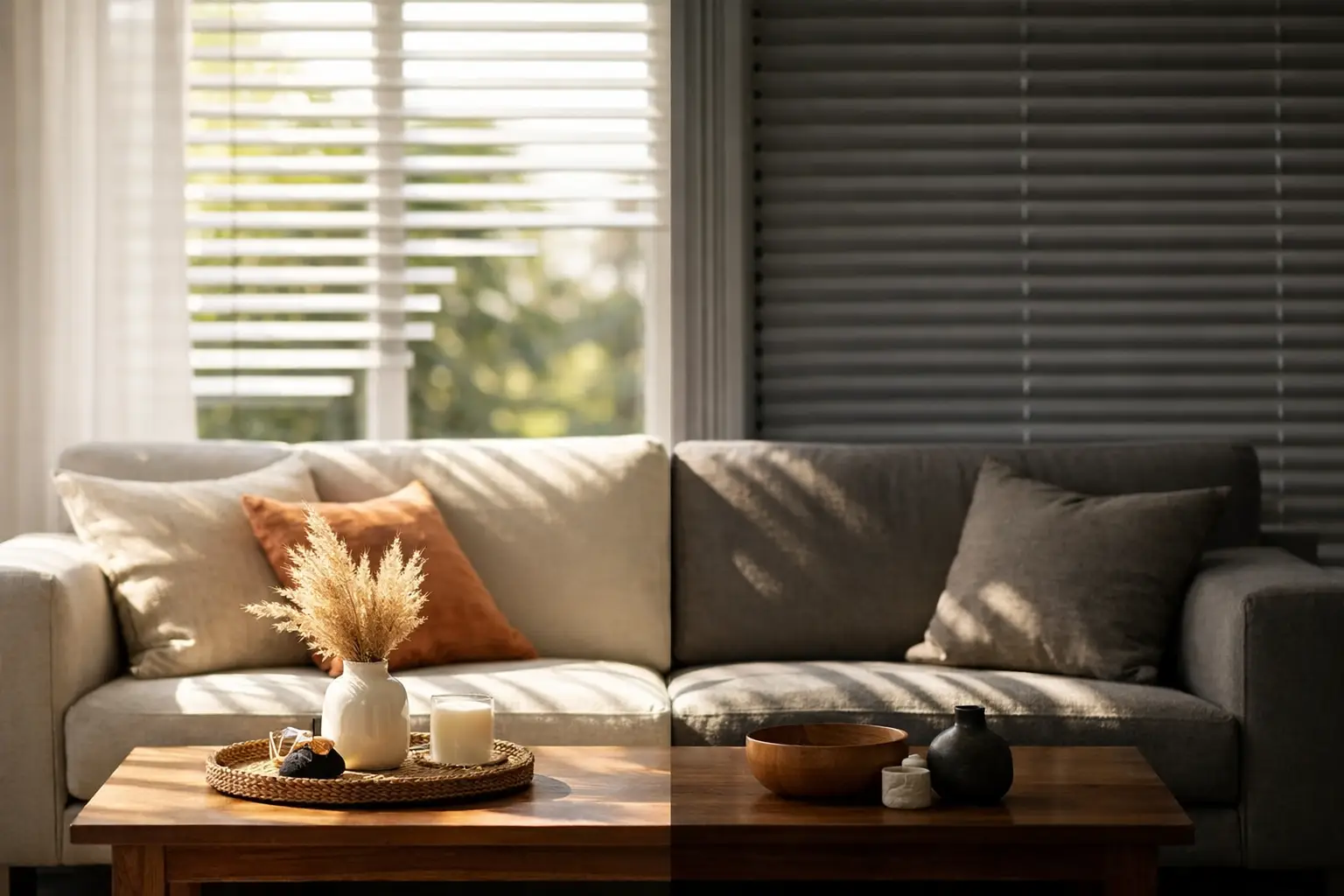
That bright south-facing lounge may be one of the reasons you love your home, but it can be hard on the furnishings nearest the window. A rug can become patchy, timber can lighten, and the arm of a favourite sofa may gradually look different from the side that faces the room. So, can blinds prevent furniture fading? They can reduce it significantly, particularly when they are fitted well and used consistently, but no blind can stop every cause of fading completely.
The practical aim is to filter the strongest daylight before it reaches your furniture, flooring and finishes. With the right fabric, slat material and fit, blinds give you far more control over the light entering the room without forcing you to live in darkness.
What actually causes furniture to fade?
Sunlight is the main culprit, but fading is not caused by UV rays alone. Ultraviolet light can break down dyes and natural materials, while visible light and solar heat also affect colour over time. That means a room can still experience some fading even through modern glazing, which often blocks much of the more damaging UVB radiation but may allow UVA and visible light through.
Natural fabrics such as cotton, linen and wool are often susceptible, as are leather, painted finishes, timber veneers and coloured flooring. Dark blues, reds and some bright dyes can show a change sooner than neutral tones. The effect is usually gradual, which is why it can be missed until a picture is moved or a cushion is turned over.
Windows that receive direct afternoon sun often create the greatest challenge. South- and west-facing rooms across Coventry and the West Midlands can be especially bright during the warmer months, though large east-facing windows can also expose furniture to strong morning light.
Can blinds prevent furniture fading completely?
Blinds cannot provide an absolute guarantee against fading. Light can enter around the edges of a blind, and materials will naturally age with use. However, quality blinds can greatly reduce direct sunlight and UV exposure, slowing the process enough to make a meaningful difference to the life and appearance of your interior.
How much protection you receive depends on the blind type, fabric or slat choice, how closely it fits the window and how often it is closed during periods of direct sun. A pale, translucent blind will soften glare while preserving a light feel, but it will not protect a leather sofa as effectively as a purpose-designed blackout or UV-filtering fabric.
This is why a made-to-measure solution is often more effective than an off-the-shelf blind. A carefully measured blind sits closer to the recess or frame, reducing the gaps that allow strong strips of sunlight to fall across a floor or furnishing. It also allows the material to be selected for the particular room rather than simply for its colour.
The best blinds for reducing sun damage
Roller blinds with UV-filtering or blackout fabrics
Roller blinds are a strong choice for rooms where direct sunlight falls on sofas, dining tables, rugs or display furniture. Specialist solar-control and UV-filtering fabrics can reduce harsh daylight while maintaining a degree of outward visibility, making them useful in lounges, kitchens and offices.
Blackout roller blinds offer a higher level of light control. They are particularly suitable for bedrooms, media rooms, nurseries and any space where protecting furnishings is as important as creating darkness. Blackout does not always mean the blind itself blocks every edge of light, so the fitting style matters. A recess fit is neat, while additional side channels or a carefully planned outside-recess fit can improve coverage where needed.
Venetian blinds for adjustable daylight
Venetian blinds are useful when you want to manage sunlight rather than block it all day. By tilting the slats, you can redirect bright rays away from furniture while still allowing natural light into the room. This flexibility works well in home offices, conservatories and living spaces where full closure would feel restrictive.
Aluminium Venetian blinds are durable and easy to maintain, while wooden-look composite slats bring a warmer finish and are well suited to areas where humidity or regular cleaning is a consideration. Keep in mind that slatted blinds naturally have small spaces between the slats. They provide excellent control, but generally less complete protection than a fully lowered blackout roller blind.
Vertical blinds for wide windows and doors
For larger windows, bay areas and patio doors, vertical blinds make it easy to angle the light away from the room or draw the blind across when the sun is strongest. They are a practical option for commercial settings too, where desks, reception furnishings and display stock may sit close to extensive glazing.
The ability to rotate individual louvres is particularly helpful in rooms where the sun moves across the space during the day. Rather than leaving the room shaded from morning to evening, you can make small adjustments as conditions change.
Fit matters as much as the blind material
A good blind fabric cannot perform at its best if the blind is too narrow, poorly positioned or leaves large gaps around the window. Direct sunlight often finds the smallest opening, creating concentrated bands of light that can fade one section of a carpet or sofa arm before the rest of the room shows any change.
During a professional home appointment, it is worth considering where the sunlight lands at different times of day. The right solution for a French door may differ from the best choice for a deep bay window or a compact bedroom recess. The position of radiators, handles, opening windows and nearby furniture will also influence the fitting approach.
For households with children, the operating method deserves attention as well. Motorised blinds can make it easier to close blinds at set times or when a room becomes bright, while cordless and child-safe options help keep the finish practical for family homes.
Everyday habits that help protect your furnishings
Blinds work best as part of a simple routine. Lowering or angling them before direct sunlight reaches the room is more effective than waiting until the furniture already feels warm. On very bright days, closing a roller blind or adjusting Venetian or vertical slats during the peak hours can also help reduce solar heat, making the space more comfortable.
It is sensible to rotate cushions, move decorative objects occasionally and avoid leaving a single item in the same sunny spot for years. If a treasured chair or antique cabinet must sit beside a window, a more protective blind fabric is usually a better investment than relying on sheer window dressing alone.
Do not overlook commercial spaces. Sunlight can affect upholstered seating, meeting-room tables, merchandise, artwork and even paperwork in offices or shops. Blinds that reduce glare also make screens easier to see, helping to protect the interior while improving day-to-day comfort for staff and visitors.
Choosing the right level of light control
The best answer is rarely to block all daylight. Natural light makes rooms feel more open and pleasant, and many homeowners want privacy and sun protection without losing that benefit. The right balance depends on how the room is used and what sits near the window.
A sunny kitchen may suit a light-filtering roller blind that cuts glare without making food preparation feel dim. A bedroom with fabric furnishings and early-morning sun may benefit from blackout material. In a lounge, adjustable Venetian blinds can give you control throughout the day, while a wide patio door may call for vertical blinds that are easy to angle and operate.
Colour and design still matter. Choosing a blind that complements the room means you are more likely to use it every day. A well-chosen window covering should protect the things you have invested in while adding a polished, considered finish to the space.
A tailored approach makes protection easier
If furniture fading is a concern, do not choose solely by looking at a small fabric sample. Consider the direction of the window, the size of the glass, the hours of direct sun and the materials you are trying to protect. These details determine whether light filtering, UV protection, blackout coverage or adjustable slats will give you the best result.
Queen Blinds can assess these practical details during a free home appointment, then measure and fit a solution that suits both the window and the way you use the room. The most useful blind is one that looks right, operates easily and helps you enjoy the daylight without watching your furniture slowly lose its colour.