


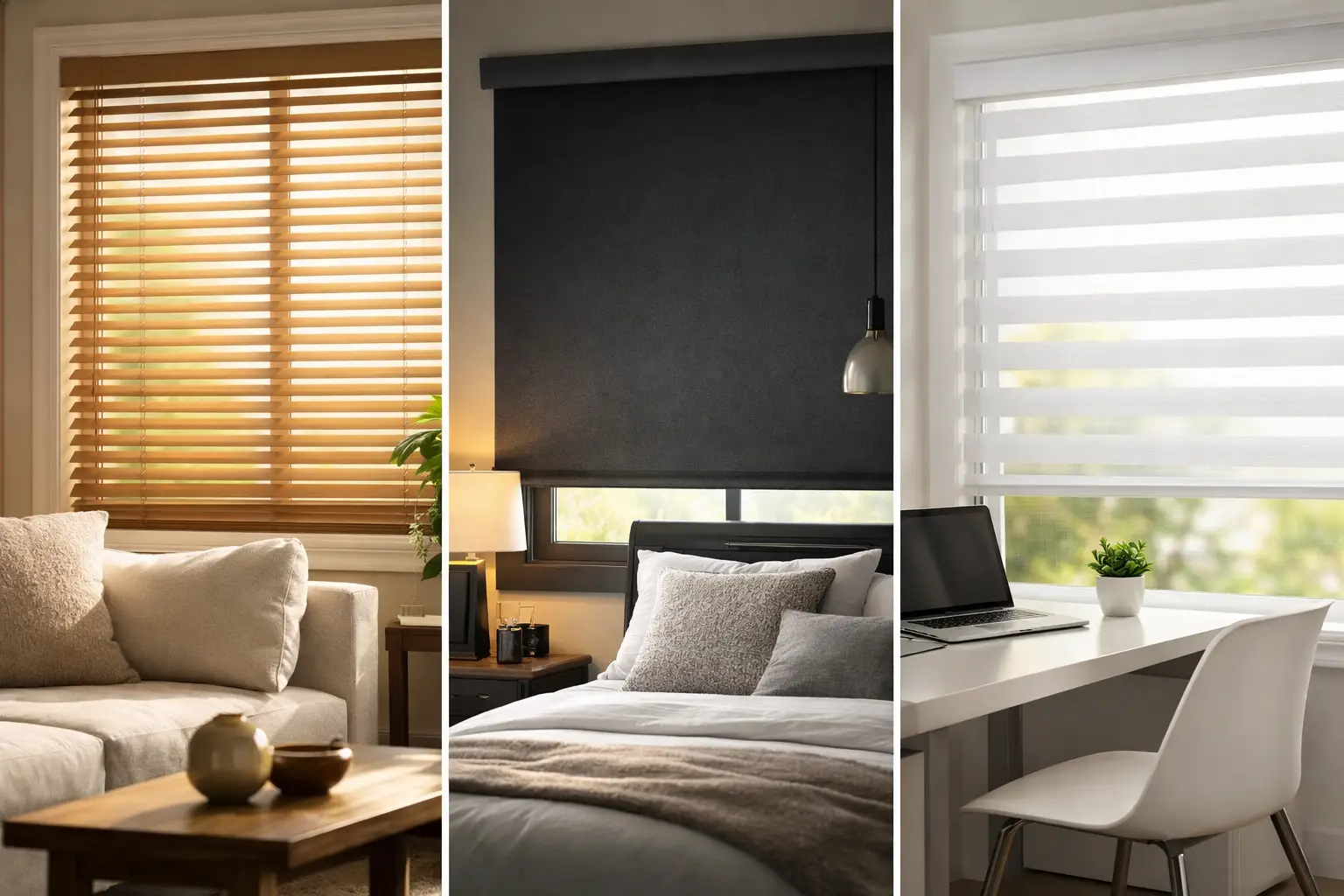
A bright south-facing lounge can be lovely for half the year, then become uncomfortable when afternoon sun hits the television screen. A bedroom may need daylight in the morning but complete darkness at night. That is why choosing the best blinds for light control starts with how you use each room, not simply the colour or style you prefer.
The right blind can soften harsh glare, protect furnishings from UV fading, create privacy without making a room gloomy, or block light almost entirely. At Queen Blinds, made-to-measure advice and fitting help ensure the finished blind works properly on your actual window – including bay windows, wide patio doors and awkward recesses.
What good light control should achieve
Light control is not always about making a room as dark as possible. In many living spaces, the goal is to filter direct sun while keeping a pleasant level of natural daylight. In a home office, it may be about reducing reflections on a monitor. In a bedroom or nursery, blackout performance may be the priority.
A well-chosen blind should also give you control throughout the day. Adjustable slats allow you to redirect sunlight as it moves, while roller fabrics provide a simpler, more consistent level of shade. The best option depends on the balance you need between daylight, privacy, insulation and appearance.
It is also worth considering the direction of your windows. South- and west-facing rooms usually receive the strongest sun, particularly in the afternoon, so they often benefit from greater shading or UV-protective fabrics. North-facing rooms can feel naturally dimmer, making light-filtering or adjustable blinds a more suitable choice.
Best blinds for light control by room
Bedrooms: blackout roller blinds for restful sleep
For bedrooms, blackout roller blinds are often the most practical choice. Their opaque fabric significantly reduces incoming light, helping shift workers, young children and anyone affected by early summer mornings sleep more comfortably. They are also neat, easy to operate and available in colours and finishes that suit both modern and traditional interiors.
There is a useful distinction to make here. A blackout fabric blocks light through the material itself, but small amounts of light can still enter around the edges of the blind, especially if it is fitted inside a recess. For the darkest possible result, accurate measuring is essential. A made-to-measure blind can be specified to give appropriate overlap, while a recess fitting can be assessed properly before installation.
Blackout rollers can also be a strong choice for media rooms, where glare on a television or projector screen is a regular frustration. If you want an even softer finish, pair the blind with curtains, although the blind itself remains the main practical layer of control.
Living rooms: Venetian blinds for flexible daylight
Living rooms need more flexibility than bedrooms. You may want sun protection during the day, privacy in the evening and daylight whenever possible. Venetian blinds are particularly effective here because their horizontal slats can be tilted to change the direction and amount of light entering the room.
Tilt the slats upwards and they can help bounce daylight towards the ceiling while reducing direct glare. Close them more fully for privacy or stronger shade. This makes Venetians a sensible option for rooms where people read, watch television or work occasionally during the day.
Aluminium Venetians offer a clean, contemporary look and are straightforward to maintain. Wooden-look composite Venetian blinds bring a warmer appearance and are a practical alternative in rooms where you want the style of wood with a durable, low-maintenance finish. The trade-off is that Venetian blinds have small gaps between slats, so they will not provide the same darkness as a blackout roller.
Kitchens and bathrooms: moisture-resistant adjustable blinds
Kitchens and bathrooms benefit from blinds that manage light without becoming difficult to clean. Venetian blinds are often a good fit because they offer adjustable shade and privacy, while their slats can be wiped down easily. This is especially useful near sinks, hobs and windows prone to condensation.
For a bathroom, consider how close neighbouring properties are. Slats can be angled to let daylight in while limiting sightlines from outside, which is often more useful than pulling a fully opaque blind down all day. A moisture-resistant material is the sensible choice for long-term performance in humid areas.
Roller blinds can also work well in kitchens, particularly where a simple, uncluttered look is preferred. Choose a wipe-clean fabric and position it carefully around taps and cooking areas. Your fitter can advise on the most suitable placement and safe operation for the space.
Home offices: screen glare and controlled daylight
Natural light makes a workspace more pleasant, but direct sunlight across a screen can make concentrating difficult. For home offices, vertical blinds and Venetian blinds are both strong options because they allow precise adjustments rather than an all-or-nothing level of shade.
Vertical blinds are especially useful on large windows, patio doors and wide office glazing. Their louvres can be turned to direct light away from screens while preserving a view outside. They are also a practical choice for commercial settings, where durability, coverage and easy operation matter as much as appearance.
If your desk faces a sunny window, a light-filtering roller blind may be enough. It softens the brightness across the room, reduces glare and retains a more open feel than blackout fabric. However, for a screen directly in line with the sun, adjustable slats generally offer more day-to-day control.
Fabric, colour and fit make a real difference
The blind type is only one part of the decision. Fabric openness, slat size, colour and fitting position all affect the final result. Lighter fabrics tend to brighten a room while diffusing sunlight, whereas darker or blackout fabrics provide more pronounced shading. A pale blind does not automatically mean poor light control, but it will usually create a softer effect rather than darkness.
For roller blinds, consider whether you need light-filtering, dim-out or blackout fabric. Light-filtering materials reduce glare and soften direct sun. Dim-out fabrics offer stronger shading but may not eliminate all brightness. Blackout fabrics are the best choice where sleep, privacy or screen use requires maximum reduction in light.
Fit is just as important. A blind fitted inside a recess has a tidy, built-in look, but it will have narrow gaps at each side. An outside-recess fitting with suitable overlap can improve coverage. Wide windows, shallow recesses, handles and tilting sash windows all need to be assessed before an order is placed. Professional measuring avoids the common problems of blinds catching on handles, sitting unevenly or leaving more light gaps than expected.
Do not overlook privacy, heat and safety
Blinds that control sunlight can also improve comfort in other ways. Closing suitable blinds during hot, sunny periods can reduce solar heat gain, particularly on large south-facing windows. Insulating fabrics and well-fitted coverings may also help reduce heat loss in colder months, although blinds should complement rather than replace efficient glazing and heating.
Privacy is another key consideration. A living-room blind that is excellent during daylight may offer less privacy at night when interior lights are on. Adjustable Venetians and vertical blinds allow you to alter the angle of the slats, while blackout rollers give a more solid barrier when lowered.
For homes with children or pets, safe operation should be part of the choice from the start. Chain-operated blinds need appropriate safety devices, and motorised options can offer a convenient cord-free alternative. Motorisation is particularly useful for tall, hard-to-reach or multiple windows, allowing you to adjust light levels without disrupting your routine.
A practical way to choose your blind
Before selecting a style, stand in the room at the times you use it most. Notice where glare falls, whether you need privacy from a particular direction and how much daylight you are willing to lose. Think about whether the window is opened regularly, whether there are handles to work around and how easy the blind will be to clean.
A free home appointment gives you the chance to compare samples against your wall colour, flooring and natural light instead of making a decision from a small online image. It also means your measurements, fixing position and blind operation can be checked before fitting.
The best blind is the one that makes the room easier to live or work in every day. Choose blackout where rest matters, adjustable slats where flexibility matters, and a professionally fitted option where a precise finish will make all the difference.