


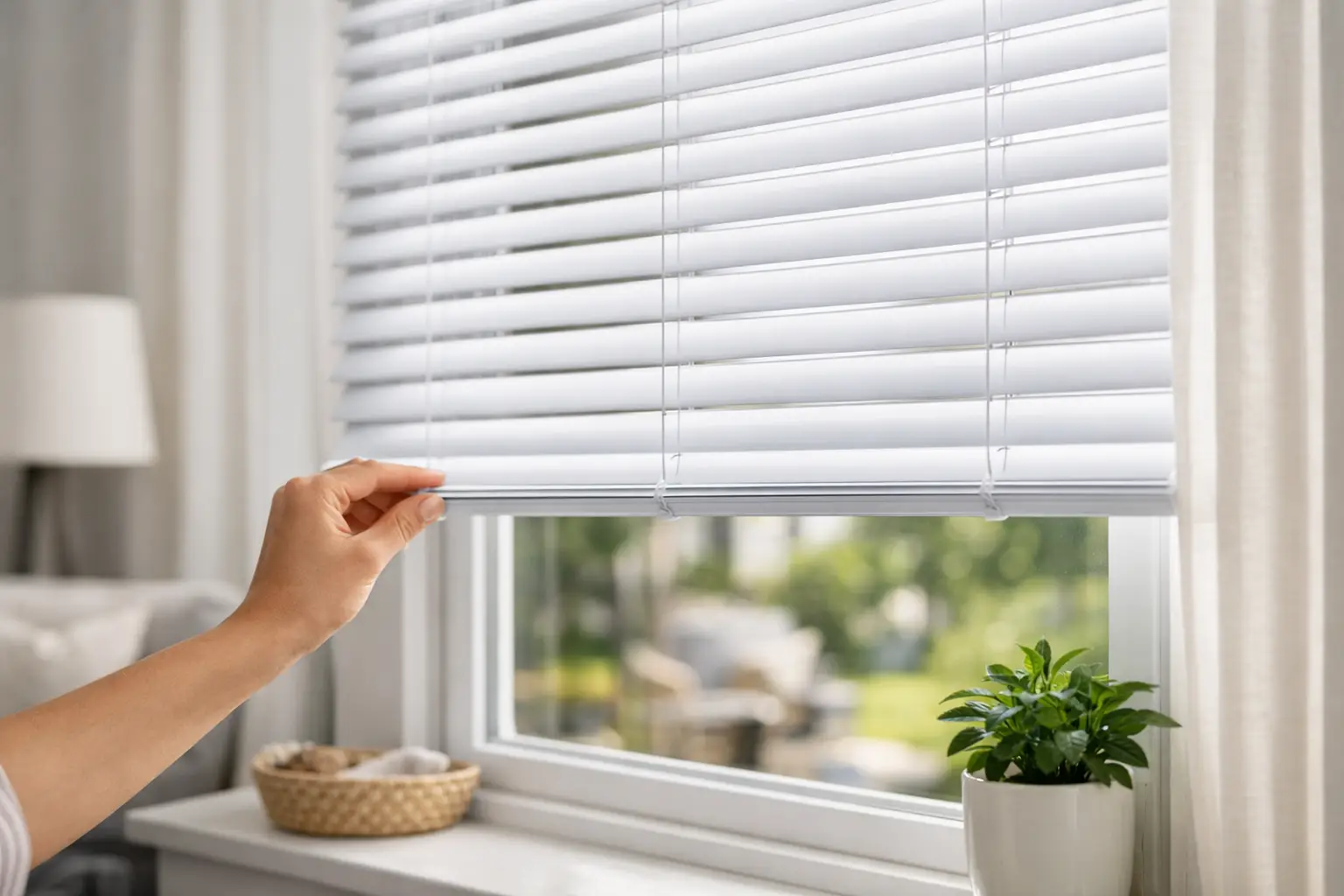
A dangling pull cord can quickly become an annoyance in a busy home. It catches on furniture, hangs awkwardly by the window and, more importantly, can present a risk in rooms used by young children. Cordless blinds remove that concern while giving windows a clean, uncluttered finish that suits both modern and traditional interiors.
Rather than relying on a loose cord or chain, cordless systems are raised, lowered or tilted using a concealed mechanism, a wand or a simple hand-operated bottom rail. The result is practical, tidy and easy to live with. For homeowners, landlords and commercial property managers across Coventry and the West Midlands, they are a sensible option where safety, appearance and everyday convenience all matter.
Why choose cordless blinds?
The most immediate benefit is child safety. Windows near cots, beds, play areas and low seating can be difficult to dress safely with conventional corded controls. A cordless design removes accessible hanging loops, helping to create a more secure environment without compromising on privacy or light control.
They also look more considered. Without a cord hanging to one side, the blind sits neatly within the window space and lets the fabric, slats or finish do the work. This is particularly effective in smaller rooms, where less visual clutter can make a real difference, and in offices or reception areas where a polished appearance matters.
Convenience is another strong point. Many cordless roller blinds can be moved with a gentle pull on the bottom bar, while Venetian styles may use an integral lift system and discreet tilt control. For hard-to-reach windows, motorised operation can be a better alternative. The right solution depends on the blind style, window position and how often the blind will be adjusted.
There is a trade-off worth considering. Cordless mechanisms are designed for easy daily use, but they need to be carefully matched to the size and weight of the blind. A large, wide window may be better suited to a motorised system or another control method than a manually operated cordless blind. Professional advice and accurate measuring prevent a good-looking choice from becoming an impractical one.
Cordless blinds by room
The best blind is not simply the one that looks right in a sample book. It should suit how the room is used, the amount of light it receives and the level of privacy required.
Bedrooms and nurseries
Bedrooms are often the first place people consider cordless operation. A blackout roller blind can help reduce early morning light, while a cordless control keeps the window area safer and neater around children’s furniture. For bedrooms facing busy roads or neighbouring properties, choosing a fabric with a close fit and good opacity can also improve privacy.
Blackout does not always mean total darkness. Light can still enter around the edges of a blind, particularly where the recess is uneven or the blind is fitted outside it. If darkness is a priority, expert measuring and advice on the fitting position are as valuable as the blackout fabric itself.
Kitchens and bathrooms
Moisture, splashes and regular cleaning make material choice especially important here. A moisture-resistant roller blind or aluminium Venetian blind is often easier to maintain than a fabric with a more textured finish. Cordless operation keeps controls clear of worktops, sinks and busy kitchen areas, making the overall look more streamlined.
For bathroom windows, privacy should lead the decision. A light-filtering fabric can allow daylight in while softening the view from outside. If the room is overlooked, a more opaque option gives greater reassurance without making the space feel closed in.
Living rooms and dining spaces
In communal rooms, cordless blinds can complement a carefully chosen colour scheme without drawing attention to the mechanism. Wooden-look composite Venetian blinds bring warmth and definition to a window, while roller blinds offer a softer, simpler finish. Both can be made to measure for a close, balanced appearance.
Think about glare as well as privacy. A south- or west-facing living room may benefit from UV-filtering or dim-out fabrics that reduce harsh sunlight and help protect furnishings. If you enjoy the view and want more flexible light control, tilting Venetian slats can be preferable to fully raising a roller blind.
Offices, shops and other commercial spaces
Cordless systems can work well in meeting rooms, salons, clinics and customer-facing spaces, where dangling controls can look untidy or be easily disturbed. They are also useful where safety and low maintenance are priorities. However, for banks of large windows or blinds adjusted frequently throughout the day, motorised blinds may provide a more practical long-term answer.
A commercial blind should be selected around the demands of the space. Consider screen glare, visitor privacy, cleaning requirements, fire-safety specifications where applicable and the need for consistent appearance across several windows. A site visit helps establish those details before an order is placed.
Choosing the right cordless blind style
Roller blinds are a popular choice because they are clean-lined, versatile and available in an extensive range of colours, patterns and performance fabrics. A cordless roller blind can be ideal for a child’s bedroom, a contemporary kitchen or a compact window where you want the blind to sit neatly out of sight when raised.
Venetian blinds offer more precise control over daylight. By adjusting the slats, you can direct light upwards, reduce glare or create privacy while retaining some natural light. Aluminium options suit practical spaces, while wood-effect composite slats can offer the look of timber with better resistance to moisture and changes in temperature.
Vertical blinds are often chosen for wider windows, patio doors and commercial settings. A wand-operated vertical blind avoids a traditional hanging cord and makes it straightforward to draw the louvres or alter their angle. They can be an excellent solution for broad glazing, although the final choice should take account of door access, furniture placement and how people move through the room.
Motorised blinds deserve consideration where convenience is the priority. They are particularly useful for high windows, large installations and homes where smart control is already part of daily life. Motorisation costs more than a basic manual mechanism, but it can make regular adjustment easier and removes the need for manual controls altogether.
Getting the fit right matters as much as the mechanism
A cordless blind only performs properly when it has been measured and installed accurately. Windows are rarely perfectly square, and small differences in recess width or depth can affect how a blind raises, lowers and sits against the frame. This matters even more when light reduction, privacy or a close visual finish is the aim.
It is also worth checking for handles, vents, alarm sensors and opening directions before settling on a style. A blind that looks right in isolation may obstruct a window handle or catch on a projecting sill. These are the practical details that are easy to miss when ordering from measurements taken at home.
Queen Blinds provides free home appointments, allowing customers to see suitable options in their own light, discuss the room’s needs and have every window measured by an experienced fitter. That service is useful whether you are updating one nursery blind, dressing a new extension or specifying blinds for an entire workplace.
Looking after cordless blinds
Most cordless blinds need very little upkeep. A regular light dusting with a clean, dry cloth or soft brush attachment helps keep roller fabrics and Venetian slats looking fresh. For marks, follow the cleaning guidance for the specific material rather than using strong household cleaners, which can damage coatings or leave water marks.
Operate the blind evenly and avoid pulling sharply on one corner of the bottom rail. If it starts to lift unevenly or feels stiff, do not force it. A quick check by a fitter is preferable to damaging the internal mechanism.
A well-chosen cordless blind does more than remove a cord. It gives a room a calmer finish, supports safer family living and makes everyday light control feel effortless. The best place to start is with the window in front of you: how it is used, who uses the room and what you need the blind to do from morning to night.