


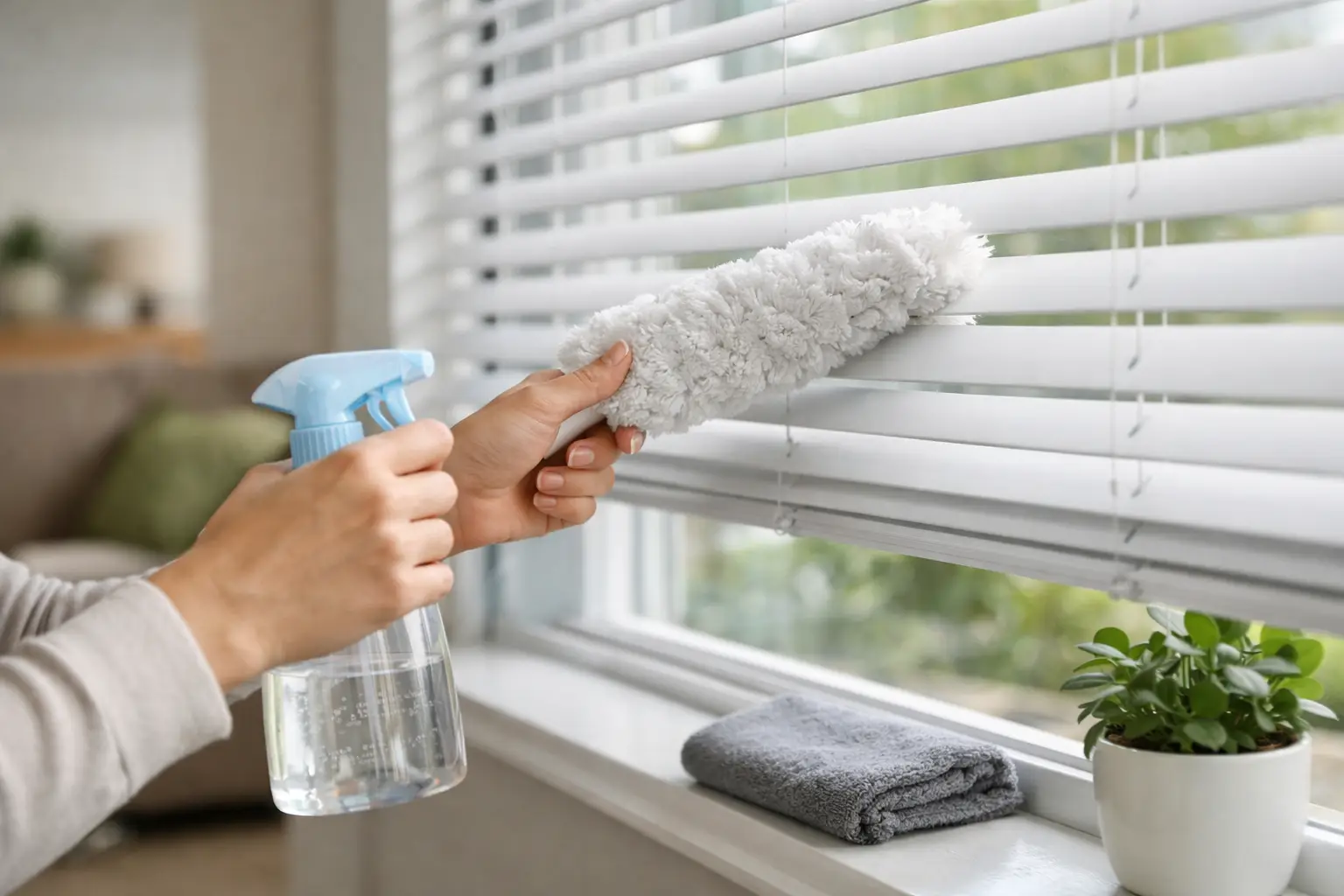
A blind can look immaculate on fitting day, then quickly become a dust-catching chore in a busy family home, kitchen or office. If you are asking what blinds are easiest to clean, the short answer is usually roller blinds with a wipe-clean finish. However, the best choice also depends on where the blind will be fitted, how much moisture or cooking residue it faces, and whether you prefer fabric, slats or a wood-effect finish.
For homeowners and businesses across Coventry and the West Midlands, low-maintenance blinds make everyday life simpler without compromising on privacy, light control or style. Here is how the most popular options compare.
What blinds are easiest to clean in everyday homes?
Roller blinds are the simplest all-round option
Roller blinds are often the easiest blinds to clean because they have a single, smooth panel rather than lots of individual slats. There are fewer edges for dust to settle on, and cleaning normally takes only a few minutes.
For living rooms, bedrooms and offices, a regular dust with a microfibre cloth or the soft brush attachment on your vacuum is usually enough. If the fabric is marked, dab it gently with a clean damp cloth and mild soap, taking care not to soak the material. Always check the recommended care instructions for the particular fabric first.
For kitchens, bathrooms, utility rooms and commercial spaces, consider a moisture-resistant or wipe-clean roller blind. These finishes are particularly practical around condensation, splashes and everyday cooking grime. They also provide a neat, modern look at windows and doors, including larger made-to-measure openings.
Blackout roller blinds remain easy to look after, too. The blackout coating is often on the reverse of the fabric, so it should be wiped carefully rather than scrubbed. A quality, correctly fitted blind will sit neatly within the window space, helping to reduce the areas where dust can gather.
Aluminium Venetian blinds are easy, but more hands-on
Aluminium Venetian blinds are another strong low-maintenance choice, especially in kitchens, bathrooms, conservatories and workplaces. Their metal slats do not absorb moisture, and most marks can be removed with a damp cloth.
The trade-off is time. Each slat needs attention, so they are not quite as quick to clean as a roller blind. Close the slats in one direction and wipe across them from top to bottom, then tilt them the other way and repeat. For a more thorough clean, wipe each slat with a slightly damp microfibre cloth before drying it straight away.
Venetian blinds are worth considering if adjustable light control matters as much as easy cleaning. You can angle the slats to reduce glare while keeping daylight in the room, which is useful in home offices and commercial settings. Just be realistic about the cleaning routine: their many horizontal surfaces will show dust sooner than a flat roller blind.
Vertical blinds work well for wide windows and patio doors
Vertical blinds are a practical choice for wide windows, bay windows and sliding or patio doors. Each louvre can be turned for privacy and light control, while the blind can be drawn to one side for easy access to the door.
Their cleaning needs depend on the material. PVC vertical louvres are straightforward to wipe down and suit areas where moisture or fingerprints are likely. Fabric louvres should be dusted or vacuumed lightly with an upholstery attachment. Spot-clean them gently where needed, as excessive water can leave tide marks or affect the fabric’s shape.
Because the louvres hang vertically, they tend to collect less settled dust than horizontal slats. That makes vertical blinds a sensible middle ground for customers who need coverage for a large opening but still want an uncomplicated cleaning routine.
The easiest blind materials to keep clean
The style of blind matters, but the material can make an even bigger difference. A fabric that works beautifully in a calm bedroom may not be the right choice above a kitchen sink.
Wipe-clean PVC, vinyl and coated roller fabrics are the most forgiving materials for busy spaces. They resist moisture and can generally be cleaned with a soft cloth, warm water and a small amount of mild washing-up liquid. Avoid abrasive pads, strong degreasers and bleach, which can damage coatings or fade the colour.
Aluminium is equally practical where humidity is high. It does not warp in the way natural wood can, although it should be dried after cleaning to keep the mechanism and cords in good condition.
Wood-look composite Venetian blinds offer the appearance of timber with a more practical finish. They are a good option for homeowners who want warmth and texture at the window without the higher maintenance of real wood. Dust them regularly and wipe with a barely damp cloth, then dry the slats immediately.
Natural wood blinds need more care. They look elegant in lounges, dining rooms and bedrooms, but water can cause staining, swelling or warping. Use a dry microfibre cloth, feather duster or vacuum brush attachment rather than a wet cloth. If easy cleaning is your top priority, a composite alternative is usually the safer choice.
Which blinds take the most effort to clean?
Roman blinds, pleated blinds and many cellular designs can be attractive, insulating options, but they are not normally the easiest to maintain. Their folds, seams and textured fabrics give dust more places to settle. Cleaning often involves gentle vacuuming, careful spot treatment and, for heavier staining, specialist advice.
This does not mean they are a poor choice. In a formal bedroom or a low-traffic sitting room, the softer appearance may be worth the extra care. But for a child’s bedroom, rental property, kitchen or busy office, a wipe-clean roller blind is often the more practical decision.
Very light-coloured fabrics can also show marks more readily than mid-tone or patterned options, whatever blind style you choose. If fingerprints, pets or young children are part of daily life, a forgiving colour and a washable-looking finish can save time in the long run.
A simple cleaning routine that protects your blinds
Regular light cleaning is far easier than tackling months of dust and grease at once. Dust roller blinds and vertical louvres weekly or fortnightly, depending on the room. Venetian blinds may need a quick wipe more often in kitchens or near open windows.
For most blinds, begin with a dry microfibre cloth. Vacuum carefully on a low setting if there is a visible build-up of dust, using an upholstery or soft brush attachment. When wiping marks, use a clean cloth that is damp rather than wet, and test a discreet area first.
Take extra care around the headrail, brackets, chain or cord mechanism. Do not spray cleaning product directly onto these parts, as moisture can work into the operating mechanism. Motorised blinds should be cleaned with the power isolated where appropriate, and the motor housing should only be dusted with a dry cloth.
A few habits make a noticeable difference. Keep blinds raised when cleaning nearby glass and frames, avoid pulling chains with dirty hands, and deal with cooking splashes promptly. In rented homes and commercial premises, a short, regular wipe-down can help blinds stay presentable between deeper cleans.
Choosing a low-maintenance blind for each room
For kitchens and bathrooms, moisture-resistant roller blinds or aluminium Venetians are usually the most sensible options. Both cope well with humidity and can be wiped clean after splashes or grease. If the room needs privacy without losing all daylight, Venetian slats give more precise control.
For bedrooms, roller blinds are hard to beat for convenience, particularly when paired with blackout fabric. They offer a clean finish, easy operation and very little cleaning effort. A composite Venetian blind can also work well where you want a more structured, wood-effect look.
For patio doors, large windows and commercial premises, vertical blinds remain a practical option. Choose wipe-clean louvres where possible, especially in high-traffic areas. They are easy to open, offer flexible light control and can be made to suit broad or unusually shaped spaces.
The most suitable blind is not always the one with the quickest cleaning routine. You may need stronger blackout performance, insulation, a child-safe operating option or a particular look for the room. A made-to-measure consultation helps balance those needs, so you do not have to choose between a blind that looks right and one that is practical to live with.
If convenience is at the top of your list, start with a wipe-clean roller blind and choose a fabric or finish suited to the room. Queen Blinds can help you compare the options in your own space, with expert measuring and fitting that makes the final result feel considered from the first day – and easy to keep that way.