


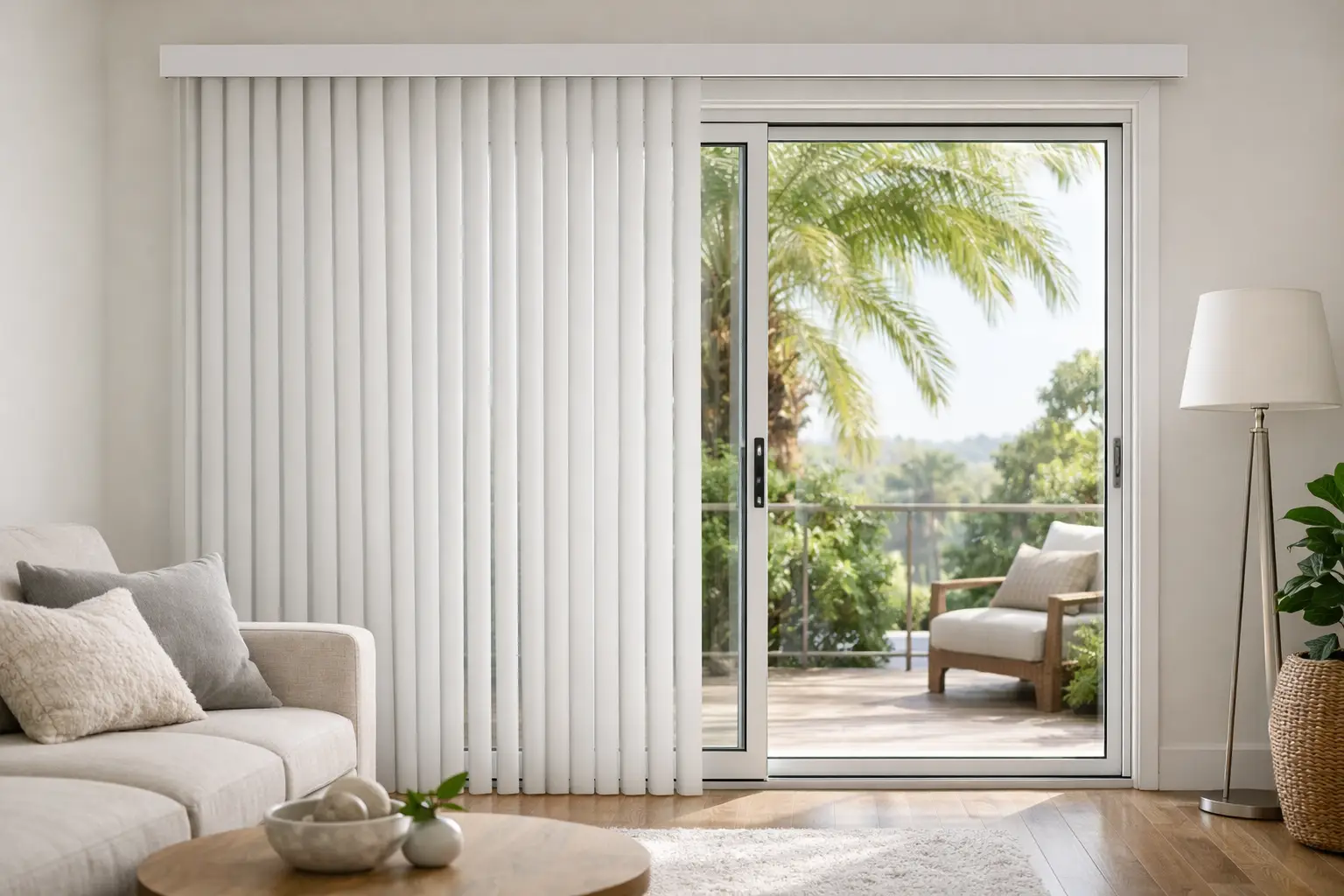
Sliding doors are brilliant for bringing in light, opening out to the garden and making a room feel bigger. They can also be awkward to dress properly. Curtains can look bulky, and some blind styles simply do not work well across a wide opening. That is why vertical blinds for sliding doors remain one of the most practical and attractive choices for homes and commercial spaces alike.
What makes them work so well is simple. Vertical blinds are designed to cover wider spans, move neatly to one side and give you flexible control over light and privacy throughout the day. Whether you are updating a family dining room, finishing a rental property or improving a meeting room, they offer a clean solution that does not overcomplicate the space.
Why vertical blinds for sliding doors make sense
Sliding doors need a window covering that can handle regular use. You are not just dressing a window for appearance. You are covering an access point that people open and close frequently, often several times a day. A blind that gets in the way soon becomes frustrating.
Vertical blinds solve that problem because the slats rotate for light control and stack back for access. You can let daylight in without fully opening the blind, or draw the slats aside when you want a clear route to the garden or patio. That flexibility is one of their biggest strengths.
They also suit the proportions of sliding doors. Wide glass panels can make some blind types look stretched or awkward, but vertical slats sit naturally across the opening. The look is tidy, balanced and easy to adapt to modern and traditional interiors.
The practical benefits in everyday use
For many customers, the decision comes down to how the blind will perform day to day. Vertical blinds do more than cover glass. They help control glare on screens, soften strong afternoon sunlight and improve privacy without making a room feel shut in.
In living spaces, this matters most when the doors face neighbouring properties or a busy road. You may want light during the day but less visibility from outside. With vertical blinds, you can angle the slats to keep the room bright while reducing direct sightlines.
In offices and commercial settings, the same feature helps reduce glare on monitors and presentation screens. It gives the room a smarter, more professional finish too, which is useful in reception areas, meeting rooms and shared workspaces.
There is also the question of upkeep. Vertical blinds are generally easy to maintain, especially when compared with heavier curtains that collect dust and need more effort to clean. For busy households, landlords between tenants and commercial premises, low-maintenance window coverings are a real advantage.
Choosing the right fabric and finish
Not all vertical blinds are the same, and the right option depends on how you use the room. Fabric choice has a big effect on appearance, privacy and light control.
If the room gets strong sun, a dimout or blackout fabric can make a noticeable difference. This is especially helpful in media rooms, bedrooms with patio doors, or any space where glare becomes a problem. For kitchens and dining areas, lighter filtering fabrics often work better because they keep the room feeling open while still softening the light.
Colour matters too, but not only for style. Pale shades can help keep a room airy and spacious, while darker tones add contrast and can feel more grounded in large open-plan spaces. Neutral colours remain the safest choice for many properties because they sit well with changing décor and appeal to a wide range of tastes.
There is also a balance to strike between softness and structure. Some fabrics give a more relaxed, domestic feel, while others create a sharper, more tailored finish that suits offices and contemporary interiors. The best choice depends on whether you want the blind to blend in quietly or play a stronger role in the room.
Are vertical blinds the best option for every sliding door?
Usually, they are one of the strongest options, but not automatically the right answer in every case. If your main priority is a very soft, layered look, you may still prefer curtains or another blind style used alongside them. If you want the clearest possible outside view when the blind is open, panel blinds may appeal in some modern spaces.
That said, vertical blinds tend to win on practicality. They are well suited to frequent access, easy to control and effective across broad widths. For many homeowners and business customers, that combination outweighs more decorative alternatives.
This is where made-to-measure fitting becomes important. A sliding door is not a feature you want to guess at. A poor fit can leave gaps, drag awkwardly or interfere with the door itself. With a professionally measured blind, the finished result looks neater and works as it should.
Vertical blinds for sliding doors in family homes
In busy homes, window coverings need to cope with real life. Children run in and out to the garden, pets brush past the doors, and sunlight changes from morning to evening. A blind has to be easy to use and durable enough for regular handling.
Vertical blinds are a sensible choice here because they offer control without much fuss. You can tilt the slats for privacy during the day, close them fully in the evening and pull them aside when the doors are open in warmer weather. They also avoid some of the heaviness that full-length curtains can bring to a practical family room.
Child safety should always be part of the conversation as well. Modern blind systems can be specified with safer operating options, which is especially relevant in homes with young children. It is one more reason why tailored advice and proper installation matter rather than choosing purely on appearance.
A smart fit for landlords and commercial spaces
For landlords, the appeal is straightforward. Vertical blinds are neat, hard-working and suitable for a wide range of interiors. They help a property look finished without pushing the décor in a style that may not suit future tenants. They are also easier to replace individual slats if needed, which can be more cost-effective over time.
In commercial settings, they offer the same tidy appearance with practical benefits that staff and visitors notice straight away. Light control is better, glare is reduced and the space feels more polished. In rooms with large glazed doors, that can make a big difference to comfort and presentation.
A made-to-measure service is particularly valuable for businesses because it reduces disruption. When measuring, advice and fitting are handled professionally, the result is quicker and more reliable than trying to manage a large installation in-house.
Why measuring and fitting matter
Vertical blinds may look simple, but getting them right takes accuracy. The width of the opening, the drop, the headrail position and the way the slats stack all affect how the blind works. A few millimetres can influence whether the doors remain easy to use and whether the blind hangs cleanly.
This is why many customers prefer a full service rather than ordering off the shelf. A home or site visit allows you to discuss how the doors are used, what level of privacy you need and which fabrics are most suitable for the room. It also reduces the risk of expensive mistakes.
For customers across Coventry and the wider West Midlands, that local support can make the process far easier. Queen Blinds focuses on made-to-measure advice and fitting so customers get a solution that is tailored to the space rather than forced to fit it.
What to consider before you choose
Before deciding on your blind, think about the room first and the product second. Ask yourself how often the doors are used, whether privacy is an issue, how strong the sunlight is and whether you want the blind to stand out or blend into the background. Those answers usually narrow the options quickly.
It is also worth thinking beyond the initial look. A blind might appear ideal in a sample book, but if it marks easily, blocks too much light or feels awkward to operate, you will notice that every day. The best result is one that looks right and works well six months later.
Vertical blinds for sliding doors continue to be a popular choice because they meet both needs. They are smart without being fussy, practical without looking purely functional, and adaptable enough to suit homes, rentals and business premises. When they are properly measured, carefully chosen and professionally fitted, they do exactly what good window coverings should do – make the room easier to live in.