


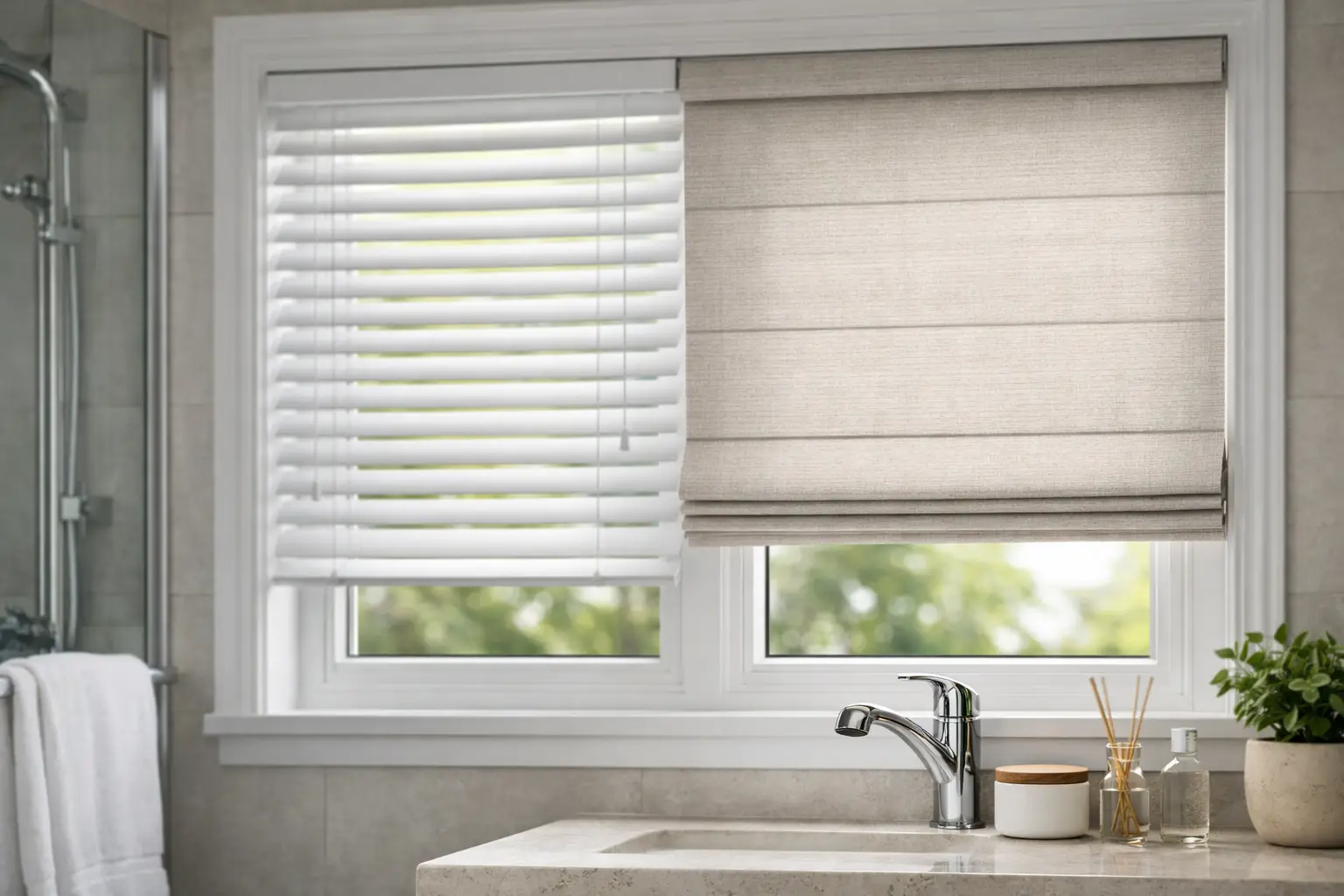
A bathroom window has a harder job than most. It needs to protect privacy, cope with steam, soften the light and still look right with the rest of the room. That is why choosing the right blinds for bathroom windows is less about following trends and more about finding a practical fit for how the space is used every day.
In some bathrooms, the priority is full privacy from nearby houses or the street. In others, it is about dealing with condensation, making cleaning easier or stopping strong morning light from flooding the room. The best option usually balances all of those things, which is why made-to-measure blinds often make such a difference. A precise fit leaves fewer gaps, looks neater and performs better.
What matters most when choosing blinds for bathroom windows
Bathrooms create conditions that other rooms simply do not. Heat, moisture and regular temperature changes can affect how well a blind lasts over time, especially if the material is not suited to humid spaces. A style that works beautifully in a lounge may quickly look tired in a bathroom.
Privacy is usually the starting point. Ground floor bathrooms and overlooked windows often need a blind that gives reliable screening even when the light is on inside. At the same time, many customers still want daylight, particularly in smaller bathrooms where natural light helps the room feel cleaner and more open.
Moisture resistance is the next key factor. Materials that resist warping, peeling and mildew are far better suited to this environment. Ease of maintenance matters too. In a room where splashes, condensation and everyday use are unavoidable, a blind that wipes clean quickly is often the better long-term choice.
Then there is appearance. Bathrooms may be practical spaces, but they still contribute to the overall feel of a home. The right blind can sharpen a modern scheme, soften a family bathroom or add a more polished finish to an en-suite.
The best types of blinds for bathroom windows
There is no single answer for every property, but a few styles consistently work well in bathrooms because they combine performance with straightforward upkeep.
Roller blinds
Roller blinds are one of the most popular choices for bathrooms, and for good reason. They are neat, compact and easy to operate, making them especially useful in smaller rooms where space is limited. Moisture-resistant fabrics are widely available, and they give a clean finish that suits both modern and traditional interiors.
They also offer flexibility with privacy and light control. A dim-out or blackout fabric can help where privacy is the main concern, while lighter fabrics can still reduce visibility from outside without making the room feel closed in. For family bathrooms, this balance often works very well.
From a design point of view, roller blinds are easy to tailor. Soft neutrals keep the room bright and calm, while textured fabrics or subtle patterns can add interest without overwhelming the space.
Venetian blinds
Venetian blinds are another strong option, particularly when control over light and privacy needs to change throughout the day. The adjustable slats allow you to let in daylight while still limiting the direct view from outside, which is useful in overlooked homes.
For bathrooms, the material is crucial. Standard wood is rarely ideal in humid conditions, but aluminium and PVC options can perform very well. Faux wood or composite styles are especially popular because they offer the look of timber with far better moisture resistance.
They do need a little more regular cleaning than a roller blind because of the slats, so they tend to suit customers who value the flexible light control enough to justify that trade-off.
Vertical blinds
Vertical blinds can work particularly well on larger bathroom windows or in commercial washroom spaces where a practical, tidy finish is needed. They are effective for privacy and easy to adjust, and they suit rooms where a softer, more structured appearance is preferred.
That said, they are less common in compact domestic bathrooms simply because the look can feel more formal. Where the window is tall or wide, though, they can be a sensible and durable choice.
Bathroom blinds and moisture resistance
When customers ask which bathroom blind lasts best, the answer usually comes down to material rather than style alone. A well-made blind in the wrong material will still struggle in a steamy room.
PVC, aluminium and specially treated fabrics generally perform well because they are less likely to absorb moisture. Composite slats can also be an excellent choice where you want the warmth of a wood-effect finish without the maintenance concerns of real timber.
Ventilation matters too. Even the most suitable blind will last better in a bathroom with good airflow. If the room has an extractor fan or the window is regularly opened, that helps reduce the impact of condensation over time.
Privacy without losing natural light
One of the biggest concerns with bathroom windows is how to feel fully private without making the room gloomy. That is where careful blind selection pays off.
A roller blind fitted correctly within or just over the recess can give dependable coverage while still allowing filtered light to come through, depending on the fabric chosen. Venetian blinds offer even more adjustability, letting you angle the slats for privacy while keeping daylight in the room.
It also depends on the position of the window. A bathroom facing a garden may need a different level of screening from one facing a pavement or neighbouring property. This is why measuring and product choice are best considered together, rather than treating them as separate decisions.
Why made-to-measure is worth it in a bathroom
Bathrooms often have awkward windows. They may be small, set close to tiles, placed above baths or fitted in narrow recesses. Off-the-shelf blinds can work in some spaces, but they often leave gaps, catch on nearby fixtures or simply look like a compromise.
Made-to-measure blinds solve that problem by being built to the exact width and drop of the window. The result is a neater finish, better privacy and smoother operation. In a bathroom, where every inch matters, accuracy makes a visible difference.
Professional measuring also helps avoid common issues, such as choosing a blind that clashes with handles, does not clear the sill properly or sits awkwardly next to tiling. For homeowners, landlords and renovators, that can save both time and unnecessary replacement costs.
Style choices that suit modern bathrooms
Most bathroom schemes benefit from keeping the window treatment simple. Clean lines, easy-care finishes and colours that work with tiles and fittings tend to have the broadest appeal.
White, soft grey, stone and muted beige remain reliable choices because they reflect light well and sit comfortably in both classic and contemporary bathrooms. If the room already has strong patterned tiles or bold wall colours, a plain blind usually keeps the balance right.
If the bathroom feels a little plain, texture can help. A subtle woven-look roller fabric or wood-effect composite Venetian blind adds interest without making the room feel busy. In en-suites and cloakrooms, where there is often a little more freedom to be decorative, bolder colour or pattern can work well.
Safety, convenience and everyday use
Practical details matter more in bathrooms than many people expect. In family homes, child safety should always be part of the decision, especially if younger children use the room. Suitable safety features and professional fitting help make sure the blind works safely as well as neatly.
Ease of operation is worth thinking about too. A blind above a basin or bath needs to be easy to raise, lower or adjust without becoming awkward. In some homes, motorised options can be a useful upgrade, particularly where the window is difficult to reach or part of a more modern smart home setup.
What looks best in a showroom or brochure is not always what feels easiest to live with. The right bathroom blind should work well on a rushed weekday morning just as much as it does in a finished room photo.
Getting the right advice for blinds for bathroom windows
The strongest results usually come from matching the blind to the room, not forcing the room to fit the blind. Window size, privacy needs, ventilation, style preferences and budget all shape the right choice.
That is why expert advice can be so valuable, especially when you want a made-to-measure finish that looks polished and lasts. A local specialist such as Queen Blinds can help narrow down the options, recommend materials suited to humid spaces and make sure the blind is measured and fitted properly from the start.
A bathroom may be one of the smaller rooms in the house, but the right blind can make it feel more comfortable, more private and far better finished every single day.