


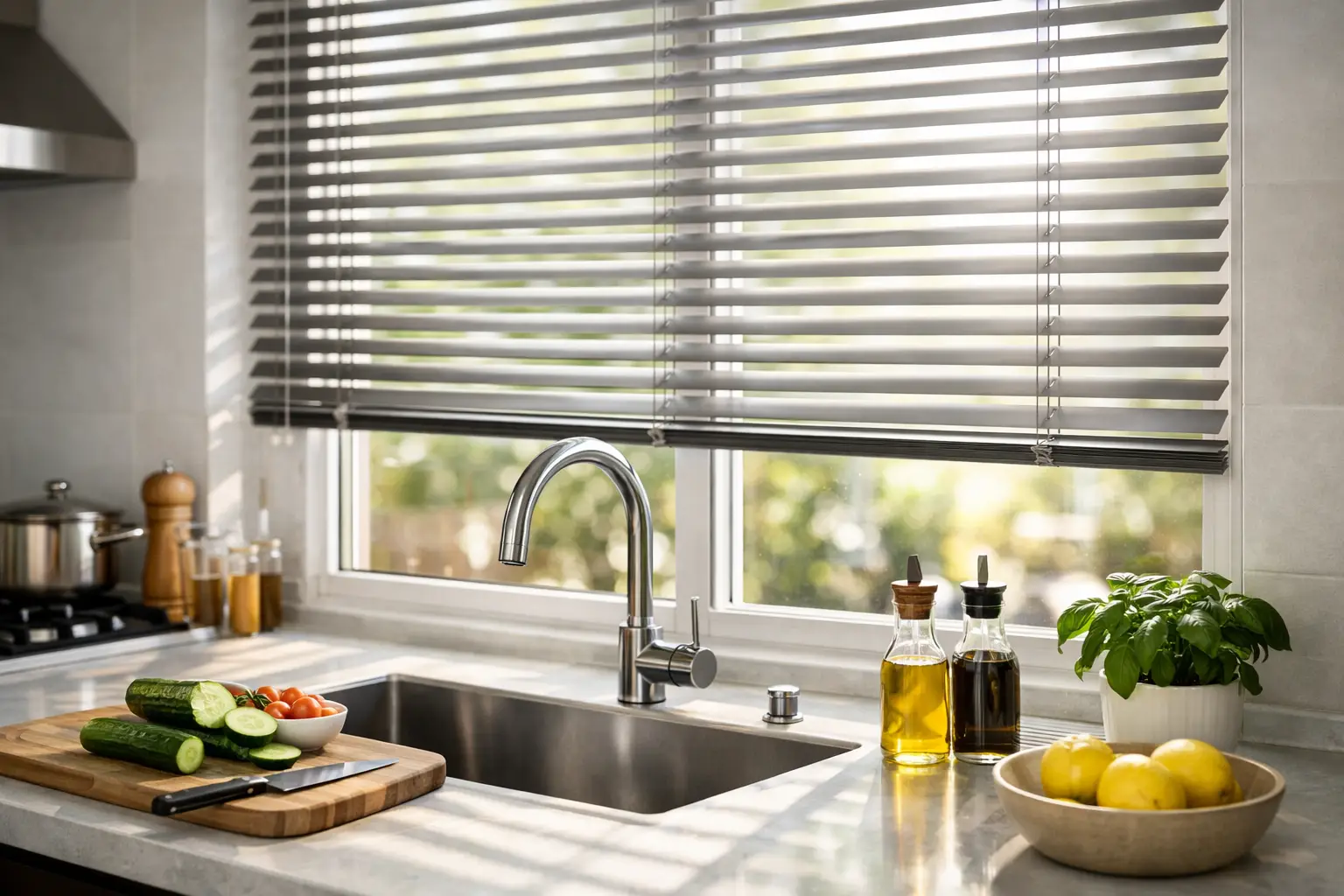
Steam from the kettle, splashes from the sink, strong afternoon sun across the worktops – kitchens ask more from a window blind than most rooms. That is exactly why venetian blinds for kitchens remain such a popular choice. They give you precise control over light and privacy, they suit both modern and traditional spaces, and when chosen well, they are easy to live with day after day.
The appeal is practical as much as visual. In a kitchen, you rarely want a window covering that feels fussy or hard to clean. You need something that can cope with moisture, everyday cooking and regular use without looking tired after a few months. Venetian blinds do that particularly well because their horizontal slats let you adjust the room in small, useful ways. You can tilt them to soften glare while keeping the room bright, or close them for privacy without shutting out every bit of daylight.
Why venetian blinds for kitchens make sense
Kitchens are busy spaces, and window dressings need to keep up. Venetian blinds are well suited because they strike a sensible balance between style and performance. They look neat, they do not dominate the room, and they work in windows above sinks, breakfast areas and doors where curtains can feel bulky.
Their biggest advantage is control. A roller blind tends to be either up or down, but Venetian slats let you fine-tune the amount of light entering the room. That matters in kitchens where too much direct sun can make surfaces uncomfortably bright, while too little light makes food prep and everyday use less pleasant.
Privacy is another reason homeowners choose them. If your kitchen faces the street or backs onto neighbouring properties, tilting the slats gives you a practical middle ground. You can protect your privacy without making the room feel closed in.
Choosing the best material for a kitchen
Not every Venetian blind is right for a kitchen. The room’s heat, humidity and occasional grease in the air mean material choice matters more here than it might in a bedroom or lounge.
Aluminium Venetian blinds
Aluminium is often the safest all-round choice for kitchens. It handles moisture well, wipes clean easily and gives a crisp, tidy finish that suits contemporary interiors. If your window sits close to the hob or sink, aluminium is a sensible option because it is less likely to warp or absorb moisture over time.
It also works well in smaller kitchens because slim slats keep the overall look light. If you want something practical first and decorative second, aluminium usually earns its place.
Faux wood and composite slats
If you like the warmth of timber but need something more hard-wearing, faux wood or composite Venetian blinds are often a better fit for kitchen conditions. They offer the appearance of wood without the same level of sensitivity to steam and humidity. For many households, that makes them the sweet spot between style and durability.
They can be especially effective in family kitchens where the design needs to feel softer and more lived-in than metal alone. White and off-white finishes remain popular because they keep the room bright, but wood-effect tones can add depth where the kitchen has pale cabinets or neutral walls.
Real wood – attractive, but not always ideal
Real wood Venetian blinds can look excellent, particularly in larger kitchens with strong ventilation and a more classic design scheme. Even so, they are not always the most practical choice. Prolonged exposure to moisture and changing temperatures can affect natural wood over time.
That does not mean they are automatically wrong for every kitchen. It depends on the room layout, how much condensation builds up and whether the window sits away from heavy steam. In many cases, a wood-look composite gives a similar result with less worry.
Finding the right colour and finish
The best kitchen blind should work with the room, not fight for attention. Venetian blinds are available in a wide range of colours and finishes, but the most effective choice often depends on what you want the room to do visually.
Lighter shades help bounce daylight around and are especially useful in smaller kitchens or spaces with limited natural light. White, cream and soft grey are reliable options because they keep the window area looking clean and open. They also pair easily with most cabinet colours and worktops.
Darker tones can look smart and more architectural, especially in kitchens with black fittings, navy units or industrial-style details. The trade-off is that they tend to show dust, water marks and cooking residue a little more readily. If easy upkeep is a top priority, mid-tone neutrals often prove the more forgiving option.
Finish matters too. A matt finish can feel softer and less reflective, while metallic finishes create a sharper, more contemporary edge. If your kitchen already has plenty of gloss surfaces, a more understated blind finish can keep the room balanced.
Measuring and fitting matter more than many people think
Even the best blind will disappoint if it does not fit properly. Kitchens often have less margin for error because windows may sit close to tiles, cupboards, splashbacks or door frames. A poor fit can look awkward, let in too much light at the edges or make the blind harder to operate.
Made-to-measure Venetian blinds are usually the better route if you want a clean, fitted look. They sit properly within the window space and feel part of the room rather than an afterthought. This is particularly useful in bay kitchens, older properties where openings are not perfectly square, or homes with patio or back doors where practical clearance is essential.
Professional measuring also helps avoid common problems such as slats catching on handles, blinds sitting unevenly or controls being placed inconveniently. For busy homeowners and landlords, that accuracy saves time and frustration.
Everyday cleaning and maintenance
One reason Venetian blinds for kitchens stay popular is that they are relatively straightforward to maintain. In a room where grease, dust and moisture build up gradually, easy cleaning is not a small benefit – it is part of what makes a blind workable long term.
Most aluminium and faux wood blinds can be dusted regularly and wiped with a damp cloth when needed. That is usually enough to keep them looking fresh. The key is consistency. A quick clean every so often is far easier than waiting until residue becomes obvious.
If your kitchen window is directly beside the hob, you may need to clean more often. In those spots, choosing a moisture-resistant, wipeable finish is usually the smarter decision. It is less about the blind looking new forever and more about making sure upkeep stays manageable.
Style, safety and convenience at home
For family homes, the practical details matter as much as the appearance. Kitchens are shared spaces, and blinds should be easy and safe to use. Child-safe operating options are worth considering if younger children are regularly around the home. A tidy, professionally fitted blind not only looks better but can feel more secure and easier to operate daily.
Some customers also prefer motorised options, particularly for hard-to-reach windows or wider glazed areas. In kitchens, this can be useful where furniture placement limits access or where you simply want cleaner operation with less handling. It is not essential for every home, but in the right setting it adds genuine convenience rather than novelty.
Are Venetian blinds right for every kitchen?
Usually, yes – but there are still a few situations where another blind style may suit better. If you want complete blackout, for example, Venetian blinds are not usually the first choice, as some light can filter between slats. In most kitchens that is not a problem, but if the room doubles as a media space or has unusually strong glare, it is worth considering.
Likewise, if your kitchen has a very soft, fabric-led design scheme, a Roman or roller blind may feel more in keeping visually. Venetian blinds tend to suit practical, clean-lined interiors best, although wood-effect finishes can soften the look considerably.
That is where tailored advice makes a real difference. The right answer depends on the window position, how you use the room and how much maintenance you are realistically willing to do. A good blind should fit your routine as much as your décor.
For homeowners and businesses across Coventry and the West Midlands, that is often why a made-to-measure service is worth it. With the right material, finish and fit, a kitchen Venetian blind can look sharp, work hard and stay easy to manage. When a room does so much every day, choosing a blind that keeps life simple is rarely the wrong decision.