


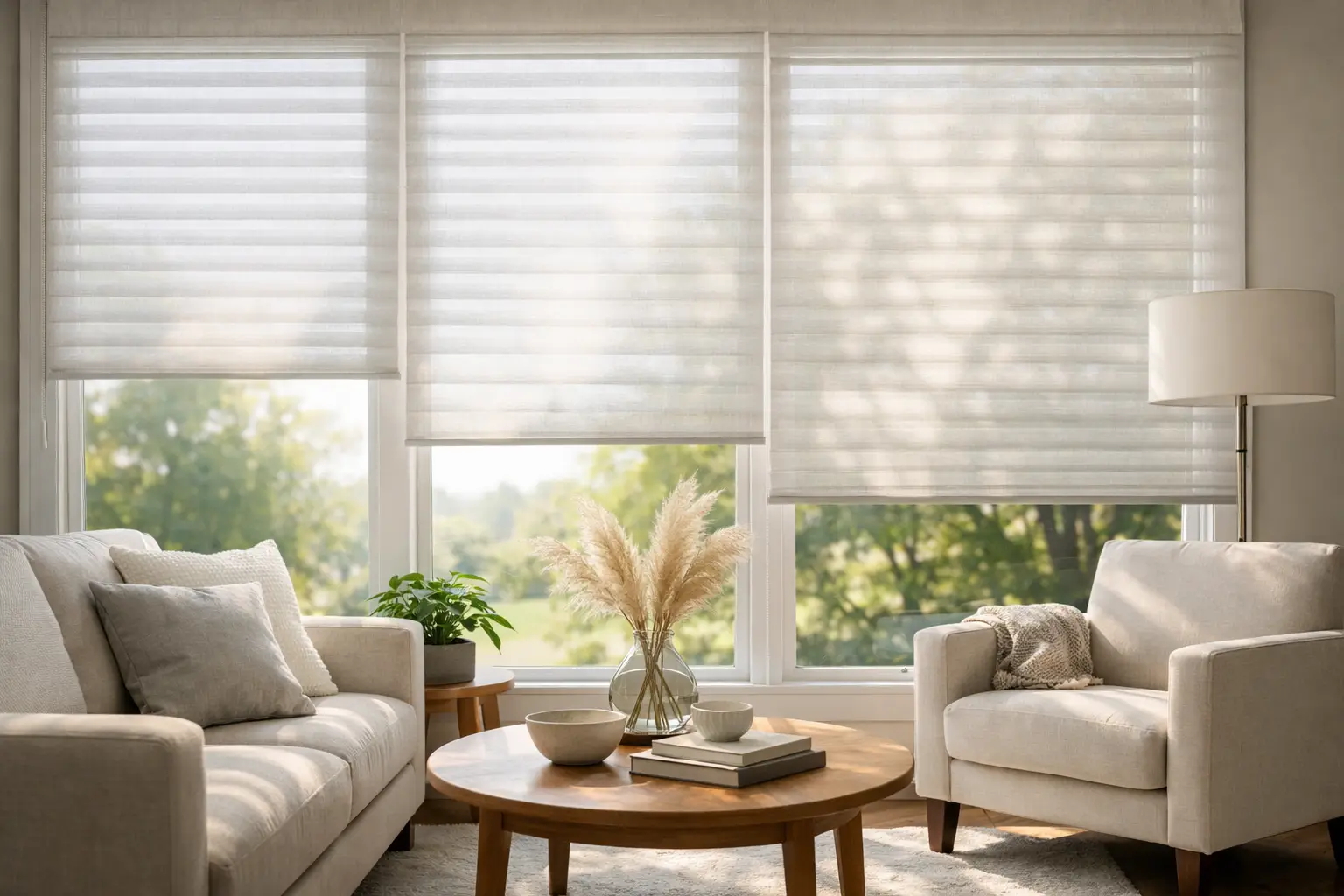
Midday glare can make a lovely living room feel awkward to use. The television reflects, soft furnishings start to fade, and the room that looked bright in the morning suddenly feels too exposed. That is exactly why light filtering blinds living room choices matter so much. They soften daylight rather than block it completely, giving you a space that feels brighter, calmer and more comfortable throughout the day.
For many homes, that balance is the hard part. Full blackout blinds can make a living room feel flat and closed off, while sheer window dressings often leave you wanting more privacy. Light filtering blinds sit neatly in the middle. They reduce harsh sunlight, help protect interiors, and keep the room usable without making it feel dark.
Why light filtering blinds work so well in a living room
A living room does more than one job. It is where families relax, where guests sit, where children play, and where many people now spend part of the working day. Because the room changes use from morning to evening, the window covering needs to be flexible too.
Light filtering blinds help by diffusing incoming daylight. Instead of strong direct sun falling across the sofa or floor, the light is spread more evenly through the room. That creates a softer look and often makes the space feel more finished. It is a practical choice, but it also changes the atmosphere in a way that heavy window coverings do not always manage.
There is also the privacy factor. In many Coventry and West Midlands homes, especially on estates, terraces and newer developments, front-facing living rooms can feel a little exposed. A light filtering blind lets in daylight while reducing that clear view from outside during the day. It is not total privacy at all hours, but it is often enough for everyday comfort.
Choosing the right light filtering blinds living room style
The best option depends on how your room is used, how much sun it gets and the look you want to create. There is no single answer for every property.
Roller blinds for a clean, modern finish
Roller blinds are often the most straightforward choice for light filtering blinds living room designs. They suit modern interiors, work well in bay windows and large openings, and come in a wide range of fabrics, colours and textures.
A plain fabric roller blind gives a simple, tidy appearance that does not compete with the rest of the room. If your living room already has strong furniture colours, patterned cushions or statement flooring, that simplicity can be a real advantage. On the other hand, textured or woven-look fabrics can add warmth if the room feels too plain.
Roller blinds also make sense for households that want easy day-to-day use. They raise neatly, need very little maintenance and can be made to measure for a closer, smarter fit.
Venetian blinds when you want more control
If controlling the angle of light matters as much as filtering it, Venetian blinds are worth considering. By tilting the slats, you can adjust brightness more precisely through the day. That can be useful in living rooms that face south or west, where late afternoon sun can be particularly strong.
The trade-off is style and softness. Venetian blinds tend to look more structured than fabric blinds, so they suit some interiors better than others. They are ideal where a sharper, more contemporary finish is wanted, but they may feel a little hard in a room built around soft textures and cosy furnishings.
Vertical blinds for wide windows and doors
Living rooms with patio doors or broad window spans often suit vertical blinds surprisingly well. They are practical, tidy and very good at handling larger glazed areas. The vanes can be angled to soften light without fully closing the room off.
Some homeowners think of vertical blinds as something only used in offices, but modern made-to-measure options are far more refined than older versions. With the right fabric and colour, they can look polished and understated in a domestic setting.
Fabric and colour make a bigger difference than people expect
When customers focus only on blind style, they sometimes miss the bigger decision: the material itself. The fabric or finish affects how much light comes through, how warm the room feels visually and how the blind sits within the wider design.
A bright white blind can look crisp, but in strong sun it may still feel quite sharp. Softer neutrals such as warm ivory, stone, sand or light grey often create a gentler effect. These shades filter daylight in a way that feels calm rather than stark.
Texture matters too. Smooth fabrics suit cleaner, more minimal spaces, while woven finishes can add depth and softness. In family homes, slightly textured fabrics can also be more forgiving of day-to-day marks and dust than very flat, bright materials.
If the room is already dark, a lighter blind will help maintain brightness. If the room gets intense sun, a slightly denser fabric may give a better balance. This is one of those areas where seeing samples in the space itself makes a real difference, because natural light changes from one property to the next.
The practical benefits beyond appearance
A good living room blind should look right, but it should also solve practical problems. Light filtering blinds can help reduce glare on screens, which is useful whether you are watching television or working from the sofa with a laptop. They can also lessen UV exposure, helping to protect flooring, furniture and fabrics from fading over time.
There may be some energy-efficiency benefit too. While light filtering blinds are not the same as full thermal blackout products, the right made-to-measure blind can still add another layer at the window. In colder months that can help the room feel more comfortable, particularly in older properties with larger glazing.
For households with children, operation and safety matter just as much as appearance. A professionally fitted blind with child-safe options offers more reassurance than an off-the-shelf product adapted at home. In busy family spaces, that peace of mind is important.
When light filtering blinds are not the best fit
They are a strong option for many living rooms, but not every one. If your room doubles as a cinema-style TV space and you want to cut as much light as possible, blackout blinds may be more suitable. If privacy at night is your main concern, light filtering fabrics alone may not go far enough once the lights are on indoors.
Some customers solve this by layering. A light filtering blind for daytime use can be paired with curtains for added softness and evening privacy. This approach works particularly well in formal sitting rooms or larger living areas where you want both practicality and a more dressed look.
There is also the question of maintenance. Fabric blinds are generally simple to look after, but if your living room opens directly onto a garden and gets more dust or moisture than usual, certain materials may perform better over time. That is why tailored advice can save frustration later.
Why made-to-measure usually pays off
Living room windows are rarely as standard as people hope. Bays, wide openings, shallow recesses and door combinations all affect what will work best. A blind that is even slightly wrong in size can let in too much glare, sit awkwardly, or make the whole room look less finished.
Made-to-measure blinds solve that by fitting the actual space rather than a rough estimate. They also give you more choice in fabric, operation and finish, which is especially helpful when trying to match an existing colour scheme or solve a particular light issue.
For homeowners, landlords and commercial clients alike, the advantage is not just appearance. It is convenience. Having the windows measured properly, the right product recommended and the blind fitted correctly saves time and reduces the risk of paying twice.
That is where a local specialist can make the process much easier. At Queen Blinds, the focus is on helping customers choose a practical, attractive option for the way the room is really used, then making sure it is fitted properly from the start.
Finding the right balance for your space
The best light filtering blinds for a living room are the ones that make the room easier to enjoy. That might mean softening strong afternoon sun, improving daytime privacy, or simply making the space feel more polished without losing natural light.
A well-chosen blind should not call attention to itself for the wrong reasons. It should sit comfortably within the room, work reliably every day and solve the small annoyances that make a living area less comfortable than it could be. If you get that balance right, the whole room tends to feel better almost immediately.
Before choosing, think less about what looks good in a showroom and more about how the room behaves in real life. The right blind is the one that suits your light, your layout and the way you actually live.