


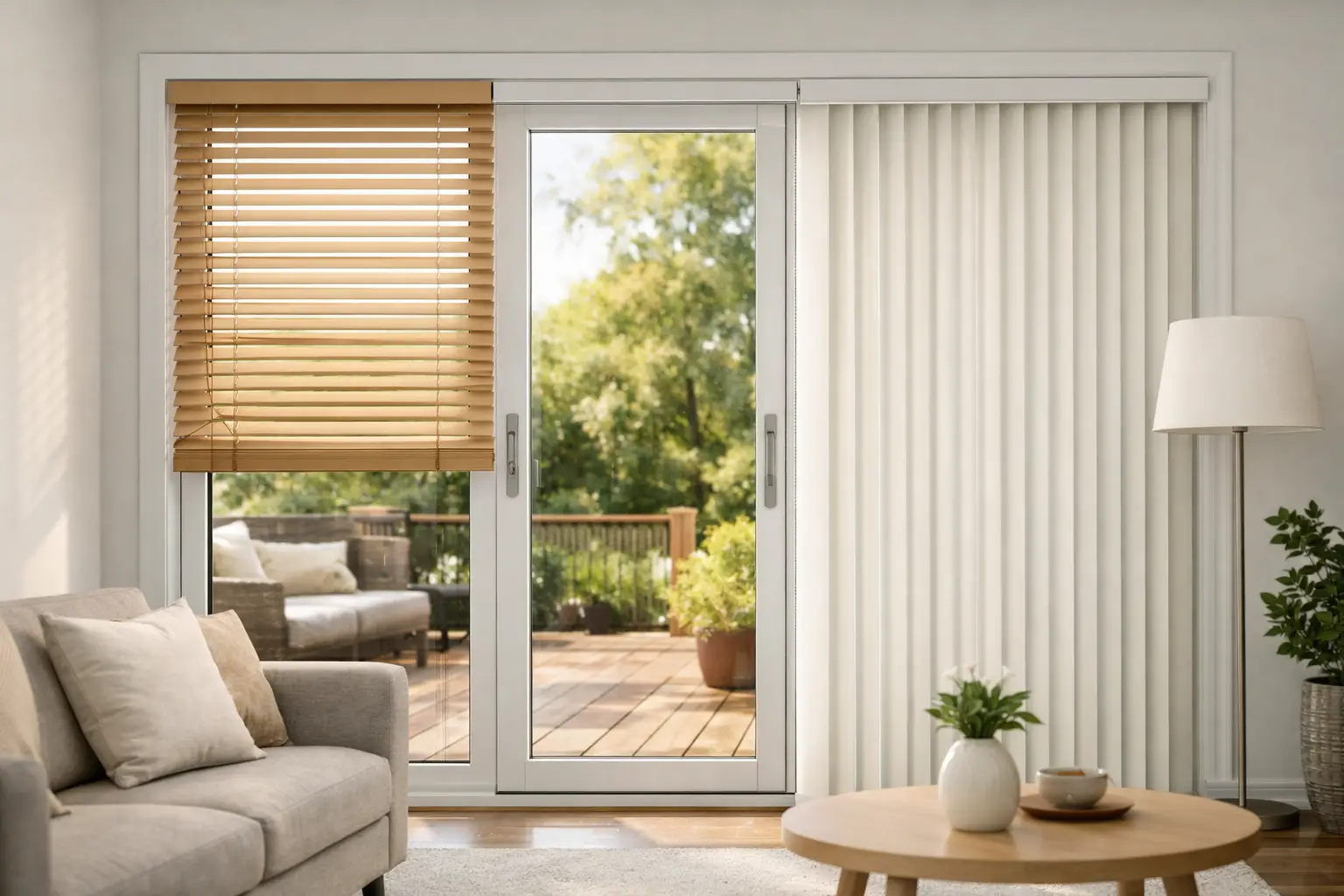
Patio doors are brilliant for natural light, but they can be one of the trickiest spots in the home to dress well. You need something that looks smart, gives you privacy when it matters, and still lets the doors open and close without a daily battle. If you are comparing the best blinds for patio doors, the right answer usually comes down to how you use the room, how often the doors are opened, and whether light control or easy access matters most.
A blind that works beautifully on a standard window can feel awkward on a set of sliding or French doors. Patio doors are larger, used more often, and sit at the centre of family life in many homes. That means the best option is rarely just about appearance. It also needs to be practical, hard-wearing and properly fitted.
What makes the best blinds for patio doors?
The main challenge with patio doors is movement. Unlike a fixed window, these doors are opened regularly for the garden, for ventilation, or simply because they lead into a busy part of the home. A blind that gets in the way, tangles easily or knocks against the glass will soon become frustrating.
That is why made-to-measure fitting matters so much here. A precise fit helps the blind sit neatly, operate smoothly and avoid unnecessary wear. It also gives a cleaner finish, which is especially important on wide glazed doors where uneven gaps can stand out.
Light and privacy also tend to compete. South-facing patio doors can flood a room with sunshine during the day, then leave it feeling exposed at night. Some households want to soften glare without darkening the space. Others need stronger privacy or blackout performance, especially in open-plan homes where patio doors sit close to television areas or ground-floor bedrooms.
Vertical blinds are often the most practical choice
For many homes and commercial spaces, vertical blinds are still one of the strongest options for patio doors. There is a good reason they have remained popular for so long. They suit wide openings, stack neatly to one side, and allow easy control over light without blocking access completely.
The adjustable slats make them particularly useful when you want privacy without losing daylight. You can angle them to reduce glare while still keeping the room bright. On sliding doors, this can be far more convenient than lifting a blind up and down every time someone steps outside.
Vertical blinds also work well in a range of interiors. Modern fabrics and finishes have moved them well beyond the basic office look some people still picture. In a home, they can feel soft and understated or more structured and contemporary depending on the fabric you choose.
Their main trade-off is appearance. Some homeowners prefer a less linear look, especially in rooms with a softer design scheme. They also need quality components and correct fitting to avoid the slats twisting or catching over time.
Roller blinds can look cleaner, but access matters
Roller blinds are a strong option when you want a simple, streamlined finish. They are neat, easy to operate and available in a wide range of colours, textures and performance fabrics. If your patio doors are not used constantly, roller blinds can be an excellent choice.
They are especially useful where glare and solar gain are a problem. A sunscreen or light-filtering fabric can take the edge off bright sun while keeping the room comfortable and protecting furnishings from UV exposure. Blackout rollers are also helpful in rooms where evening privacy is a priority.
The key consideration is access. A single wide roller blind can look impressive, but if the doors are opened frequently, lifting it every time may become inconvenient. In some cases, using separate blinds across each section gives more flexibility, though this depends on the door layout and the available fitting space.
For homeowners who want a clean look without too much fuss, roller blinds often strike a good balance. They are also easy to maintain, which matters in kitchens, dining areas and family rooms where patio doors tend to attract regular use.
Venetian blinds offer control, with a few caveats
Venetian blinds are often chosen for their precise light control. Tilting the slats lets you manage privacy and daylight very effectively, which can be useful on patio doors that face neighbours or a busy garden.
Aluminium and wooden-look composite styles can both work well, particularly in more contemporary interiors. Composite materials are a practical choice where moisture, heat or heavier wear is a concern, as they tend to be durable and low maintenance.
That said, Venetian blinds are not always the first recommendation for large patio doors. On wider spans, they can feel heavier to operate, and frequent movement may put more strain on the blind over time. They can also knock against the glass if installed in the wrong setting or used on doors that open inwards.
They are often better suited to nearby windows than to the doors themselves, unless the space, usage and product specification all line up well.
Which blind style suits your patio doors best?
The best blinds for patio doors depend on the layout as much as the look. Sliding doors usually pair well with vertical blinds because they move in a similar direction and keep access straightforward. French doors can suit individually fitted blinds, especially where handles and door clearance need careful consideration.
If your priority is a softer look in a living room, a roller blind in a textured or dim-out fabric may feel more in keeping with the rest of the space. If practicality comes first in a busy family area, vertical blinds usually make daily use easier. If you need detailed control over sunlight and privacy and the doors are opened less often, Venetian blinds may still be worth considering.
This is where an in-home measuring appointment is especially useful. Patio doors vary more than many people realise, and small details such as recess depth, handle position and stacking space can affect what will work best.
Features worth considering
Fabric and finish matter just as much as style. A bright room with strong afternoon sun may benefit from UV-protective or solar-control fabrics. A cooler room might be better suited to materials that help with insulation. In family homes, child-safe operation is another priority, particularly in open-plan spaces where younger children spend time.
Motorised operation can also make sense on larger patio doors. It is not just about convenience. On wider blinds, smooth motorised control can reduce wear and make regular use easier. For commercial settings such as offices, meeting rooms and reception areas, it can also give a cleaner, more polished finish.
Colour choice should be led by the room rather than the product alone. Light neutral blinds can keep a space feeling airy and open, while darker tones may add definition and improve glare control. The right choice depends on whether you want the blind to blend in or act as a design feature.
Why made-to-measure fitting makes a difference
Patio doors are not a great place to guess measurements. Even a small inaccuracy can leave gaps, interfere with door movement, or create a finish that feels slightly off every time you look at it. On a larger glazed area, those details become more obvious.
Made-to-measure blinds remove much of that risk. They are designed around the exact width, drop and fitting position, with proper allowance for handles, recesses and operating space. That means the finished blind is more likely to perform well and look right from day one.
Professional fitting also matters. A patio door blind is used regularly, so smooth operation and secure installation are not small details. They are part of what makes the blind feel like a long-term improvement rather than a compromise.
For homeowners and businesses across Coventry and the West Midlands, that is often the difference between choosing a product and choosing a solution. Queen Blinds takes that practical approach seriously, combining advice, measuring and fitting so the result works in real life, not just in a brochure.
The right choice is the one that suits how you live
There is no single winner for every home. Vertical blinds are often the most practical all-round option. Roller blinds are ideal when you want a cleaner look and straightforward performance. Venetian blinds can work well where light control is the main concern and the doors are not in constant use.
The best decision usually comes from balancing appearance with the way the room is used every day. If a blind looks perfect but makes the doors awkward to use, it will not feel like the right choice for long. A well-fitted blind should make the space more comfortable, more private and easier to live with. That is what matters once the measuring tape is packed away.