


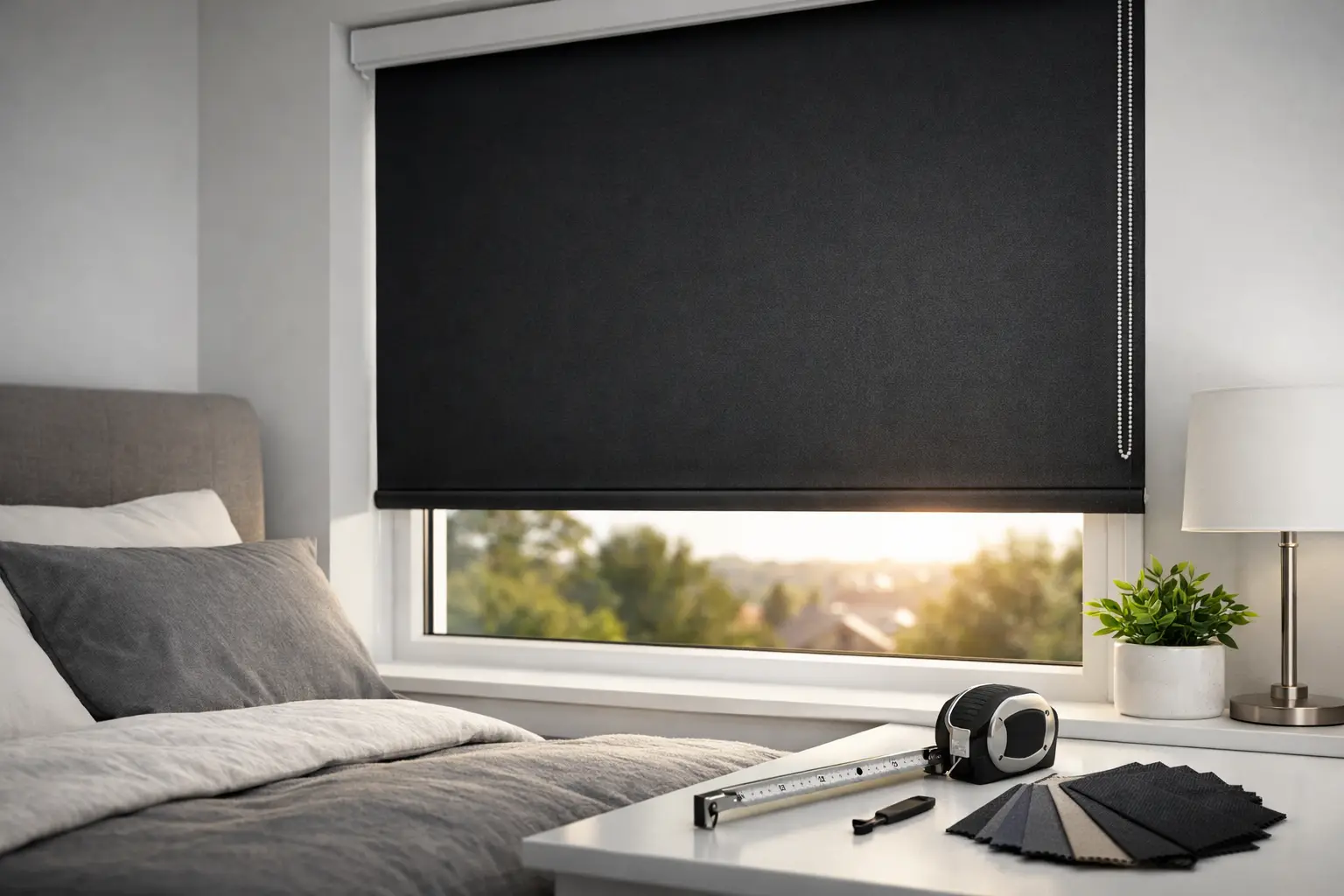
A blind that looks fine at first glance can still let in a strip of early morning light, catch on the window handle, or sit awkwardly within the recess. That is usually the difference between an off-the-shelf option and made to measure blackout blinds. When the fit is right, the room feels better straight away – darker when it needs to be, smarter at the window, and far less frustrating to live with.
For many homes and workplaces, blackout blinds are not just about blocking sunlight. They help with privacy, reduce glare on screens, support better sleep, and can even improve comfort by adding another layer at the window. The key is choosing a product that suits the room, the window shape and the way you use the space day to day.
Why made to measure blackout blinds are worth it
The main benefit of made to measure blackout blinds is precision. Windows are rarely as standard as people expect. Recesses can be uneven, frames can vary by a few millimetres, and features such as tiles, handles and trickle vents can affect how a blind sits.
A made to measure blind is built around those details rather than forcing the window to work around a pre-packed size. That usually means less light leakage at the edges, a cleaner finish and smoother operation. In practical terms, it also saves the trial and error that often comes with buying something online and hoping for the best.
There is a style benefit too. A properly fitted blackout blind tends to look more considered, whether you want a minimal roller blind in a bedroom, a smart solution for a nursery, or a neat finish for an office meeting room. It does the functional job without making the window look like an afterthought.
Where blackout blinds make the biggest difference
Bedrooms are the obvious place to start. If you work shifts, have young children, or simply prefer a darker sleeping environment, blackout fabric can make a noticeable difference. Street lighting, bright summer mornings and neighbouring properties all become less of an issue when the blind covers the window properly.
Nurseries and children’s bedrooms are another strong fit. Many families want a room that can be darkened for naps in the day and settled bedtimes in the evening. In those spaces, the appeal is not only darkness but convenience. A made to measure blind that fits correctly and operates reliably is easier to live with every day.
Living rooms and media rooms also benefit, especially where screens are involved. Glare on televisions and laptops can make a bright room less usable than it should be. Blackout blinds can help control that, although the level of darkness you want may depend on whether the room is used for films, general relaxing or occasional home working.
In commercial settings, blackout blinds can be just as useful. Offices, treatment rooms, schools and meeting spaces often need better control over light and privacy. The right blind can make presentations easier to see, improve comfort for staff and visitors, and create a more polished appearance overall.
What blackout really means
This is one of the areas where expectations matter. Blackout fabric is designed to stop light passing through the material itself. That does not always mean a room will become completely dark, because some light may still enter around the edges of the blind.
That is exactly why made to measure matters. A better fit reduces those gaps and gives the fabric the best chance to do its job. Even then, total blackout depends on the blind type, the mounting position and the window itself. If you are especially sensitive to light, this is worth discussing before choosing a product.
For some rooms, near-total darkness is the goal. For others, it is enough to reduce brightness significantly while keeping the room stylish and easy to use. The best solution depends on the space, not just the label on the fabric.
Choosing the right style of made to measure blackout blinds
Roller blinds are often the most popular choice for blackout use because they are neat, simple and effective. They suit modern and traditional interiors alike, and they work well in bedrooms, offices and rental properties where practicality matters.
Vertical blinds can also be a good option for larger windows and doors, particularly in commercial spaces or wider living areas. They give you flexibility over light levels throughout the day, although they may not create the same close blackout effect as a well-fitted roller blind in every setting.
Venetian styles are better known for light filtering and adjustable privacy than full blackout performance, so they are usually chosen for a different reason. If complete darkness is your priority, fabric-based blackout options are often the stronger route.
Motorised operation is worth considering too. For high windows, busy family homes or commercial premises, remote or smart-controlled blinds can make daily use much easier. It is a premium feature, but for some customers the convenience is more than worth it.
The details that affect performance
Fabric quality plays a big part. Some blackout materials are designed mainly for darkness, while others also help with thermal efficiency, UV protection or a softer decorative finish. That means the best blind is not always the cheapest or the thickest – it is the one that balances appearance and performance for the room.
Colour can also surprise people. Many assume blackout blinds need to be dark in colour, but that is not the case. The blackout effect comes from the fabric construction, not simply from choosing black or navy. Lighter shades can still offer blackout performance, which gives you much more freedom with interior design.
Fitting position matters as well. A recess fit can look very tidy, but an exact window shape may limit how much edge coverage you get. An outside recess fit can sometimes improve blackout effect because the blind extends beyond the frame. There is no single right answer here – it depends on the window and what matters most to you visually and practically.
Why professional measuring and fitting matters
Measuring for blinds sounds straightforward until you find out the recess is narrower at the top than the bottom, or the handle projects more than expected. Small errors can affect how the blind hangs, rolls and blocks light.
Professional measuring removes that guesswork. It also gives you a chance to ask practical questions about use, safety, finish and control options. For landlords, renovators and business owners managing multiple rooms, that support can save a considerable amount of time.
Fitting is just as important. A well-made blind still needs to be installed correctly to perform properly and look right. Secure brackets, level alignment and careful positioning all contribute to the final result. This is one reason many customers prefer a full service rather than trying to coordinate everything themselves.
For homes and businesses across Coventry and the wider West Midlands, that local, hands-on approach is often what makes the process easier. Queen Blinds focuses on that kind of service – measuring, advice and fitting included – so customers get a result that works in real life, not just on paper.
Are made to measure blackout blinds right for every room?
Not always, and that is worth saying plainly. In kitchens and bathrooms, moisture levels and cleaning requirements may influence which blind type is most suitable. In a living room, you may prefer filtered natural light over full blackout. In some offices, glare reduction matters more than making the room dark.
That does not make blackout blinds the wrong choice. It just means the right recommendation should follow the room’s purpose. A bedroom and a boardroom may both need privacy, but they will not always need the same blind.
Cost is another factor. Made to measure products usually cost more than standard sizes, especially when fitting and upgraded controls are included. The trade-off is better fit, better finish and fewer compromises. For many customers, that value shows itself quickly in day-to-day use.
What to look for before you decide
It helps to think about more than just darkness. Ask yourself how often the room is used, whether privacy is a priority, how easy the blind needs to be to clean, and whether children or vulnerable people are in the property. Safety features, durability and ease of operation all matter.
It is also sensible to consider the wider look of the room. A blackout blind should perform well, but it should still sit comfortably with your décor. With made to measure options, you do not have to choose between function and appearance as often as people think.
The best blackout blind is usually the one that feels effortless once it is installed. It opens smoothly, fits neatly, looks right in the space and solves the problem you bought it for. That might sound simple, but it is exactly why tailored advice and accurate fitting make such a difference.
If your current blinds are doing half a job, that is usually a sign the window needs something made for it rather than something adapted to it. A darker bedroom, a more comfortable office or a smarter finish at the window often starts with getting the fit right.