


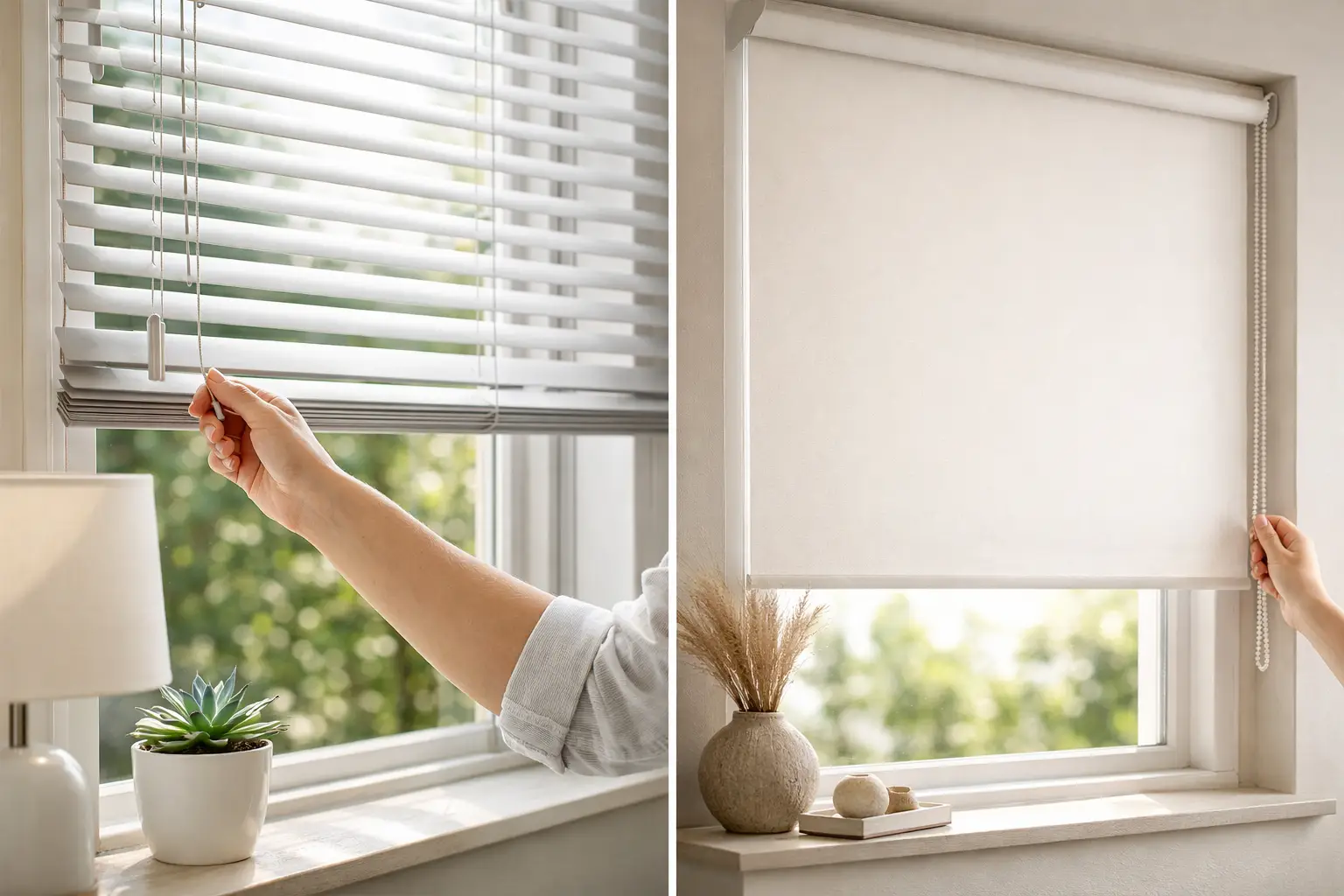
Stand in front of a bare window long enough and the same question usually comes up: venetian blinds vs roller blinds – which one will actually work better in the room, not just look good in a photo? The right answer depends on how you use the space, how much privacy you need, and whether you want a softer finish or a sharper, more structured look.
Both styles are popular for good reason. Roller blinds are clean, simple and easy to live with. Venetian blinds offer more precise control over light and privacy. When customers are choosing between the two, the best option is rarely about trends. It is about what the room needs day to day.
Venetian blinds vs roller blinds: the key difference
The biggest difference is how they control light. Roller blinds use a single piece of fabric that raises or lowers in one movement. Venetian blinds are made from horizontal slats that can tilt open, closed or somewhere in between.
That means roller blinds are often the simpler choice when you want a neat finish and straightforward shading. Venetian blinds give you more flexibility during the day because you can angle the slats to let in light while reducing glare or limiting visibility from outside.
This alone can make the decision much easier. If you want fine control, venetians usually come out ahead. If you want simplicity and a softer visual line, roller blinds often suit better.
Which style looks better?
This depends on the overall feel of the room. Roller blinds tend to suit modern interiors, understated schemes and spaces where you want the window covering to blend in rather than dominate. With the right fabric, they can look minimal, smart and tidy in bedrooms, kitchens, offices and open-plan living areas.
Venetian blinds bring more structure. Aluminium or wood-effect slats create clean horizontal lines that can make a window feel more defined. They often suit rooms where you want a slightly more architectural finish, such as home offices, dining rooms or commercial spaces.
There is also the matter of warmth. Fabric roller blinds can soften a room visually, especially in calmer neutral shades or textured materials. Venetian blinds can feel crisper and more practical. Neither is better across the board. It comes down to whether you want the blind to feel discreet or decorative.
Light control and privacy
This is where the comparison becomes more practical. Roller blinds are excellent when you want a clear choice between open and closed. If fitted with blackout fabric, they are especially effective for bedrooms, nurseries and media rooms where strong light reduction matters.
Venetian blinds are more adjustable. You can lower them and still tilt the slats to control brightness, reduce screen glare or preserve some privacy without blocking daylight completely. In street-facing rooms or offices, that extra control can be a real advantage.
There is a trade-off, though. Even when fully closed, venetian blinds can allow tiny lines of light between slats. If near-total darkness is the priority, a blackout roller blind usually performs better. If balanced daylight and privacy are the priority, venetians are often more useful.
What works best in different rooms?
Bedrooms often suit roller blinds, especially blackout options. They create a simpler seal across the window and help reduce early morning light. For children’s rooms, this can be particularly helpful, and made-to-measure fitting also supports a neater, safer finish.
Bathrooms and kitchens can work well with either style, but material matters. Moisture-resistant roller fabrics are a practical option, while aluminium or composite venetian blinds are also well suited because they are durable and easy to wipe down. In these rooms, the choice often comes down to the look you prefer.
Living rooms can go either way. If you want a softer, more relaxed feel, roller blinds often sit comfortably within the space. If you want to manage sunlight through the day without closing the room off completely, venetian blinds give you more flexibility.
For offices, clinics and other commercial settings, venetian blinds are often chosen for glare control and a more formal finish. Roller blinds also work very well in business environments, especially where a clean, uncluttered appearance is the priority.
Maintenance and day-to-day cleaning
If easy upkeep matters, think honestly about how much cleaning you are willing to do. Roller blinds are generally lower maintenance because they have a flat surface and fewer individual parts. Many fabrics can be kept looking fresh with light dusting or careful spot cleaning.
Venetian blinds can attract dust more visibly because each slat needs attention. They are not difficult to clean, but they do take longer. In kitchens, slats may also collect grease or moisture residue over time if ventilation is poor.
That does not mean venetians are high effort. It just means roller blinds usually win on simplicity. For busy households, rental properties or workspaces where practicality comes first, that can make a difference.
Durability and suitability for busy homes
Both blind types can be durable when made well and fitted properly. The better question is what kind of wear they are likely to face. Roller blinds have fewer moving visible parts, which keeps operation straightforward. They tend to perform well in family homes, bedrooms and general living spaces.
Venetian blinds are also hard-wearing, particularly in aluminium or composite finishes, but slats can bend if handled roughly. In homes with young children, pets or high traffic around the window, product choice and fitting quality matter more.
Child safety should never be an afterthought. Whichever style you choose, safe operation and correct installation are essential. That is one reason many homeowners prefer a measured and fitted service rather than trying to work it out themselves.
Cost and value
Price often comes into the conversation early, but value is the more useful measure. Roller blinds can be a very cost-effective option, especially when you want a clean finish across multiple windows. They offer plenty of design flexibility without always pushing the budget too far.
Venetian blinds can vary more in price depending on material and finish. Aluminium styles may be very competitive, while wood-look or premium options can cost more. The extra spend can be worthwhile if you want stronger visual detail or more precise light control.
It is also worth thinking beyond the blind itself. A made-to-measure product that fits properly, works smoothly and suits the room tends to offer better long-term value than an off-the-shelf option that almost fits but never feels quite right.
Venetian blinds vs roller blinds for made-to-measure homes
Made-to-measure fitting matters with both styles, but for slightly different reasons. Roller blinds benefit from accurate sizing because it improves the finish, reduces gaps and helps with privacy and blackout performance. A poorly sized roller blind can look fine from a distance but disappoint in use.
Venetian blinds also need precise measuring so the slats sit correctly, operate smoothly and complement the proportions of the window. On bay windows, awkward recesses or larger glazed areas, careful measuring is even more important.
For homeowners and businesses across Coventry and the wider West Midlands, this is often where tailored advice makes the decision easier. A room that gets harsh afternoon sun may benefit from one solution, while a shaded front room with overlooked windows may suit another entirely. What works on paper is not always what works best in the property.
So, which one should you choose?
Choose roller blinds if you want a clean look, easy maintenance and strong options for blackout and softness. They are especially useful in bedrooms, family spaces and interiors where simplicity is part of the appeal.
Choose venetian blinds if you want finer control over light, a more structured finish and the ability to adjust privacy through the day. They are often a smart choice for kitchens, offices, street-facing rooms and spaces where glare control matters.
If you are torn between the two, start with the room rather than the product. Think about the light at different times of day, how often the blind will be used, and whether your priority is softness, flexibility, easy cleaning or darkness at night. The best blind is the one that suits real life once the fitting is done and the room is back in use.
A good window covering should make the room easier to live with every day, not just easier to photograph. When you choose with the space in mind, the right option usually becomes clear.