


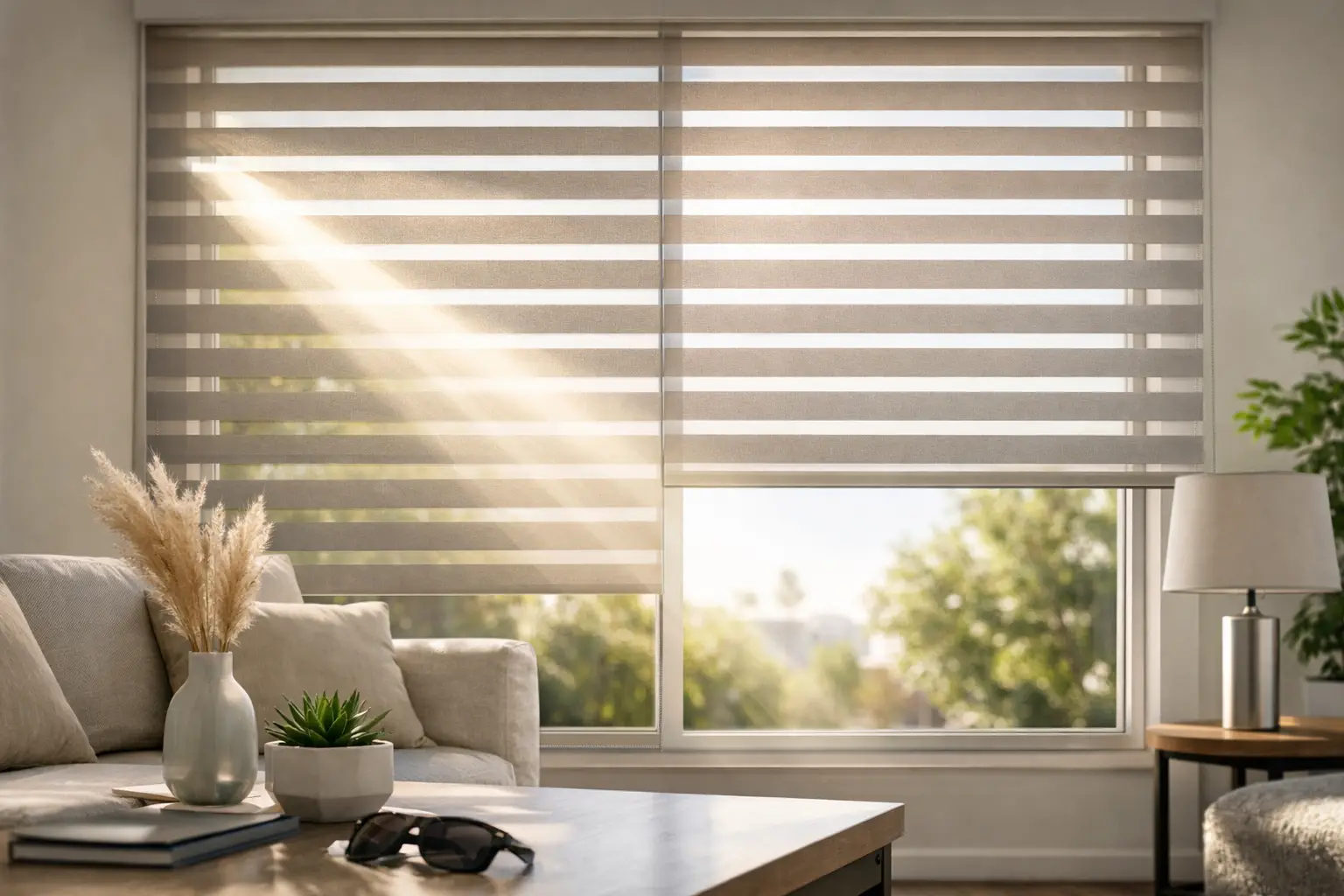
Sun damage usually shows up slowly. A sofa fades on one side, timber flooring loses its depth of colour, and rooms that looked bright and welcoming start to feel harsh and overheated by mid-afternoon. That is where UV protection window blinds make a real difference. They do more than soften daylight – they help shield interiors from prolonged sun exposure while giving you better control over comfort, privacy and the overall look of the room.
For many homeowners and business owners across Coventry and the West Midlands, that balance matters. You want natural light, but not glare on a screen. You want warmth in the room, but not excessive heat building up near south-facing windows. You want a blind that looks right, but also works hard in the background every day.
What UV protection window blinds actually do
Ultraviolet rays can pass through ordinary glazing and gradually affect fabrics, furniture, flooring and artwork. Blinds designed with UV protection in mind help reduce the amount of damaging sunlight entering the space, which can slow down fading and make interiors easier to live with over time.
That does not mean every blind blocks UV in the same way. Performance depends on the material, colour, weave, opacity and how closely the blind fits the window. A pale decorative blind may look the part but offer limited protection, while a tightly woven roller fabric or blackout option can make a much bigger impact.
This is why made-to-measure blinds are often the better route. Gaps around the sides or an awkward drop can let in more light than expected. A precise fit gives you a cleaner finish and better day-to-day performance.
Why UV protection matters in real rooms
The benefit is not only about preserving furnishings, although that is a big part of it. In homes, strong sun can make lounges uncomfortable, overheat bedrooms and create glare in kitchens and home offices. In commercial spaces, it can affect staff comfort, screen visibility and the professional appearance of reception areas, meeting rooms and shop fronts.
There is also a practical cost angle. Replacing faded soft furnishings or flooring is expensive. Even if the damage happens gradually, it adds up. Choosing blinds that help reduce UV exposure can be a sensible long-term decision, especially in rooms with large windows, bi-fold doors or strong afternoon sun.
Still, it depends on the space. A north-facing room with soft light may not need the same level of protection as a south- or west-facing room that gets direct sun for hours. The right blind is often less about chasing the highest spec and more about matching the product to how the room is actually used.
Which styles of UV protection window blinds are best?
Roller blinds are one of the most popular choices for UV control because the fabric options are broad and the look is simple. You can choose from dimout and blackout materials, solar reflective backings and moisture-resistant finishes depending on the room. In a bedroom or media room, a blackout roller blind can help with both light control and UV reduction. In a kitchen or office, a screen-type fabric may be better if you still want filtered daylight.
Venetian blinds are another strong option, especially when flexible light control matters. Tilting the slats lets you manage direct sun without completely darkening the room. This can work well in living rooms, offices and street-facing spaces where you want privacy and daylight at the same time. Aluminium and composite options are also low maintenance, which suits busy households and commercial settings.
Vertical blinds are often a good fit for larger windows and patio doors. They give you adjustable shading across wide openings and can be particularly useful in conservatories, offices and open-plan rooms. Because the louvres can be angled, they help reduce glare while still keeping the space usable during bright parts of the day.
No single style is always best. If your priority is maximum protection and minimal light leakage, roller blinds with the right fabric may be the front-runner. If you want adaptable shading throughout the day, Venetian or vertical blinds can be more practical.
Fabric, colour and finish make a bigger difference than many expect
People often focus first on blind style, but the material choice is what really shapes performance. Tighter weaves and specialist coatings usually improve UV resistance. Blackout fabrics tend to offer stronger protection, though they also reduce natural light more significantly. That can be ideal in bedrooms, nurseries and presentation rooms, but less suitable in a living area where you still want a bright feel.
Colour matters too. Darker shades can be effective for glare reduction, yet they may absorb more heat depending on the fabric and backing. Lighter colours often keep the room feeling airy and can work well when paired with a reflective coating. The right answer depends on whether your main problem is fading, glare, heat, privacy or a mix of all four.
This is where tailored advice is useful. Two windows in the same house may need completely different solutions because of orientation, room use and décor. A made-to-measure approach avoids the guesswork that often comes with buying off the shelf.
UV protection and heat control are related, but not identical
A common assumption is that if a blind reduces UV, it will automatically keep the room cooler. Sometimes that is true, but not always to the same degree. UV protection is about filtering harmful rays that contribute to fading and surface damage. Heat control is about reducing solar gain and the build-up of warmth in the room.
Some blinds do both very well, especially those with thermal or reflective properties. Others mainly help with light filtering and interior protection. If overheating is one of your main concerns, it is worth choosing a blind that has been selected for thermal performance as well as UV resistance.
For sun-facing rooms, combining these benefits can noticeably improve comfort. A room that feels too bright and too hot for part of the day becomes more usable, which matters whether it is a family lounge, a garden room or an office where people need to concentrate.
Where these blinds make the biggest difference
Bedrooms often benefit because direct morning or evening sun can be disruptive, especially in summer. Living rooms are another key area, particularly where there is expensive furniture, wooden floors or large glazed doors. Home offices need attention too, as glare on monitors can quickly become frustrating.
In commercial properties, UV-conscious blinds are useful anywhere presentation and comfort matter. Waiting areas, meeting rooms, salons, clinics and office spaces all benefit from better control of sunlight. Customers and staff notice when a room feels calmer, cooler and easier on the eyes.
Landlords and renovators may also see the value. Protecting interiors between tenancies or during staging can help maintain the condition and appearance of the property without adding maintenance headaches.
Why measuring and fitting matter
A good blind can underperform if it is poorly fitted. Light gaps, uneven hanging and the wrong recess allowance all affect how much sun reaches the room. That is one reason professionally measured blinds tend to give better results than standard ready-made options.
The finish matters as much as the function. Blinds should sit neatly, operate smoothly and suit the proportions of the window. In bay windows, wide patio doors or commercial frontages, accurate measuring becomes even more important. It is not simply about getting something to cover the glass – it is about making sure the blind works properly every day.
For customers who want a straightforward process, a full service from consultation through to fitting saves time and avoids costly mistakes. Queen Blinds focuses on that practical side of the job, helping customers choose products that look right and perform well in the specific conditions of the room.
Choosing the right option for your space
If your main concern is protecting interiors from fading, start with the windows that get the strongest direct sun. If glare is the bigger issue, look at blind styles that allow adjustable light control. If you need a room to stay darker and more private, blackout fabrics are worth considering. And if appearance matters just as much as function, the finish, texture and colour should be chosen alongside performance, not after it.
There is rarely a one-size-fits-all answer. A family home may need child-safe, easy-clean blinds in one room and a softer decorative finish in another. A business may want a smart, low-maintenance look that also helps staff work comfortably through bright afternoons. The best results come from treating each window as part of the wider room, not as an isolated purchase.
The right blinds should make the space easier to live in from the moment they are fitted. If they also protect what is inside the room for years to come, that is money well spent.