


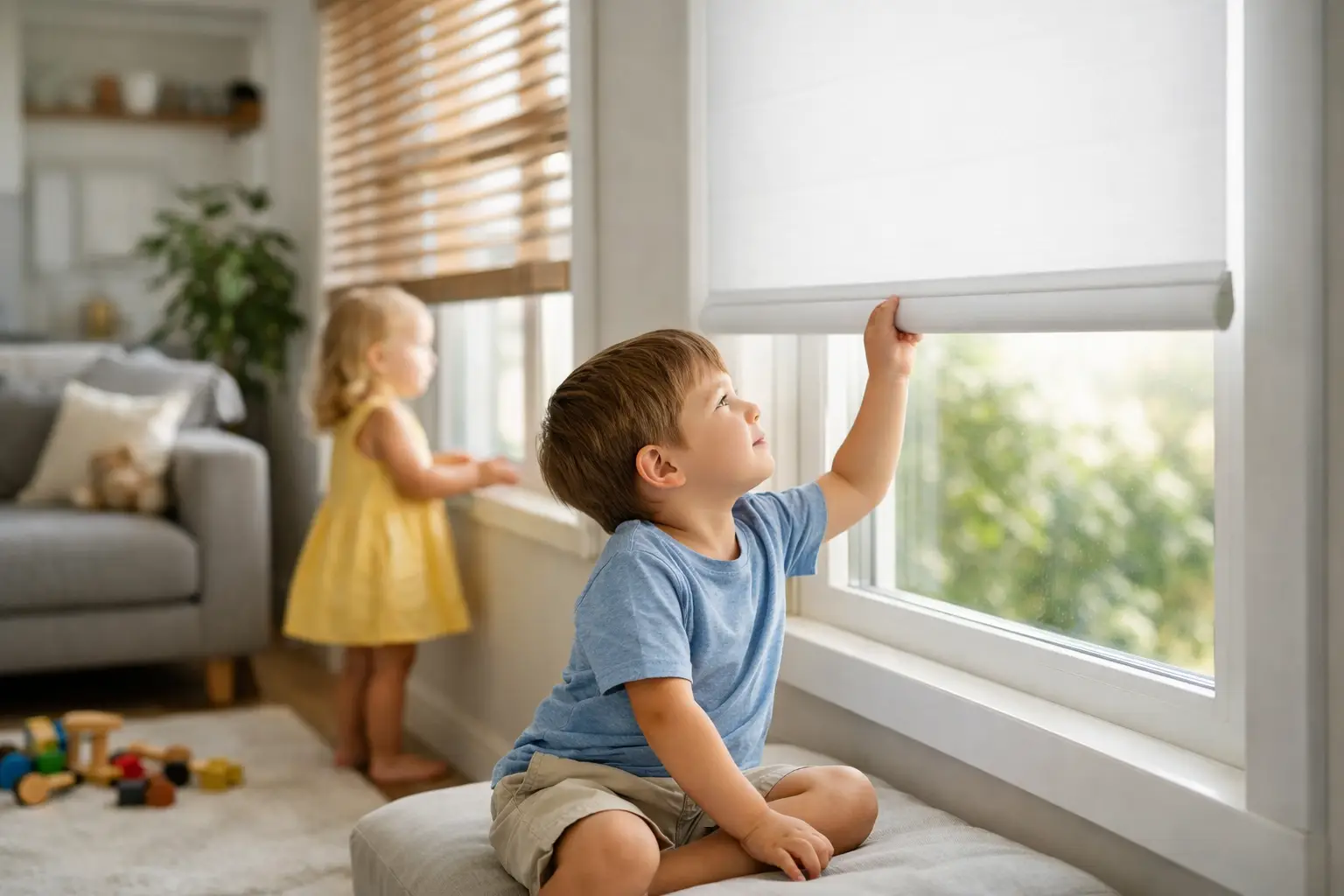
The quickest way to make a room feel finished is often the blinds. The quickest way to worry about that same room, if you have young children, is the cords, chains and loose fittings that can come with the wrong choice. That is why child safe blinds ideas matter so much – not as an afterthought, but as part of choosing a window covering that works properly for everyday family life.
For most homes, the best answer is not one universal blind. It depends on the room, the age of the children, how often the blind will be used and whether you also need blackout, privacy or insulation. A nursery has different demands from a kitchen, and a family living room is not quite the same as a rental property or a child-friendly waiting area in a business setting.
Child safe blinds ideas that work in real homes
The safest and most practical options tend to share one thing: they reduce or remove accessible cords and keep operation simple. That can mean a cordless mechanism, a spring-assisted design, a motorised system or a carefully fitted blind with built-in safety features. The right choice should feel easy to live with, not like a compromise on appearance.
A made-to-measure blind also helps here. When a blind fits the window properly, there is less excess material, cleaner operation and fewer awkward adjustments. It looks better, but just as importantly, it tends to function more reliably day to day.
1. Cordless roller blinds for simple everyday use
If you want a straightforward starting point, cordless roller blinds are one of the strongest child safe options. They suit modern homes, work well in bedrooms and living spaces, and keep the window area neat without dangling controls.
They are especially useful where children can easily reach the window, such as playrooms or ground-floor family rooms. A roller blind also gives you flexibility with fabric choice. If the room needs better sleep conditions, blackout fabric is often the better fit. If you want softer daytime light, a light-filtering fabric may be more practical.
The trade-off is that some homeowners want very precise control over height and positioning, and that is where motorised systems can sometimes feel even more refined.
2. Motorised blinds for maximum control
Motorised blinds are one of the smartest child safe blinds ideas for busy households. With no operating cords or chains to manage, they create a cleaner finish and offer an easy way to adjust light levels without having to reach across furniture or climb around a cot.
They make particular sense in bedrooms, larger bay windows and rooms with multiple blinds that are opened and closed every day. They are also helpful in commercial settings where safety, consistency and a polished appearance all matter.
The obvious consideration is budget. Motorisation is usually a bigger initial investment than a manual blind, but for many families it pays back in convenience, safety and day-to-day ease. It can also encourage you to use the blinds properly, rather than leaving them half-set because adjusting them is a nuisance.
3. Blackout blinds for nurseries and children’s bedrooms
Safety is the first concern, but comfort matters too. In nurseries and children’s bedrooms, blackout blinds are often the most useful option because they support naps, earlier bedtimes in summer and better sleep overall.
From a child safety point of view, the best version is a blackout blind with a cordless or motorised operation. That gives you the sleep benefits without introducing unnecessary risk around the window. It is also worth thinking about fit. A made-to-measure blackout blind usually performs better than an off-the-shelf alternative because it can reduce light gaps around the edges.
If the room also gets cold in winter or very warm in direct sun, an insulated or thermal fabric can make the space more comfortable through the year.
Choosing child safe blinds ideas by room
The most useful way to narrow down your options is often to stop thinking about blind types in isolation and start with the room itself.
Living rooms and family spaces
In a main family room, you usually need a balance of privacy, daylight and durability. Roller blinds are a dependable choice because they are simple, tidy and available in a wide range of finishes. If the room gets heavy use, easy-clean fabrics can make life easier.
Motorised blinds are also worth considering in larger family areas, especially where sofas or storage units make windows harder to access. They keep the room looking streamlined and remove the temptation to leave cords or chains within reach.
Bedrooms and nurseries
Children’s bedrooms call for a little more thought about darkness and routine. Blackout roller blinds are often the most practical answer, and motorisation can be especially helpful in nurseries where you want quiet, fuss-free operation.
For older children, durability starts to matter more. A blind that operates smoothly and stands up to daily use is usually a better investment than something cheaper that feels flimsy after a few months.
Kitchens and bathrooms
These spaces need moisture resistance, easy maintenance and good privacy. Depending on the layout, a practical fitted blind in a wipe-clean finish may be more useful than a soft fabric-heavy option.
Safety still matters here, especially in family kitchens where children are often around while meals are being prepared. A neat, properly fitted blind with controlled operation is usually the best route.
Offices, schools and commercial spaces
Child safe blinds ideas are not only for homes. In nurseries, clinics, schools, waiting rooms and family-facing businesses, safer blind operation is part of creating a more responsible environment.
Motorised blinds or carefully specified fitted systems can help commercial spaces stay both presentable and practical. They also reduce wear from repeated handling, which can be useful in busy premises.
Beyond cords – what else to look for
Safety is not only about whether a blind has a visible cord. It is also about installation quality, the reliability of the mechanism and how the blind sits within the room.
A blind that is poorly measured or awkwardly fitted can create its own problems. If it catches, hangs unevenly or needs repeated tugging to work, it becomes less convenient and less dependable. That is one reason many homeowners prefer a full measuring and fitting service rather than trying to adapt an off-the-shelf product.
The finish matters as well. Smooth operation, secure fixings and materials suited to the room all play a part. A family bathroom needs something different from a nursery, and a sunny south-facing living room may benefit from UV-protective or heat-managing fabrics.
Style does not need to be sacrificed
One of the biggest misconceptions is that safer blinds look basic or limited. In reality, many child-safe options are also some of the cleanest-looking designs available.
Cordless and motorised blinds suit contemporary interiors particularly well because they remove visual clutter around the window. Roller blinds can be understated or decorative depending on the fabric, while wood-look and textured finishes can add warmth without making the room feel heavy.
For landlords and renovators, this matters. You want a blind that feels appealing to future tenants or buyers, but also practical enough for everyday use. A child-safe design can achieve both.
When tailored advice makes the difference
If you are comparing products online, a lot of them can sound similar. The real difference often comes from matching the blind to the room properly and making sure it is measured and installed correctly.
That is where local, made-to-measure advice can save time. A home with wide patio doors, shallow recesses or awkward bay windows may need a different solution from a standard bedroom window. At Queen Blinds, this is often where a consultation is most useful – not to overcomplicate the decision, but to narrow it down to what will genuinely work in your home.
The best child safe blinds ideas are usually the ones that solve more than one problem at once. They make the room safer, yes, but they also improve privacy, control the light, look right with the rest of the interior and feel easy to use every single day.
If you are choosing blinds for a family home, start with safety and then build from there. The right blind should give you confidence when the room is in use, and that peace of mind is always worth planning for.