


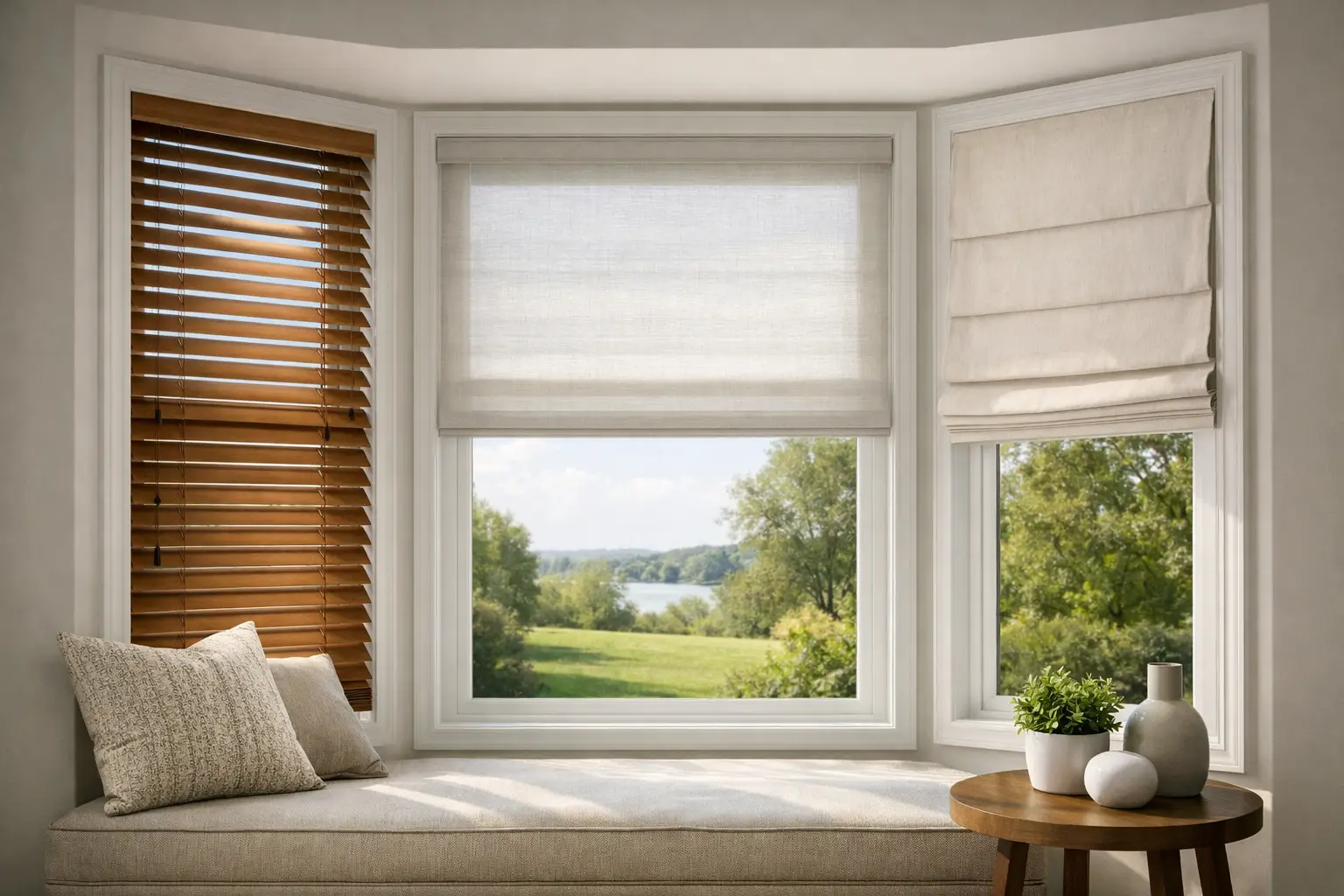
Bay windows look impressive until it is time to dress them properly. The angles, depth and individual panes mean the best blinds for bay windows are rarely the same as the best blinds for a standard flat window. A good result depends on more than style alone – you need something that suits the shape, gives you the right light control and fits cleanly without making the whole area feel crowded.
That is why bay windows benefit from a made-to-measure approach. Off-the-shelf options can leave gaps, catch on handles or sit awkwardly across each section. When each blind is measured to the space, the finished look is tidier and the blinds work as they should day after day.
What makes bay windows trickier to cover?
A bay window usually projects outwards and is made up of three or more separate sections. That creates more corners, more brackets and more chances for a poor fit. Even small measuring errors become obvious when blinds sit side by side.
There is also the question of how you use the room. In a front lounge, privacy may be the main concern. In a kitchen bay, you may want to keep the area bright while cutting glare. In a bedroom, blackout performance matters more. The right answer depends on the room, the window depth and how much of the sill or surrounding space you want to keep accessible.
Best blinds for bay windows by style
Roller blinds for a clean, simple finish
Roller blinds are one of the most practical choices for bay windows because they can be fitted to each individual section. That keeps the shape of the bay visible rather than covering it with one heavy treatment. They are neat, easy to operate and available in a wide range of colours, textures and performance fabrics.
For modern homes, roller blinds often give the smartest overall look. They work especially well when you want a minimal finish that does not compete with the architecture of the bay itself. If the room gets strong sunlight, fabrics with UV protection can help reduce glare and protect furnishings from fading.
Blackout roller blinds are a strong option for bedrooms and media rooms, but they do not suit every bay in the same way. In living spaces, a dim-out or light-filtering fabric can feel more balanced, giving privacy without making the room too dark during the day.
Venetian blinds for flexible light control
If you want more control over privacy and daylight, Venetian blinds are often among the best blinds for bay windows. The adjustable slats let you tilt the light rather than simply having the blind fully up or fully down. That can be especially useful for street-facing bays or offices where glare changes through the day.
Aluminium Venetians suit kitchens, bathrooms and workspaces because they are practical and easy to wipe clean. For lounges, dining rooms and bedrooms, wooden-look composite styles can give a warmer appearance while still coping well with everyday wear. They also suit homes where you want the look of timber without the maintenance concerns of real wood.
The trade-off is that Venetians create a more structured look. Some homeowners love that crisp finish, while others prefer the softer appearance of a fabric blind. They also need enough clearance to operate smoothly, so accurate measuring matters.
Vertical blinds for larger bays and commercial spaces
Vertical blinds are sometimes overlooked in homes, but they can work very well in wide bay windows, particularly in offices, schools, clinics and other commercial settings. They offer strong light control, good privacy and a practical finish for larger glazed areas.
Because the louvres rotate, you can adjust the light without fully opening the blind. That makes vertical blinds useful where glare control is important, such as meeting rooms or front rooms with large bay windows. They are also straightforward to maintain and can be specified in blackout or dim-out fabrics.
In domestic interiors, verticals tend to suit contemporary or functional spaces more than decorative period rooms. They are not always the first choice for a traditional bay in a Victorian or Edwardian property, but in the right setting they do the job very well.
Choosing blinds for the room, not just the window
Living rooms and front bays
For living rooms, the balance usually comes down to privacy, appearance and daylight. Roller blinds and Venetian blinds both work well here. A light-filtering roller fabric keeps the room bright while softening the view from outside, while Venetians give you more control if the bay catches low sun in the morning or evening.
If the bay is the focal point of the room, keeping each blind fitted neatly within its own section often gives the cleanest finish. It avoids overpowering the feature and helps the whole space feel more considered.
Bedrooms
Bedrooms need better light control, so blackout roller blinds are often the most effective choice. If the bay includes several smaller panes, separate made-to-measure blinds can reduce light gaps and sit closer to the frame. That is especially useful in children’s rooms, where early morning light can be a problem.
Safety also matters in family homes. Child-safe operating options and professionally fitted blinds give extra peace of mind, particularly in nurseries and bedrooms where cords and controls need careful consideration.
Kitchens and bathrooms
Moisture and easy cleaning are the main priorities here. Venetian blinds, especially aluminium or composite styles, are practical because they cope well with humidity and can be wiped down quickly. Roller blinds can also work if you choose a suitable performance fabric.
In these rooms, it often makes sense to focus on durability before decorative detail. A bay window can still look smart, but the blind has to stand up to steam, splashes and regular use.
Offices and commercial properties
For offices and other business premises, glare reduction, privacy and a professional finish are usually more important than decorative softness. Vertical blinds and Venetians are often the strongest options, depending on the size and shape of the bay. They create a tidy appearance and allow staff to adjust light levels through the day.
Why made-to-measure matters more for bay windows
Bay windows are one of the clearest examples of where measuring and fitting should not be guessed. Each section may differ slightly, and the angle of the bay affects how brackets, controls and blind widths need to work together. A small issue on paper can become obvious once the blinds are installed.
Made-to-measure blinds help avoid common problems such as overlapping blinds, gaps that affect privacy, and hardware that catches when you open or close the blinds. They also help preserve access to handles and sills, which is often forgotten until after a poor installation.
This is where a full service makes a real difference. With expert measuring, tailored advice and fitting included, homeowners and businesses can choose blinds based on what will actually work in the space rather than what looks good in a photo. At Queen Blinds, that practical approach is a big part of helping customers across Coventry and the West Midlands get a result that feels right from the start.
Features worth considering
The best blinds for bay windows are not only about style. Fabric and operating options can change how the blinds perform day to day. Blackout linings suit bedrooms, while thermal and insulating fabrics can help improve comfort in bays that feel cold in winter. Motorised operation is also worth considering for hard-to-reach sections or for a cleaner, more streamlined finish.
If the bay gets direct sun, UV-resistant materials can help reduce fading on floors and furniture. If privacy is the main issue, slatted blinds or denser fabrics usually give better control than sheer materials. It all comes back to how the room is used.
So which blind is best?
If you want the simplest all-round answer, roller blinds are often the safest choice for most bay windows. They are clean, versatile and easy to tailor to different rooms. If adjustable light control matters more, Venetian blinds are hard to beat. For larger bays or practical commercial spaces, vertical blinds can be the better fit.
The right choice is usually the one that suits your bay window’s shape, your room’s needs and the level of finish you want. A bay window should feel like an asset, not a fitting problem waiting to happen. When the blinds are chosen properly and fitted with care, the whole space works better – and looks it too.
If you are planning to update a bay window, it helps to start with how you want the room to feel once the blinds are in place, then work backwards from there.