


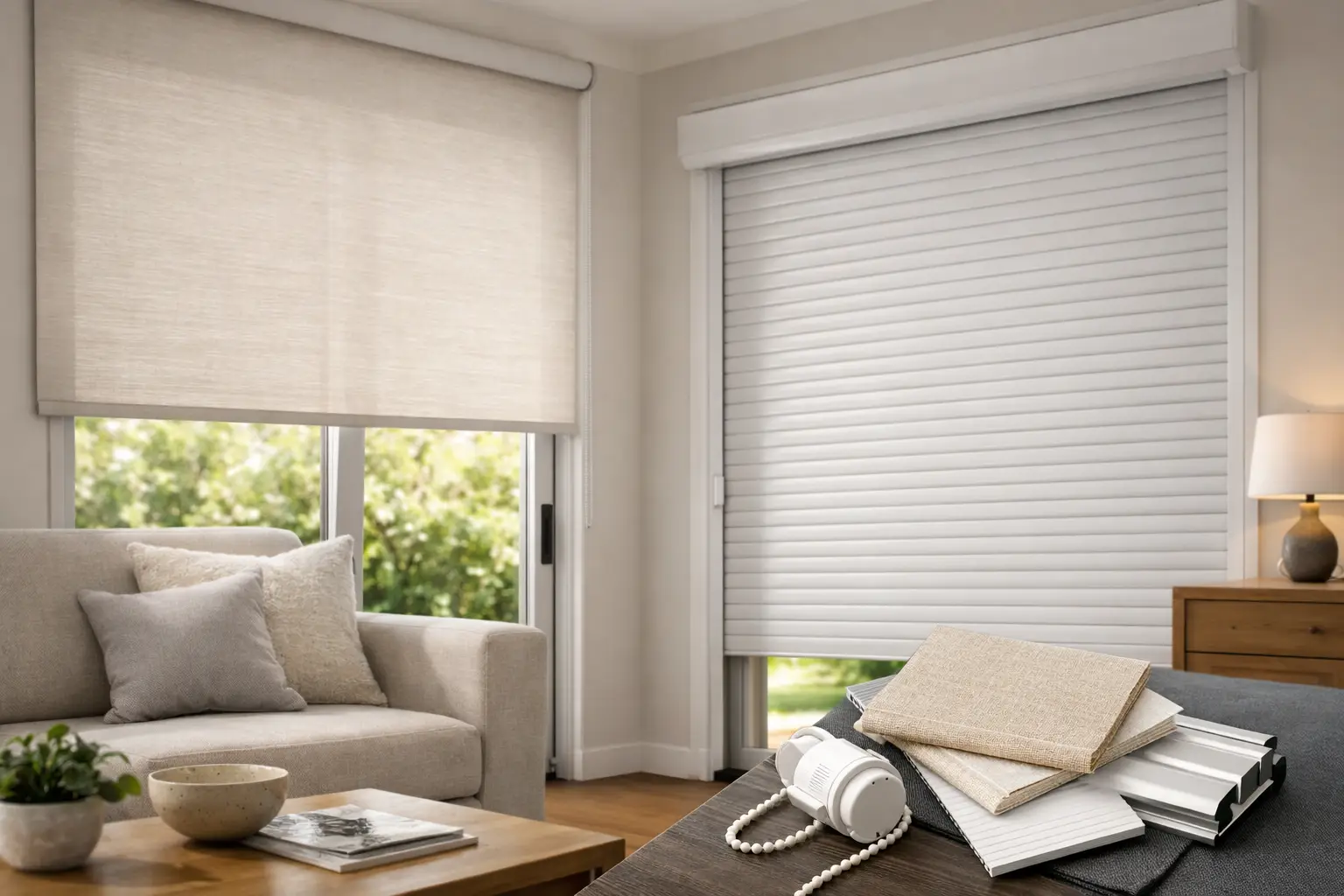
A south-facing lounge can feel bright and welcoming at 10am, then uncomfortably hot and glare-filled by lunchtime. A bedroom may need complete darkness for a child’s early bedtime, while a street-facing bay window needs privacy without losing all its daylight. These are the practical questions behind the search for roller blinds shutters – and the right answer depends on the room, the window and how you use the space.
Roller blinds and shutters are often considered together because both give a window a clean, tailored finish. They work in very different ways, however. Roller blinds use a single fabric panel that rolls neatly into a tube at the top of the window. Shutters use solid louvred panels that can be opened, closed or tilted. Understanding the difference makes it much easier to choose a window covering that looks right and performs well for years.
Roller Blinds or Shutters: The Key Difference
The most obvious difference is how each option controls light. A roller blind is raised or lowered, giving you a clear choice between a covered window and an open one. Depending on the fabric, it can filter sunlight softly, reduce glare, provide daytime privacy or block light almost completely.
Shutters offer more adjustment throughout the day. Their louvres can be tilted to direct sunlight upwards, limit views in from the street or allow fresh light into a room without exposing the whole window. This makes them especially appealing for front-facing living rooms, bathrooms and properties where neighbouring windows are close by.
There is no universal winner. Roller blinds are often the more flexible choice for fabric, colour and budget, while shutters bring a more architectural, permanent look. The best option comes down to the balance of privacy, insulation, appearance and day-to-day convenience you need.
When Roller Blinds Are the Better Choice
Roller blinds suit a remarkably wide range of rooms because the fabric choices are so varied. A light-filtering blind can soften harsh sun in a kitchen or conservatory without making the room feel closed in. A blackout roller blind is a practical choice for bedrooms, nurseries, media rooms and shift workers who need reliable darkness during the day.
They are also excellent for wide windows, patio doors and commercial spaces. The simple, compact design keeps the treatment close to the glass, which is useful where bulky curtains would get in the way. In an office, clinic or shop, roller blinds can reduce screen glare and maintain a smart, uncluttered appearance.
For homes across Coventry and the West Midlands, thermal roller fabrics can be particularly worthwhile. They add a layer at the window to help reduce heat loss in colder months and lessen solar heat gain when the weather turns warmer. A blind will not replace good glazing or insulation, but it can make a noticeable difference to comfort in rooms that tend to feel chilly or overheat.
Roller blinds are also easy to tailor to a decorating scheme. Neutral fabrics work well when you want the furniture or wall colour to lead the room. Textured weaves can add warmth without the upkeep of heavier curtains, while moisture-resistant options are suitable for kitchens and bathrooms. For a more polished finish, cassette systems and coordinated bottom bars can be selected to complement the frame and interior style.
Think about the fabric before the colour
Colour matters, but performance should come first. A pale sheer fabric may look beautiful in a sunny room, yet it will not provide the privacy or glare reduction needed for television viewing. Equally, a very dark blackout fabric can be ideal in a bedroom but may feel too heavy in a compact dining room.
It helps to decide what the blind must do before choosing a shade. Ask whether the main concern is privacy, heat, glare, sleep, UV protection or decoration. A made-to-measure consultation lets you see fabric samples against the actual light in your room, rather than relying on a small image on a screen.
When Shutters Make Sense
Shutters are a strong choice when the window itself is a feature. Bay windows, period properties and large front-facing windows often benefit from their structured lines. They can frame the window neatly while allowing you to adjust the louvres for changing light and privacy.
They are commonly chosen for bathrooms and kitchens too, particularly in water-resistant composite finishes. These materials offer the appearance of painted wood with greater resilience in humid areas. They are straightforward to wipe clean, making them useful where cooking splashes, steam or everyday family life demand low-maintenance finishes.
Shutters can provide an additional barrier at the window, but their insulation performance varies with the panel design, material and fit. They should be measured carefully so the panels operate properly and do not interfere with handles, radiators, inward-opening windows or nearby furniture. This is one area where professional measuring is particularly valuable.
The trade-off is that shutters generally require a greater upfront investment than roller blinds. They are a long-term interior feature rather than a quick fabric update. If you are refreshing several rooms on a set budget, roller blinds may allow you to achieve a coordinated result across the property more affordably.
Choosing Roller Blinds Shutters Room by Room
A room-by-room approach prevents style from overtaking practicality. Bedrooms usually benefit from blackout roller blinds, especially where streetlights or early sunrise disturb sleep. For an even darker result, the fitting method and any gaps around the blind need consideration as well as the fabric itself.
Living rooms often depend on orientation. A bright, south- or west-facing room may need solar-control roller fabric to reduce glare and protect furnishings from fading. A road-facing lounge may be better suited to shutters, as tilted louvres allow daylight in while reducing direct views into the room.
In bathrooms, choose materials that can cope with moisture. Waterproof or moisture-resistant roller blinds and composite shutters are both sensible options. Avoid assuming that every fabric or wood finish is suitable simply because it looks right in a photograph.
Kitchens need window coverings that are practical around heat, steam and regular cleaning. A roller blind is compact and efficient above a sink or worktop. Shutters can work beautifully on a larger kitchen window where you want more precise privacy and a harder-wearing finish.
For offices and commercial premises, the priority is often glare control, privacy and a professional appearance. Roller blinds are a popular choice for their clean operation and suitability for larger spans. Motorised systems can make them especially useful where windows are high, difficult to reach or operated frequently throughout the day.
Why Made-to-Measure Fitting Changes the Result
Even the right product can disappoint if it is poorly measured or fitted. A ready-made blind may leave uneven gaps, sit awkwardly around handles or fail to cover the part of the window that causes the glare. With shutters, inaccurate measurements can affect panel alignment and smooth operation.
Made-to-measure window coverings are designed around the details of your space. This includes recess depth, frame type, opening direction, obstructions and how much coverage you need. It also means you can discuss child-safe operating options, including motorised controls where appropriate, rather than treating safety as an afterthought.
Professional fitting saves the uncertainty of measuring yourself and gives the finished window a more considered look. Queen Blinds offers free home appointments, allowing customers to compare suitable options, receive practical advice and have their chosen blinds measured and fitted correctly.
A Better Way to Decide
Start with the problem you want to solve, not the product name. If your priority is blackout sleep, glare reduction, a soft fabric finish or cost-conscious coverage across several windows, roller blinds are likely to be the natural starting point. If you want adjustable privacy, a distinctive built-in look and easy-clean panels, shutters may be worth the extra investment.
For some homes, using both across different rooms is the most practical choice. A consistent colour palette or finish can tie the look together without forcing one treatment to do every job. The most satisfying window covering is the one that feels effortless once fitted: it controls the light you need, suits the room and makes everyday living more comfortable.