


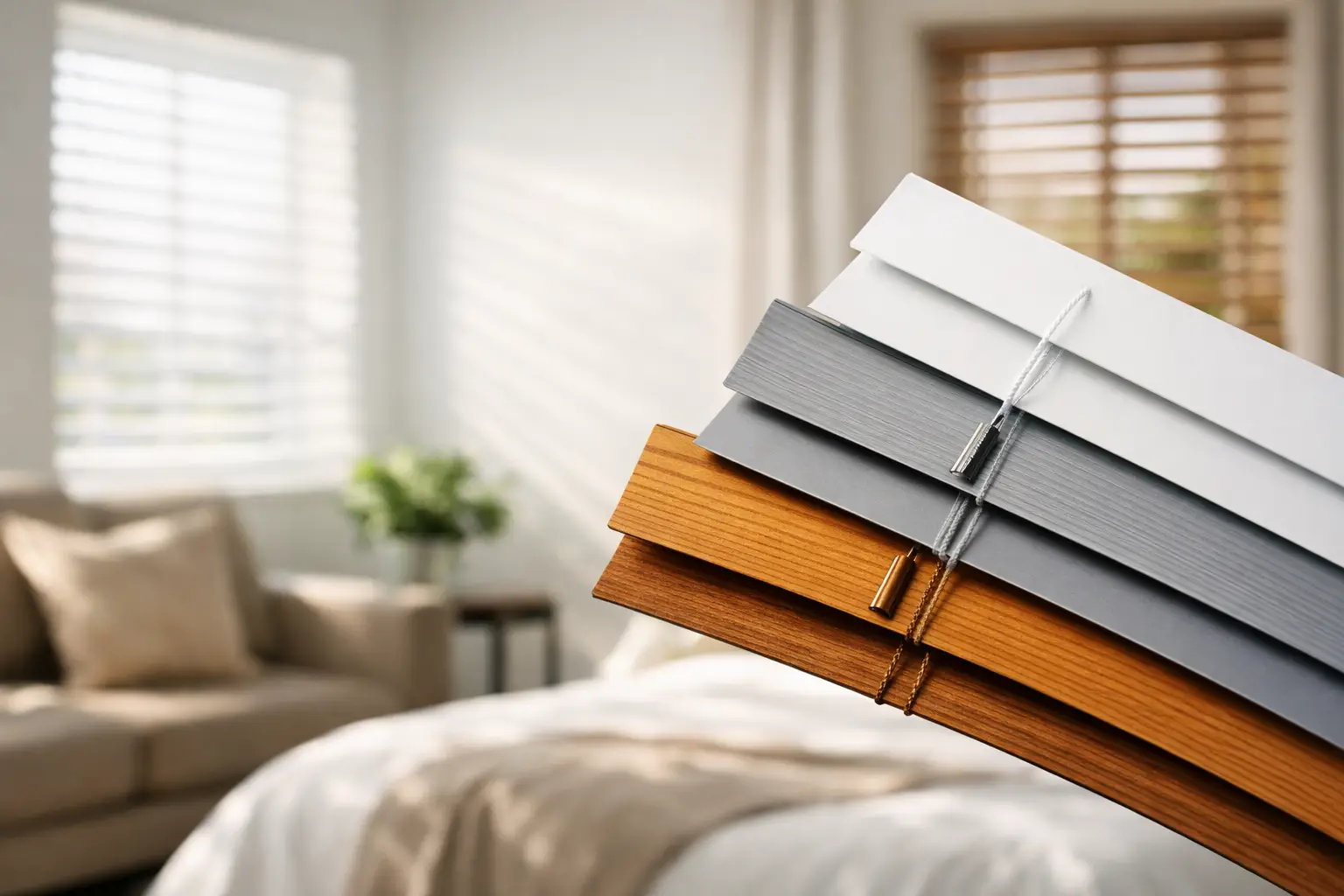
A well-chosen Venetian blind can make a compact Coventry kitchen feel brighter, give a south-facing lounge more comfortable light, or bring a tidy, professional finish to an office. This guide to Venetian blind slats explains the details that make the difference: material, width, colour, finish and the way each choice performs in daily life.
Venetian blinds are built from horizontal slats that tilt to direct daylight, close for privacy or lift neatly when you want a clear view. That simple design gives you more control than many other window coverings, but it also means the slats deserve careful consideration. The right option is not always the one that looks best in a sample book. It needs to suit the room, the window and how you use the space.
Why Venetian blind slats matter
The slats set the character and performance of a Venetian blind. They affect how much light enters the room, how easy the blind is to clean, how it handles moisture, and whether it feels light and understated or bold and architectural.
When the slats are tilted upwards, they can soften direct sunlight while still allowing daylight to reflect into the room. Tilted downwards, they offer a greater degree of privacy, which is useful in overlooked bedrooms, ground-floor living rooms and commercial premises. Fully raised, the blind stacks at the top of the window, leaving the glass largely clear.
This flexibility is a key reason Venetian blinds work so well across homes, rental properties and workplaces. However, there is a practical trade-off. Because there are several individual slats, they need a little more routine dusting than a roller blind. Choosing a durable material and a suitable slat width makes that upkeep much easier.
A guide to Venetian blind slats by material
Aluminium slats
Aluminium Venetian blinds are a practical choice for kitchens, bathrooms, utility rooms and offices. The slats are light, moisture-resistant and simple to wipe clean, so they cope well with steam, splashes and everyday marks. They are also available in a broad range of colours, from crisp white and soft grey to black, metallic shades and brighter statement tones.
Their slim profile suits contemporary interiors and windows where a clean, uncluttered look matters. Aluminium is often the best value choice too, particularly when fitting several windows in a commercial space or rental property. On the other hand, it can feel cooler than wood-effect alternatives, so it may not be the first choice for a traditional lounge or a bedroom where warmth is the priority.
Real wood slats
Wooden Venetian blinds bring natural texture and a more substantial appearance. They work particularly well in lounges, dining rooms, home offices and period properties around the West Midlands, where timber finishes can complement flooring, furniture and original features.
Wood is a good insulator compared with metal, which can help create a more comfortable feel by the window. It is best kept away from consistently damp conditions, though. A wooden blind in a well-ventilated kitchen may be perfectly suitable, but a bathroom with frequent condensation calls for a more moisture-tolerant alternative.
Faux wood and composite slats
Faux wood or wooden-look composite slats offer the appearance of timber with stronger resistance to humidity. They are a sensible option for kitchens, bathrooms and busy family homes where you want a warmer finish without worrying about occasional splashes or moisture in the air.
Composite slats tend to be heavier than aluminium, and this should be considered on very wide windows. Made-to-measure advice is useful here, as the blind needs the right headrail, controls and support for its size. For many customers, the balance of durability, easy cleaning and a wood-look finish makes composite slats an excellent all-round choice.
Choosing the right slat width
Slat width changes both the look of the blind and the view through it. Narrower slats, commonly around 25mm, create a neater, more detailed finish. They suit smaller windows, bathroom windows and spaces where you want the blind to sit discreetly within the frame.
Wider slats, such as 35mm or 50mm options, make more of a design statement. They tend to suit larger windows, bay windows and rooms with a more open layout. When tilted open, wider slats can also give a clearer view outside because there are fewer horizontal lines across the glass.
There is no universal best width. A 50mm wood-effect slat may look excellent across a wide lounge window but overpower a small cloakroom window. Conversely, a narrow aluminium slat can look sharp and practical in an office but may not deliver the warmth wanted in a family dining room. Proportion is what matters.
Colour, finish and light control
White, cream and pale grey slats remain popular because they keep a room feeling light and work with changing décor. They are especially effective in smaller rooms or properties being prepared for sale or let. A soft neutral blind can frame the window without competing with wall colour, flooring or furniture.
Darker colours create more contrast. Black, charcoal and deep wood tones can give a window definition and suit modern interiors, studies and commercial settings. Keep in mind that very dark slats can show dust more readily, particularly in bright rooms. They can still be a strong choice, but they benefit from regular cleaning.
A gloss finish reflects more light and is easy to wipe, making it suitable for functional spaces. Matte and textured finishes have a softer, less reflective appearance and can feel more considered in living areas. Woodgrain effects bring depth without the maintenance considerations of natural timber.
Venetian blinds provide excellent adjustable light control, but they are not usually a full blackout solution on their own. Small gaps between slats and around the edges allow some light through. For bedrooms, nurseries or media rooms where near-darkness is required, consider pairing a Venetian blind with curtains or choosing a dedicated blackout blind instead. The best solution depends on whether your main priority is flexible daylight, privacy or blackout performance.
Measuring and fitting make the difference
Even high-quality slats will not look or work their best if the blind is poorly measured. Windows are rarely perfectly square, especially in older homes, and recess depth, handles, tiles and opening direction all need to be considered.
A recess-fitted Venetian blind should have enough clearance to tilt and raise freely without catching on the sill or window handle. An outside-recess fit may be preferable where the recess is shallow, the window is uneven or you want to cover more of the surrounding frame. For doors and frequently opened windows, the position of the controls is equally important.
This is where professional measuring removes the guesswork. At a home appointment, a specialist can assess the window properly, show suitable samples in the room’s actual light and recommend a slat material that matches the conditions. Queen Blinds provides tailored advice and fitting, helping customers avoid common issues such as blinds that sit unevenly, snag on handles or leave more light gap than expected.
Keeping Venetian blind slats looking their best
Regular light cleaning prevents dust from building up between the slats. Close the blind in one direction and dust across it with a soft microfibre cloth or blind duster, then reverse the slats and repeat. For aluminium and composite slats, a damp cloth with mild detergent is usually enough for marks or kitchen residue. Dry them afterwards to avoid water collecting around cords or mechanisms.
Wooden slats should be cleaned more gently with a dry or barely damp cloth. Avoid soaking them or using harsh cleaners, as excess moisture can affect the finish over time. Whatever material you choose, operate the blind using the controls rather than pulling directly on individual slats. That keeps the ladders and tilt mechanism in good condition.
Practical choices for each room
For bathrooms and kitchens, aluminium or composite slats offer the most dependable combination of moisture resistance and easy maintenance. In a lounge or dining room, wood or wood-effect slats can add warmth while retaining useful daytime privacy control. Bedrooms often benefit from Venetian blinds where adjustable daylight is wanted, although a blackout roller blind or curtains may be better if early morning light is a problem.
For offices, clinics, shops and other commercial spaces, aluminium slats are a reliable option. They look neat, are straightforward to clean and allow staff to manage glare on screens without making the room feel closed in. Neutral shades usually give the most flexible, professional result, while a brand colour can work well in customer-facing areas when used thoughtfully.
The best Venetian blind slats are the ones that suit your window rather than simply following a trend. See the samples in your own room, think about moisture, privacy and cleaning, and choose a made-to-measure fit that will continue to work properly long after installation day.