


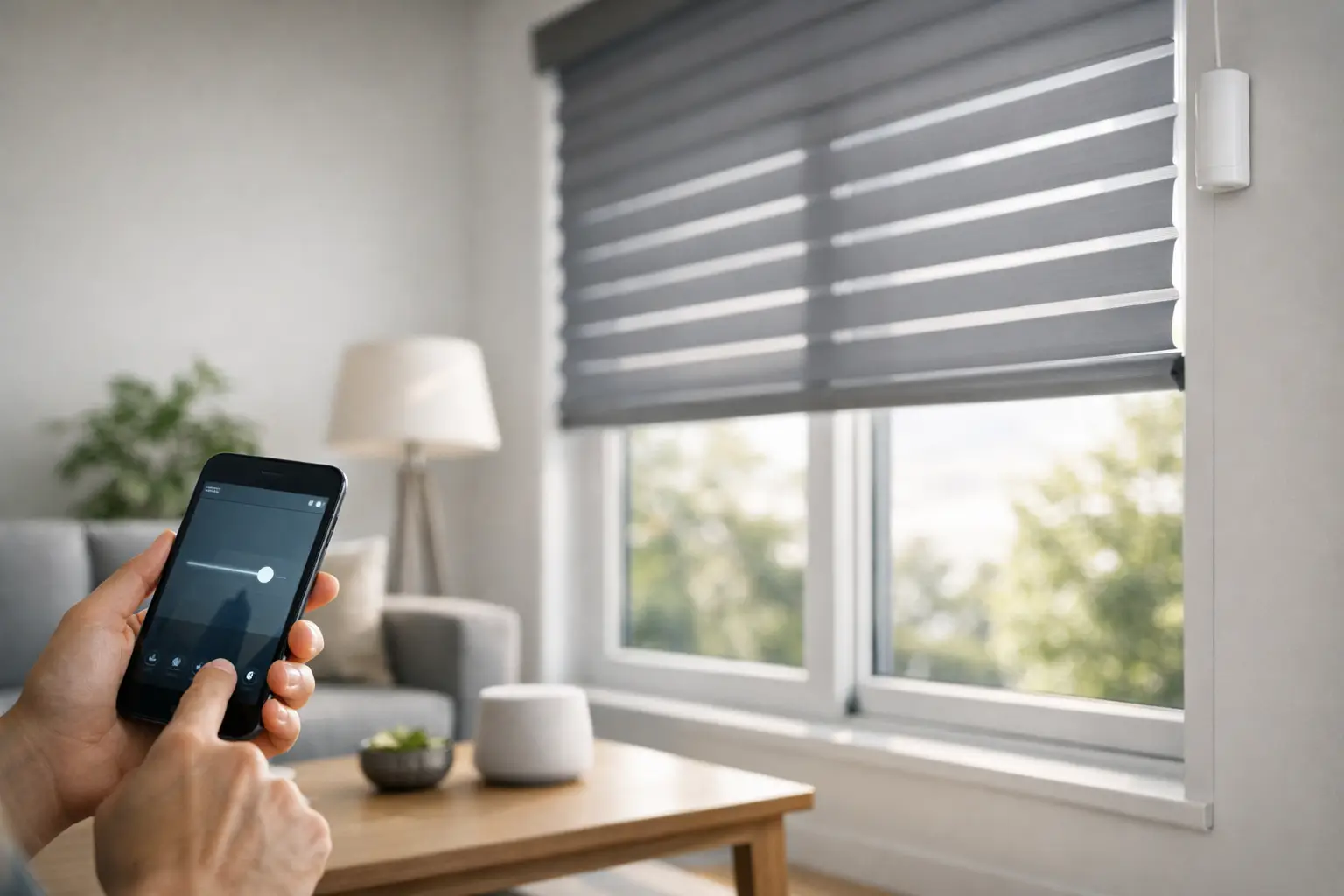
If you have ever opened every blind in the morning, closed half of them again by lunchtime to cut glare, and then forgotten the bedroom blackout blind at night, a guide to smart window blinds starts with one simple idea: make everyday light control easier. Smart blinds are not just a gadget. For many homes and workplaces, they solve practical problems around privacy, comfort, energy use and day-to-day convenience.
The appeal is easy to understand. A blind that opens on schedule, responds to an app, or works with a voice assistant takes one more repetitive task off your list. That said, the right setup depends on the room, the type of blind, and how you actually use the space. A smart blind in a family bedroom needs something different from a smart blind in a meeting room or shopfront.
What smart window blinds actually do
Smart window blinds are made with a motor that allows them to open, close or tilt without manual operation. Depending on the system, you can control them with a remote, wall switch, smartphone app, timer or voice command. Some can also be grouped together, so multiple blinds move at the same time.
The big advantage is consistency. In a bedroom, that might mean blackout blinds closing at the same hour every evening. In a south-facing office, it could mean reducing screen glare before staff arrive. In living rooms, it often comes down to comfort – controlling sunlight without having to cross the room every time the light changes.
Motorisation also helps in places where windows are awkward to reach. Tall stairwell windows, wide bi-fold doors and commercial spaces with multiple large blinds all benefit from a setup that does not rely on chains or cords.
A practical guide to smart window blinds for different rooms
Not every smart blind suits every setting. The best result usually comes from matching the blind style to the function of the room first, then choosing the smart controls around that.
Bedrooms
Bedrooms usually need privacy, dependable blackout performance and quiet operation. Roller blinds are a common choice here because they work well with blackout fabrics and create a clean finish. If your goal is better sleep, scheduled opening and closing can make a real difference, especially in children’s rooms where routine matters.
For families, motorised blinds also remove hanging cords, which is an important safety benefit. That makes smart blinds appealing not only for convenience, but for peace of mind.
Living rooms and family spaces
In main living areas, style and flexibility matter just as much as function. You may want to soften glare during the day without losing all natural light, then close the blinds for privacy in the evening. Venetian blinds can work well if you want finer control over light, while roller blinds suit a simpler, more streamlined look.
If the room gets hot in summer or feels cool in winter, fabric choice becomes more important. Some blinds include insulation benefits that help improve comfort and support better energy efficiency.
Kitchens and bathrooms
These spaces call for materials that can cope with moisture and are easy to maintain. Smart operation is useful here, but practicality should come first. Faux wood or composite-style Venetian blinds often suit bathrooms and kitchens because they offer the look of wood with better resistance to humidity.
In kitchens, a motorised blind above a sink or worktop can also be easier to use than a manual blind placed behind taps, appliances or other obstacles.
Offices, shops and commercial spaces
For business settings, smart blinds are often less about novelty and more about presentation and control. In offices, they can reduce glare on screens, improve privacy and help rooms feel more polished. In retail or hospitality spaces, scheduled opening can support a more professional appearance from the start of the day.
Where several windows need to move together, grouped controls save time and keep the look consistent. This is one of the clearest examples of where a made-to-measure and professionally fitted approach pays off.
Control options and what they mean in practice
When people start looking into smart blinds, they often focus on app control first. That can be useful, but it is only one part of the picture. A good system is one that feels easy to use every day, not one that sounds impressive on paper.
Remote controls are straightforward and suit people who want motorisation without relying on a phone. Wall switches offer a neat, familiar option, especially in commercial settings or for homeowners who prefer something simple. App control adds flexibility when you want to operate blinds while away from home or set routines around your schedule.
Voice control is convenient, but not essential for everyone. If you already use a smart home setup, it can fit in naturally. If not, timers and remotes may cover what you need without adding complexity.
There is also the question of power. Some motorised blinds are battery-operated, while others are mains powered. Battery options can be neater and easier to install in many homes, but they will need recharging or replacement over time. Mains-powered systems are better suited to larger projects, frequent operation or spaces where long-term uninterrupted use matters most.
The trade-offs people should know before buying
A guide to smart window blinds should be honest about the compromises as well as the benefits. Smart blinds are convenient, but they do cost more than manual versions. The value tends to be clearest in rooms you use every day, hard-to-reach windows, family homes focused on safety, and commercial properties where consistency matters.
You also need to think about whether smart features will genuinely improve the way you use the space. In a guest bedroom that is rarely used, manual operation may be perfectly adequate. In a busy office with multiple windows, motorisation can make daily life easier from the first week.
Another consideration is product quality. A smart motor attached to a poorly suited blind will not give a better result. Accurate measuring, the right fabric or slat material, and proper fitting all matter just as much as the control system itself.
Why made-to-measure matters more with smart blinds
With standard blinds, a less-than-perfect fit may be irritating. With smart blinds, it can affect how smoothly the blind operates and how polished the result looks. Made-to-measure blinds help ensure the blind sits correctly, moves reliably and delivers the privacy and light control you expect.
That is particularly important for larger windows, bay windows and commercial installations. Even a small measuring error can become more obvious when blinds are grouped together or programmed to move in sync.
Professional measuring and fitting also remove guesswork around brackets, clearances and placement. For many customers, that is the point where smart blinds go from being an idea to being a practical upgrade that actually works properly.
Cost, value and where to spend wisely
Prices vary depending on blind type, size, fabric, motor system and whether you are fitting one blind or several. Blackout roller blinds with motorisation will usually cost differently from Venetian systems with tilt control, and commercial installations often need a more tailored quotation.
The better question is not simply whether smart blinds cost more, but whether they offer enough value for the room. If you want improved privacy, regular light control, safer operation for children, and a cleaner overall finish, they can be a worthwhile investment. If your main goal is dressing a rarely used window as cheaply as possible, a manual blind may make more sense.
A local, full-service approach helps here because you can match the recommendation to the room instead of buying on guesswork. For customers across Coventry and the West Midlands, Queen Blinds often sees that the best result comes from balancing style, practicality and budget rather than choosing the most advanced option by default.
Who smart window blinds suit best
Smart blinds are especially well suited to busy households, modern renovations, family homes, rental upgrades at the higher end of the market, and business premises where presentation matters. They also make sense for anyone who values convenience but does not want a complicated setup.
The most successful installations are usually the ones planned around real habits. When do you need privacy? Which rooms overheat? Which windows are hard to reach? Where would safer, cord-free operation make a difference? Those answers matter more than any single feature list.
If you are considering smart blinds, it helps to start with the room and the result you want, rather than the technology itself. Get the blind type right, choose controls that fit your routine, and make sure the measuring and fitting are handled properly. When that part is done well, smart blinds feel less like a luxury add-on and more like a sensible improvement you will appreciate every day.
A good blind should suit your room even when the motor is switched off. When the design, fit and controls all work together, smart window blinds become one of those upgrades that quietly make the whole space feel better.