


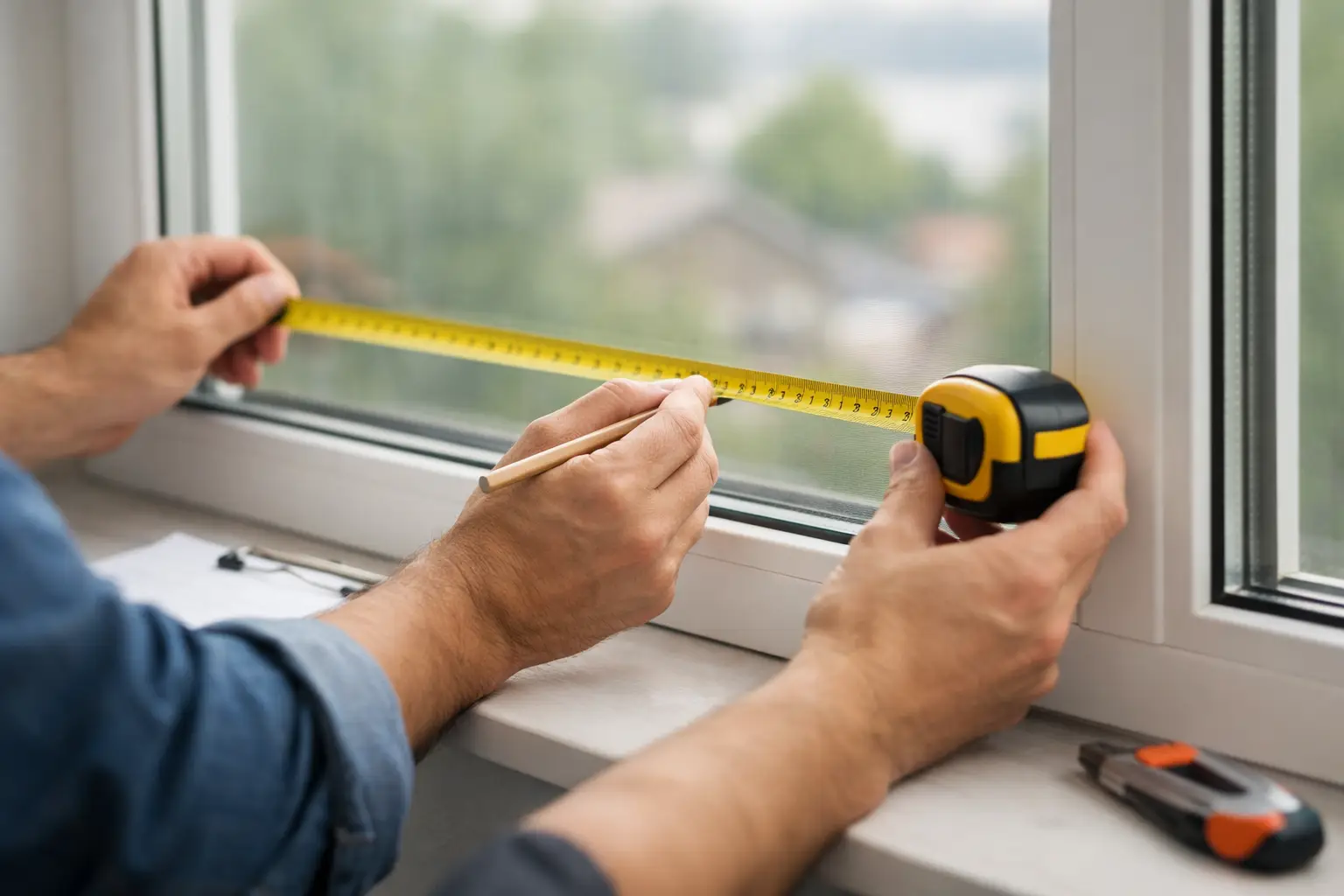
A blind that is a few millimetres out can turn a straightforward job into a frustrating one. Too wide, and it catches on the frame. Too narrow, and it lets in more light than you wanted. If you are wondering how to measure windows accurately, the good news is that it is not complicated – but it does need care, the right method and a little patience.
Made-to-measure blinds are designed to fit the space you give them, so accurate measurements matter from the start. Whether you are updating a bay window at home, replacing office blinds or getting a rental property ready for new tenants, careful measuring helps you avoid delays, extra cost and a finish that looks slightly off every time you walk into the room.
How to measure windows accurately for blinds
Before you pick up the tape measure, decide how you want the blind to sit. This is the first thing that changes the way you measure. In most cases, you will be choosing between a recess fit and an exact fit.
A recess fit means the blind sits inside the window recess. This usually gives a neat, built-in look and is popular in kitchens, bedrooms and offices. An exact fit, sometimes called an outside fit, means the blind sits outside the recess and covers the window opening more fully. This can be a better option if you want to reduce light gaps, hide an uneven frame or fit around handles and obstructions.
If you are not sure which style is right, think about function as well as appearance. Blackout blinds often benefit from a fitting approach that keeps light gaps to a minimum, while a decorative blind in a living room may be more about proportion and finish.
What you need before measuring
Use a metal tape measure rather than a cloth one. Cloth tapes can stretch slightly, and even a small difference can affect the fit. Measure in millimetres, not centimetres, and write each figure down immediately. It is also worth measuring the actual recess rather than relying on old plans or previous blind sizes, especially in older properties where frames are rarely perfectly square.
A step stool can help for taller windows, and a second person is useful for wide commercial windows or awkward bay sections. Good light matters too. It is easier to spot a tiled reveal, a protruding handle or a frame that narrows towards the top when you can see the full opening clearly.
Measuring a recess fit window
If you want the blind inside the recess, measure the width in three places – at the top, middle and bottom. Then measure the drop in three places – left, centre and right. Use the smallest width and the smallest drop.
That smaller number matters because window recesses are not always even. Plaster can bow slightly, tiled walls can sit proud in places, and timber frames can move over time. Measuring in one place only can give you a size that looks right on paper but does not fit in reality.
For most made-to-measure blinds, you give the recess size and the manufacturer or fitter makes the appropriate deductions. You should not take deductions yourself unless the supplier specifically asks you to. This is one of the most common measuring mistakes, and it can leave you with a blind that is too narrow.
Do not forget to check for obstructions inside the recess. Window handles, trickle vents, alarm sensors and tiles can all affect how the blind operates. A Venetian blind, for example, needs space to raise and tilt without catching. A roller blind may need to clear a handle so the fabric hangs properly.
Measuring depth matters too
Width and drop usually get the most attention, but recess depth can be just as important. Some blind styles need more room than others. Wooden or faux wood Venetians generally need more space than a slim roller blind, and motorised options may need additional clearance for the headrail or battery pack.
If the recess is shallow, an exact fit outside the recess may be the better choice. It can give you a cleaner result than forcing a product into a space that is technically measurable but not practical.
Measuring an exact fit window
If the blind is going outside the recess, measure the area you want the blind to cover rather than the glass alone. This usually means taking the full width and drop of the window opening and then allowing extra overlap on each side.
How much overlap you need depends on the blind type, the room and the result you want. If privacy and light control are the priority, you will usually want more coverage beyond the frame. In a bathroom or bedroom, that extra overlap can make a noticeable difference. In a living room, the decision may be more about visual balance.
When measuring for an exact fit, also think about where the brackets will be fixed. You need sound fixing points above or around the window, and you need to make sure the blind clears handles, radiators or nearby coving. This is particularly important in commercial spaces where larger blinds may need stronger support and consistent alignment across several windows.
Bay windows and shaped windows
Bay windows need a little more attention because each section often has its own angle, depth and frame details. Measure each window separately and label them clearly. Do not assume both side windows match just because they look similar.
For shaped or unusual windows, the safest route is usually a professional measuring service. Arches, angled tops and very large panes can be measured at home, but the margin for error is smaller and the cost of getting it wrong is higher.
Common mistakes that affect the final fit
Most measuring problems come down to rushing. People measure in centimetres, round numbers up, forget to check all three points, or take deductions that should have been left to the supplier. Another frequent issue is measuring the old blind rather than the window itself. If the old blind never fitted perfectly, copying its size simply repeats the same problem.
Handles are another detail that often gets missed. A blind may fit the recess width exactly but still sit awkwardly if a handle pushes the fabric or slats forward. That does not always mean the blind cannot work there, but it does mean the product choice or fitting position may need adjusting.
It is also worth checking whether the window opens inwards. In some rooms, especially kitchens and bathrooms, the way a window opens can influence which blind style is practical. A neat recess fit may sound ideal until you realise it interferes with ventilation or catches when the sash moves.
When professional measuring is the better option
Knowing how to measure windows accurately is useful, but there are times when expert help saves time and stress. Large windows, bay windows, multiple rooms, commercial sites and motorised blinds all benefit from a trained eye. The same applies if your walls are uneven, your recesses are tiled, or you simply want the confidence that the final size is right first time.
That is why many customers prefer a full service rather than taking a chance with self-measuring. A professional can spot the details that are easy to miss, recommend the right fitting style and make sure the finished blind works as well as it looks. For homeowners and businesses across Coventry and the wider West Midlands, that kind of support often makes the whole process simpler.
At Queen Blinds, measuring is part of helping customers choose blinds that suit the room properly, not just physically fit the opening. That might mean recommending a blackout roller blind for a bedroom, a moisture-resistant Venetian for a bathroom or a smart motorised option for a larger office space.
A practical approach to getting it right
If you are measuring yourself, slow down and treat each window as its own project. Measure more than once. Record width, drop and any obstructions. Note whether you want a recess or exact fit before you start. If something looks uneven, assume it probably is and measure again.
Accurate measuring is not about being a tradesperson. It is about being methodical. A few extra minutes with the tape measure can be the difference between blinds that feel made for the room and blinds that always look like a near miss.
And if you would rather not leave it to chance, there is real value in having someone local handle the measuring for you – especially when the goal is a clean finish, smooth operation and one less thing to worry about.