


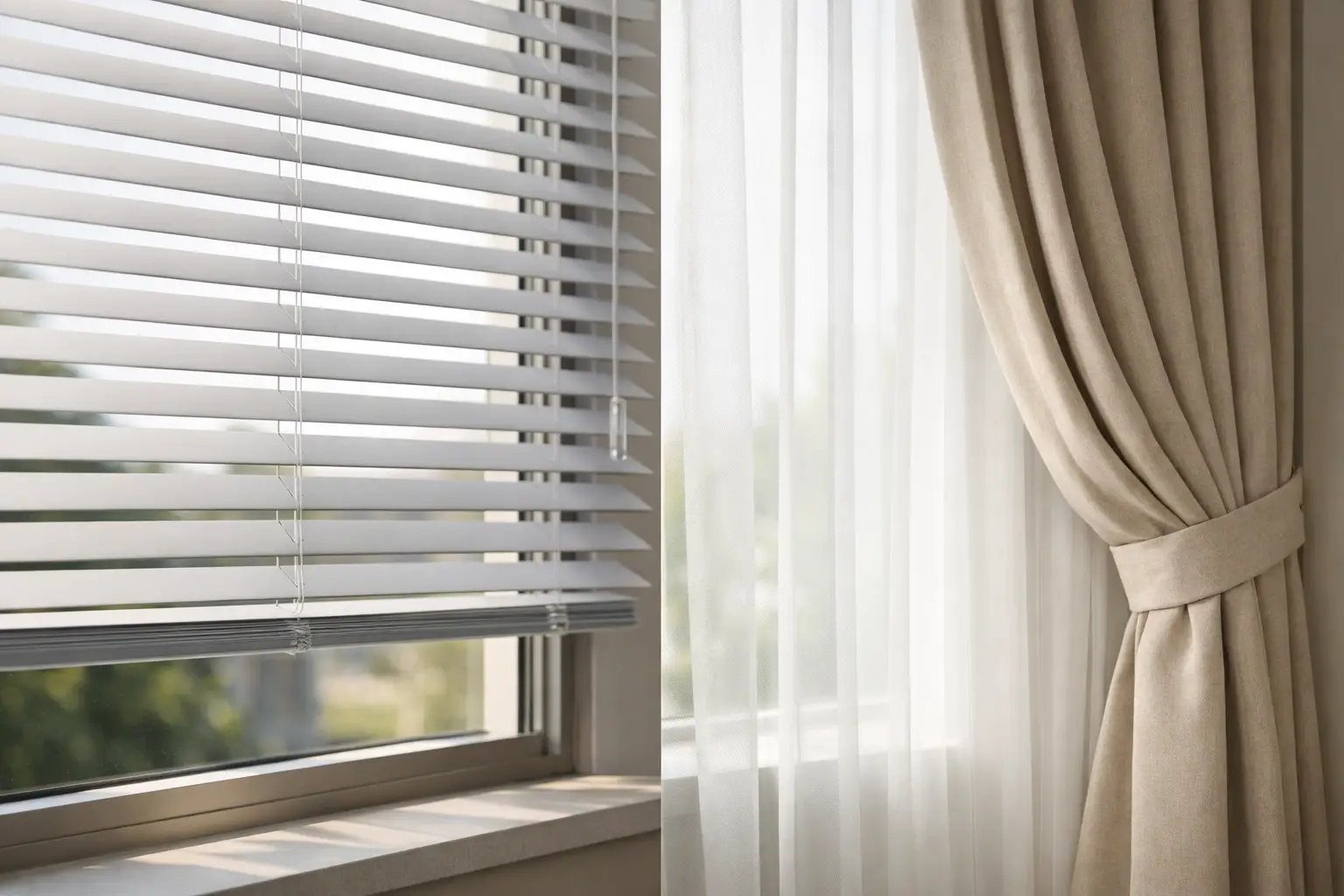
If you have stood in a newly decorated room and still felt like something was off, the window treatment is often the reason. It changes how a room looks, how much privacy you get, how warm it feels, and how easy it is to live with day to day. So, are blinds better than curtains? For many homes and commercial spaces, blinds are the more practical choice – but the right answer depends on the room, your priorities, and the finish you want.
Curtains still have their place. They can soften a space and add texture in a way blinds do not. But when customers are comparing the two, they are usually not just thinking about style. They are thinking about glare on a screen, early morning light in a bedroom, cleaning around radiators, child safety, moisture in bathrooms, and whether the final result will actually fit the window properly.
Are blinds better than curtains for everyday use?
In many cases, yes. Blinds tend to offer better control, a neater fit, and less bulk. Because they sit close to the window, they make better use of the space around it. That matters in smaller rooms, bay windows, kitchens, offices and any area where long fabric can feel heavy or get in the way.
Blinds are also easier to tailor to the exact needs of a room. A blackout roller blind in a bedroom does a very different job from a moisture-resistant Venetian blind in a bathroom or a vertical blind in a bright office. With curtains, the choice is often broader in fabric and pattern, but less precise in performance.
That is one of the main reasons made-to-measure blinds are so popular. They give you a cleaner finish and a more purposeful solution. Instead of trying to make a standard curtain drop work, you can choose a blind designed around the window itself.
Light control is where blinds usually win
Light control is often the deciding factor when asking whether blinds are better than curtains. Curtains can block light well if they are lined and fitted properly, but they usually have gaps at the sides and top. Blinds, especially when made to measure, give you more control over how much light comes in and when.
Roller blinds are a strong option when you want a simple look with practical benefits. You can choose light-filtering fabrics for living areas or blackout fabrics for bedrooms and media rooms. Venetian blinds are useful when you want to adjust the angle of the slats rather than fully open or close the covering. That makes them ideal for rooms where you want daylight without losing privacy.
In offices and workspaces, this flexibility matters even more. Too much glare can make desks uncomfortable and meeting rooms difficult to use. A fitted blind can reduce that problem quickly while still keeping the space bright and professional.
Privacy depends on the room
Privacy is not a one-size-fits-all issue. A front-facing lounge, a street-level office and an upstairs bathroom all need something slightly different. Curtains can give full privacy when closed, but once they are open, that privacy is gone. Blinds offer more options through the day.
This is where Venetian and vertical blinds often stand out. You can tilt or angle them to obscure the view from outside while still letting in natural light. That balance is harder to achieve with curtains alone. In places where privacy matters all day, blinds are often the more practical answer.
For families, privacy also needs to work without fuss. A blind that is quick to adjust is often more useful than curtains that are either fully open or fully closed. Small details like that make a difference when you are using the room every day, not just styling it for a photo.
Curtains can feel softer, but blinds look sharper
Style is the part of the conversation where preferences split. Curtains bring softness, movement and a more traditional feel. In period homes, formal dining rooms or bedrooms where you want a layered look, they can work beautifully.
Blinds, though, tend to suit modern living better. They give a cleaner line and a tidier finish. In newer homes, extensions, kitchens and commercial interiors, that simplicity often looks more considered. Wooden-look and composite Venetian blinds can add warmth without the maintenance concerns of fabric. Roller blinds can disappear neatly into the background or become a feature with the right fabric and colour.
There is also the issue of scale. Heavy curtains can overwhelm a smaller room or make a window feel crowded. A fitted blind keeps the area around the window looking open. If you are trying to create a brighter, more spacious feel, that can be a real advantage.
Are blinds better than curtains for cleaning and upkeep?
For most busy households and workplaces, they are. Curtains collect dust, hold odours and usually need to be taken down for washing or dry cleaning. That can be inconvenient, especially in kitchens or homes with pets and children.
Blinds are generally easier to maintain. A quick dust or wipe is often enough to keep them looking smart. Moisture-resistant options are particularly useful in bathrooms and kitchens, where fabric curtains can quickly show wear. In commercial settings, easy maintenance is even more valuable because it helps keep spaces presentable without creating extra work.
This does not mean every blind is maintenance-free. Slatted blinds need regular dusting, and some materials are more forgiving than others. But compared with curtains, upkeep is usually simpler and faster.
Warmth and insulation are not as simple as they sound
Many people assume curtains are always better for insulation. Sometimes they are, especially if they are thick, lined and full length. But that does not make them the automatic winner.
Modern blinds can help with insulation too, particularly when they are fitted well and made with thermal or insulating materials. Because they sit close to the glass, they can reduce heat loss and help manage solar gain in warmer weather. In rooms where curtains would hang over a radiator, blinds can even make more practical sense, as they allow heat to circulate more effectively into the room.
If reducing drafts and improving comfort is a priority, the best option depends on the window, the room and how the heating works. That is where tailored advice matters. A made-to-measure solution will usually perform better than an off-the-shelf product, whether you choose blinds or curtains.
Cost is about value, not just ticket price
At first glance, ready-made curtains can seem like the cheaper route. But that is not always the full picture. Once you add poles or tracks, linings, alterations and the time involved in getting the fit right, costs can rise quickly.
Blinds vary in price depending on style, size and features, but they often represent stronger value because they are designed to do a specific job well. If you need blackout, privacy, low maintenance and a tidy finish, a properly fitted blind can solve all of that in one product.
Motorised blinds cost more upfront, but for larger windows, hard-to-reach spaces or commercial premises, the convenience can be worth it. The same goes for child-safe designs, UV-protective fabrics and moisture-resistant materials. The best choice is not the cheapest item on the day. It is the option that works properly for years.
When curtains still make sense
There are rooms where curtains are the better fit, or at least part of the answer. Bedrooms often benefit from layering, for example a blackout blind paired with curtains for softness and extra insulation. Formal rooms may suit curtains if you want a richer, more decorative finish.
Curtains can also be useful when the goal is more about fabric, pattern and visual warmth than precise light control. If you love that look, there is no reason to force a minimalist blind into the scheme.
The point is not that curtains are outdated. It is that blinds usually solve more practical problems with less fuss.
The real question is what you need the window covering to do
When customers ask whether blinds are better than curtains, the most useful answer starts with the room. A kitchen needs something different from a nursery. A south-facing office has different demands from a cosy lounge. Moisture, privacy, glare, energy efficiency, safety and cleaning all matter, and they do not matter equally in every space.
That is why a made-to-measure approach tends to give better results. Instead of choosing based on a showroom display or a packet label, you choose based on how the room is actually used. For homeowners, landlords and businesses across Coventry and the West Midlands, that usually leads to blinds being the more flexible and reliable option. Companies like Queen Blinds build their service around that idea – practical advice, accurate measuring and fitting that takes the guesswork out of the process.
If you want a window covering that looks smart, works hard and fits the space properly, blinds are often the better choice. The best decision is rarely about following a trend. It is about choosing something that makes the room easier to live in every single day.