


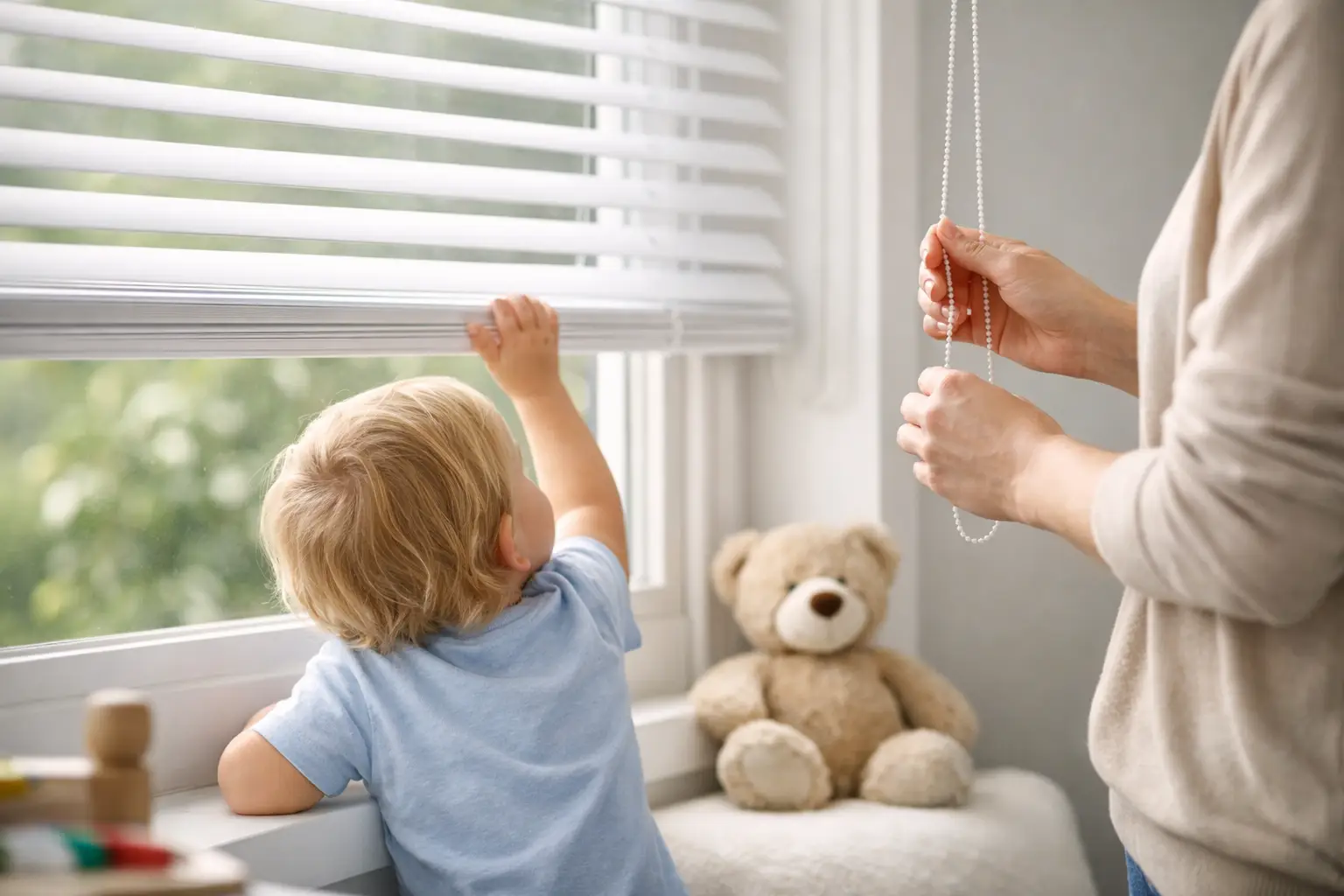
A blind cord hanging within reach might seem like a small detail, but for families with babies and young children, it is one of the first things worth checking in any room. This guide to child safe blinds is designed to help you choose window coverings that look right, work well day to day and reduce avoidable risks around the home.
For many households, safety sits alongside privacy, light control and style. The good news is that you do not have to choose one over the other. With made-to-measure blinds, the right operating system and proper fitting, it is perfectly possible to create a room that feels polished and practical while also being better suited to family life.
Why child safe blinds matter
Young children are naturally curious. If there is a looped cord, a low chain or a reachable pull control, they may grab it, play with it or become tangled in it. That is why child safety is not just about the blind itself, but about the full setup – the product, the position, the controls and the installation.
This matters most in bedrooms, nurseries and living spaces where children spend time unsupervised or where furniture sits close to windows. A blind that appears tidy at first glance may still create a hazard if cords are left loose or the wrong style is chosen for the room. In rental properties and family homes alike, safer choices at the point of purchase can prevent problems later.
A guide to child safe blinds by blind type
Some blind styles are naturally better suited to homes with young children than others. The safest option often comes down to minimising accessible cords and choosing a design that can be fitted securely and used easily every day.
Cordless and motorised blinds
If safety is the priority, cordless and motorised blinds are usually the strongest starting point. They remove the need for hanging cords or chains altogether, which helps reduce risk while also giving a cleaner look at the window.
Motorised blinds are especially useful in nurseries, children’s bedrooms and hard-to-reach windows. They allow light control at the touch of a button and can be a smart long-term choice if you want convenience as well as safety. They do cost more than some manually operated options, so it depends on your budget, but for many families the added ease is worthwhile.
Roller blinds
Roller blinds remain a popular option because they are neat, versatile and available in blackout and dim-out fabrics that suit bedrooms well. They can be a child safe choice when specified with safer control options and fitted correctly.
The key point is not to assume every roller blind is the same. Control position, chain length and the use of safety devices all matter. In a child’s room, a professionally measured and fitted roller blind with the right safety features is far better than a one-size-fits-all product installed without much thought.
Venetian blinds
Venetian blinds offer excellent control over privacy and daylight, which makes them useful in family homes and offices alike. They can still work well in homes with children, but they require more attention because they may include cords for tilting and raising the slats.
If you like the look of Venetian blinds, ask about updated child safety features and whether another style might offer similar light control with fewer accessible operating parts. In some rooms, especially where a cot or bed sits near the window, a simpler design may be the better call.
Vertical blinds
Vertical blinds are often chosen for larger windows and patio doors. They can be practical, easy to maintain and suitable for family spaces, but as with Venetian blinds, the operating system needs careful consideration.
They are not automatically unsafe, but they do rely on proper specification and fitting. In busy areas where children move in and out frequently, it is worth discussing whether a different blind type would better balance access, durability and safety.
What to look for when choosing child safe blinds
The best guide to child safe blinds is not simply a list of products. It is a way of thinking about how the blind will work in your home.
Start with the room itself. A nursery has different demands from a kitchen, and a family lounge is different again from a home office. If children sleep in the room, blackout performance may matter just as much as safety. If the room gets cold in winter or too bright in the afternoon, insulation and light filtering should come into the conversation too.
Then consider the window position. If furniture sits directly below the window, children may be able to reach higher than you expect. A blind that seems out of reach from floor level may not be out of reach once a chair, toy box or bed frame is nearby.
Finally, think about how the blind will be used every day. A safer design only helps if it suits your routine. If a blind is awkward to operate, people are more likely to leave it half open, tie cords loosely or use it in ways it was not intended for. Practicality supports safety.
Installation is part of the safety picture
Even a well-designed blind can become a problem if it is fitted badly. Accurate measuring matters because a blind that sits properly at the window is less likely to need adjustments or improvised fixes. Secure brackets matter too, particularly in family homes where blinds are used often.
This is one reason many customers prefer a full measuring and fitting service rather than tackling it alone. Professional installation helps ensure the blind is positioned correctly, safety devices are installed as intended and the finished result works as it should. For homeowners, landlords and commercial clients, it also removes the guesswork.
At Queen Blinds, this is part of the wider value of made-to-measure service. You are not just choosing a fabric or a slat finish. You are choosing a setup that fits the room, the window and the people using it.
Child safe blinds and style can work together
There is sometimes a sense that safer blinds must look basic or limited. In practice, that is rarely true. Family-friendly blinds now come in a wide range of colours, textures and finishes, from simple neutral rollers to more decorative options that still feel calm and modern.
In children’s bedrooms, you may want blackout fabric for better sleep, moisture-resistant materials for easier cleaning or a softer colour palette that fits the room scheme. In living areas, you may be more focused on privacy, glare reduction and a finish that complements the rest of the interior. Safety does not remove those choices. It simply shapes how the blind should operate.
This is where tailored advice makes a difference. A made-to-measure recommendation can balance appearance with the practical details that are easy to miss when buying off the shelf.
Common mistakes to avoid
One of the most common mistakes is assuming a blind is safe because the cord looks short. Reach changes as children grow, and a short chain can still be accessible if furniture is nearby.
Another mistake is focusing only on the product and not the room layout. A safe operating height in one room may not be safe in another. Rearranging furniture later can also change the risk.
The third is treating fitting as an afterthought. DIY installation can work in some cases, but if safety is a concern, it makes sense to have the blind measured and fitted properly from the outset.
When to replace older blinds
If you already have blinds installed, it is worth checking them with fresh eyes. Older blinds may not offer the same safety features available on newer systems, and wear over time can affect how securely parts sit in place.
Replacement is worth considering if cords or chains hang low, fittings feel loose, the blind no longer operates smoothly or the room is now used by a baby or toddler when it was not before. A home changes over time, and your window coverings may need to change with it.
That does not mean every older blind must be removed immediately. Sometimes an adjustment or updated fitting can help. But if there is any doubt, expert advice is the sensible next step.
Making the right choice for your home
The right child safe blind depends on the age of your children, the type of room, your budget and how you want the window to function. For some households, a motorised roller blind will be the clearest answer. For others, a carefully specified made-to-measure blind with appropriate safety features will offer the right balance of style and value.
What matters most is avoiding a rushed decision. Window blinds are part of daily life. They affect comfort, privacy, sleep and the look of a room, but in homes with young children, they also need thoughtful planning.
If you are choosing blinds for a nursery, updating a family home or reviewing older window coverings, start with safety and build from there. The best result is not just a better-looking room. It is a room that works properly for the people living in it.