


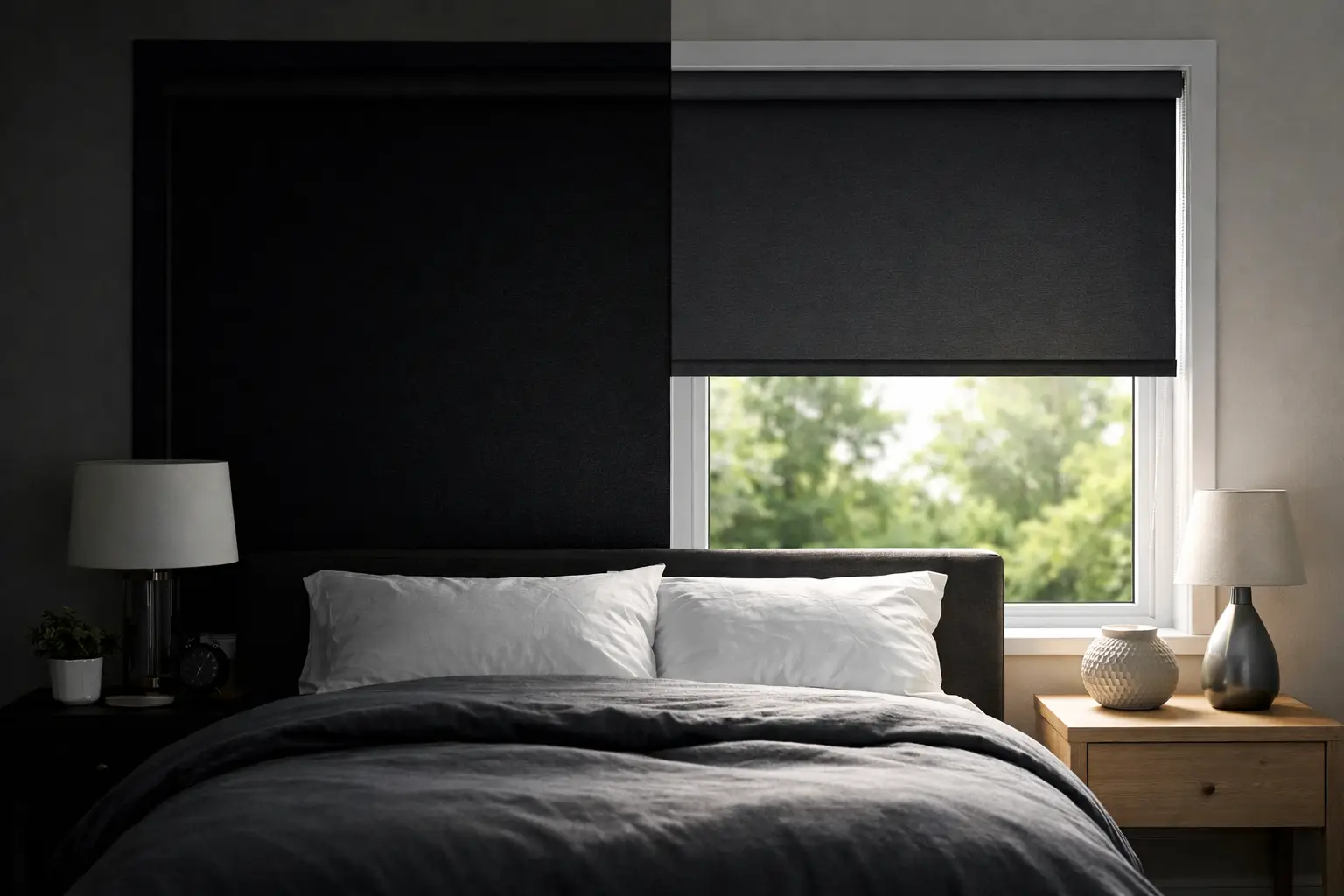
Poor sleep, screen glare and rooms that heat up too quickly usually come down to one thing – light control that is not doing its job. A good guide to blackout window blinds should help you look beyond the word blackout on a label and focus on what actually matters in day-to-day use: how much light is blocked, how the blind fits, and whether it suits the room.
Blackout blinds are a practical choice for bedrooms, nurseries, media rooms, offices and any space where comfort depends on managing light properly. They can also improve privacy and help with insulation, but not every blackout blind performs in the same way. Fabric, fitting and blind style all make a noticeable difference.
What blackout window blinds actually do
Blackout window blinds are designed to reduce incoming light far more effectively than standard blinds. That usually comes from a tightly woven or specially coated fabric that limits light passing through the material itself. In a bedroom, that can mean better sleep and fewer early morning wake-ups. In a workspace, it can mean less glare on screens and a more comfortable environment.
That said, blackout does not always mean complete darkness. Light often sneaks in around the sides of the blind, especially if the blind is recess-fitted and the window opening is slightly uneven. This is one of the most common surprises for buyers. The fabric may be blackout, but the overall result depends on installation and the window shape.
For many households and businesses, that is still more than enough. If your main goal is to dim a room significantly, a well-made blackout blind will usually do the job. If you want near-total darkness, the specification needs to be more precise.
A guide to blackout window blinds by style
The best style depends on the room, the look you want and how much light control you need. Blackout is not one single product type. It is available across several blind designs, and each behaves differently once installed.
Roller blackout blinds
Roller blinds are one of the most popular blackout options because they are neat, simple and effective. With the right fabric, they suit bedrooms, children’s rooms, offices and commercial spaces equally well. They also work with a wide range of interiors, from plain modern schemes to softer, more traditional spaces.
Their main advantage is straightforward performance. A single panel of blackout fabric rolls down smoothly and gives clean coverage across the glass. They are easy to operate, easy to maintain and available in a wide choice of colours and finishes. If you want a practical starting point, this is often it.
The trade-off is edge light. Because roller blinds sit within or just over the opening, small gaps at the sides can remain visible, particularly in bright summer mornings.
Roman blackout blinds
Roman blinds give a softer, more furnished look, which makes them a strong choice for bedrooms, living rooms and guest rooms. When made with blackout lining, they combine decorative appeal with better light control than a standard fabric blind.
They are ideal when appearance matters as much as function. If you want the room to feel warm and finished rather than purely practical, Roman blinds can do that well. They do take up more visual space than rollers, though, and the fabric stack at the top is more noticeable when raised.
Vertical blackout blinds
Vertical blinds are often associated with larger windows, patio doors and commercial settings, but they can also work well in the home. Blackout vertical fabrics help reduce glare and create privacy in offices, meeting rooms and bedrooms with wide openings.
Their strength is flexibility. You can tilt the vanes to control light during the day and fully close them when you need darker conditions. They are not usually the first choice for complete bedroom darkness, but they can be a very practical option where access to doors or wide glazed areas matters.
Venetian and other hard-slat blinds
Venetian blinds are excellent for adjustable light control, but they are not usually the strongest option if your priority is blackout performance. Even when closed, light can pass between slats and around cord routes. For kitchens, bathrooms and offices they may still be the right answer, especially if moisture resistance and easy cleaning matter more than deep darkness.
This is where expectations matter. If you want flexible daylight control and a crisp, modern finish, Venetians are useful. If you want a dark bedroom at 6 am in June, fabric blackout blinds are normally the better route.
Why fit matters as much as fabric
One of the biggest factors in blackout performance is how the blind is measured and fitted. A made-to-measure blind has a clear advantage because it is tailored to the exact window rather than approximated to a standard size. That improves coverage, appearance and day-to-day operation.
Inside-recess fitting can look very smart and keeps the blind tidy within the window opening. However, it often allows a little more side light. Outside-recess fitting can improve coverage because the blind overlaps the opening, reducing gaps. Which approach is best depends on the room, the shape of the window and how dark you want the space to be.
This is why expert measuring is valuable. Small miscalculations can leave annoying strips of light at the edge or create a blind that does not sit properly. In a room where darkness matters, precision is not a luxury. It is part of the product doing its job.
Choosing the right blackout blind for each room
Bedrooms are the obvious place to start. Adults who work shifts, light sleepers and families with young children tend to notice the benefits of blackout blinds very quickly. A roller or Roman blackout blind is usually the strongest choice here, depending on whether you prefer a cleaner or softer look.
Nurseries and children’s bedrooms need a little extra thought. Blackout matters, but so does safe operation. Child-safe controls, secure fittings and smooth day-to-day use are part of choosing well. A blind that looks good but feels awkward to use twice a day soon becomes frustrating.
Living rooms and media rooms often need a balance between comfort and appearance. You may not want full darkness all day, but you might want to reduce glare on the television and make the room feel cooler in strong sun. In these spaces, blackout blinds can be more about comfort than sleep.
For offices, clinics and other commercial spaces, the priority is often screen visibility, privacy and a tidy finish. Blackout rollers and vertical blinds are both practical options because they keep the room looking professional while improving working conditions.
Other benefits beyond darkness
A good blackout blind does more than block light. Many fabrics also help reduce heat gain in summer and limit heat loss at the window in colder months. It will not replace proper insulation, but it can make a room feel more comfortable and help support energy efficiency.
Privacy is another strong benefit. In street-facing rooms or overlooked properties, blackout blinds provide solid coverage when closed, which can be especially useful in bedrooms, bathrooms and ground-floor commercial units.
There is also the question of upkeep. Most blackout roller blinds are low maintenance and easy to wipe clean, which suits busy households and workplaces. Fabric-heavy options may need a little more care, but they often bring a more decorative finish.
Common mistakes people make
A frequent mistake is choosing purely on colour or price and assuming all blackout blinds perform the same. They do not. The fabric may be suitable, but the wrong style or a poor fit can undermine the result.
Another is overlooking how the room is used. A bedroom used by a night-shift worker has different needs from a lounge that only gets occasional afternoon glare. The right blind is not just the darkest one. It is the one that suits the space, the routine and the overall look of the room.
Standard ready-made blinds can be tempting, especially for a quick fix, but awkward window sizes and uneven reveals often expose the limits of off-the-shelf options. If appearance and performance both matter, made-to-measure tends to be the better long-term choice.
What to look for before you buy
Start with the room and the problem you are solving. If it is sleep, prioritise maximum coverage and accurate fitting. If it is glare or privacy, you may have more flexibility in style. Then consider how often the blind will be used, who will use it, and whether features such as motorisation would make daily operation easier.
It is also worth thinking about the finish in the wider room. Blackout blinds do not need to look heavy or clinical. With the right colour, texture and design, they can sit neatly within a stylish scheme while still delivering practical benefits.
For many customers, the best results come from a proper consultation rather than trying to guess from product photos alone. A local specialist such as Queen Blinds can assess the space, measure accurately and recommend a solution that suits both the window and the way the room is actually used.
The right blackout blind should make life easier the moment it is fitted – a bedroom that stays darker, an office that feels more comfortable, or a living space that works better at every hour of the day.