


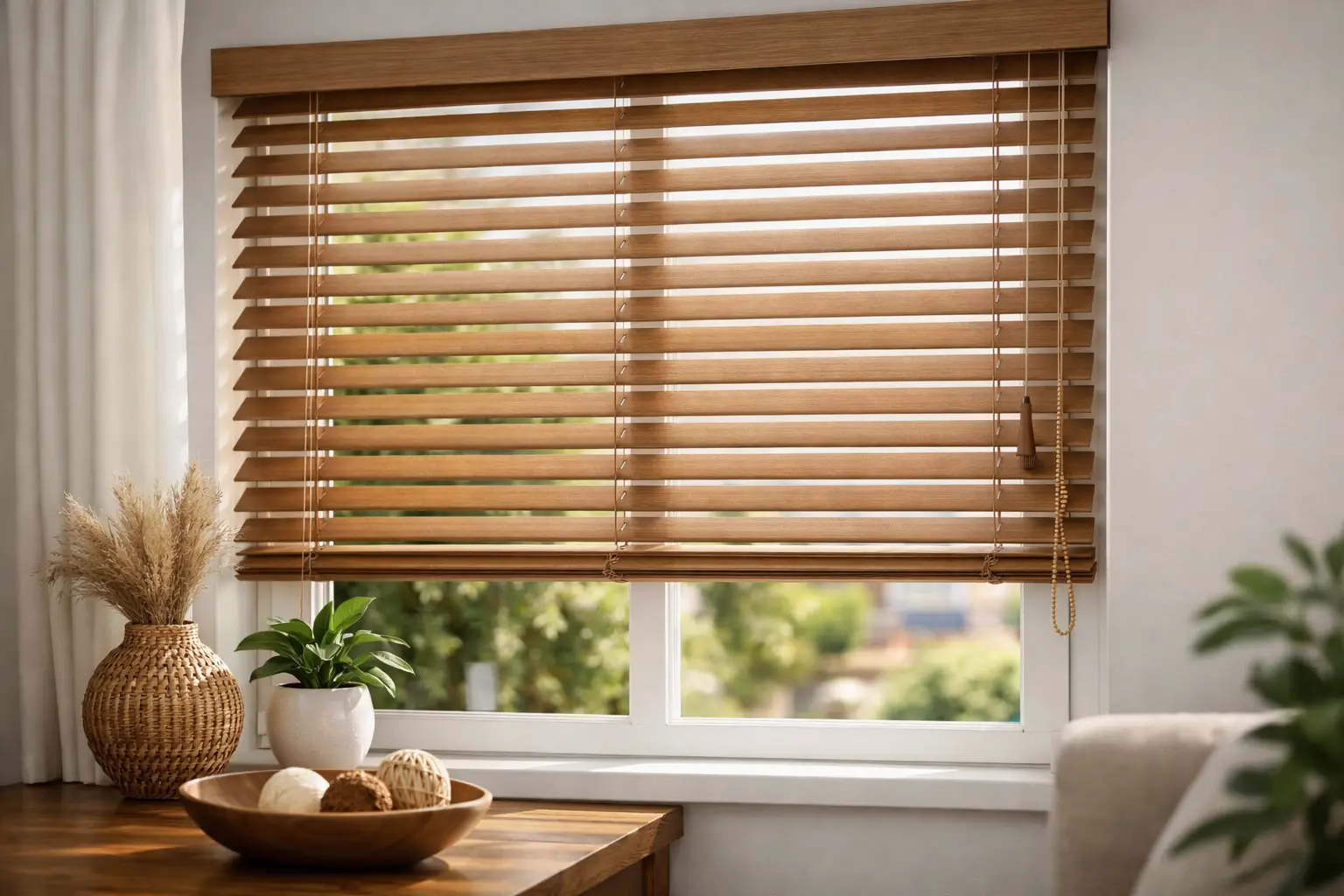
Real wood blinds can look excellent on the right window, but they are not always the most practical choice. In kitchens, bathrooms, busy family homes and hard-working office spaces, wooden look venetian blinds often make more sense. They give you the warmth and structure of timber-inspired slats, with a finish that is usually easier to maintain and better suited to everyday wear.
That balance is exactly why they have become such a popular option for homeowners, landlords and commercial spaces across the West Midlands. If you want a blind that looks polished, controls light properly and stands up well to regular use, this style deserves a closer look.
What are wooden look venetian blinds?
Wooden look venetian blinds are horizontal slatted blinds designed to capture the appearance of painted or stained wood, but made from practical alternative materials such as PVC, faux wood or composite slats. From a distance, and often even close up, they deliver the same clean-lined look people like about timber blinds.
The difference is in how they perform. Depending on the material and finish, they are typically more resistant to moisture, less demanding to clean and often better suited to rooms where steam, splashes or heavy daily use would be a concern. That makes them a strong option for modern living, where style needs to work alongside convenience.
Why this style works in so many rooms
One of the biggest strengths of this blind is flexibility. Some window coverings look right in one room and out of place in another. Wooden look venetian blinds tend to sit comfortably across a whole property, which matters if you want a consistent finish from room to room.
In living rooms, they bring shape and softness without feeling fussy. In bedrooms, they offer privacy and good light control, especially when paired with curtains for extra blackout performance. In kitchens and bathrooms, the moisture-resistant qualities are often the deciding factor. In offices, clinics and meeting rooms, they create a tidy, professional look that is easy to keep presentable.
That does not mean they are always the best answer for every space. If you want the natural grain, weight and texture of genuine timber, real wood still has a distinct character. But for many people, the visual difference is small enough that the practical advantages win.
The main benefits of wooden look venetian blinds
The first benefit is appearance. This style gives you the classic, structured look associated with wooden slats, which suits both traditional and contemporary interiors. White and off-white finishes remain especially popular because they brighten a room and pair easily with changing wall colours and furniture.
The second is light control. Venetian blinds allow you to tilt the slats rather than simply having them open or shut. That means you can soften glare, maintain privacy and still let in daylight. In street-facing rooms or overlooked properties, that level of control is a genuine day-to-day advantage.
The third is maintenance. Most wooden-look materials wipe clean with far less effort than fabric blinds. In homes with children, pets or a busy cooking space, this can save time and frustration.
The fourth is durability in more demanding environments. Steam and humidity can be a problem for some materials, but composite and faux wood options are often chosen precisely because they cope better in those conditions. For landlords and commercial settings, that can make them a sensible long-term investment.
Wooden look venetian blinds vs real wood
This is where the decision usually becomes clearer. Real wood has natural variation and texture that many customers still prefer. It can feel more premium, and in the right setting it offers a richness that manufactured finishes are trying to emulate.
But real wood comes with trade-offs. It can be less suitable for rooms with higher moisture levels, and it may require a little more care over time. Weight can also become a factor on larger windows.
Wooden look venetian blinds are often chosen because they keep the overall design effect while reducing some of those concerns. They are generally well suited to family homes, rental properties and workplaces where practicality matters as much as appearance. If you are furnishing a bathroom, utility room or kitchen, the balance often tips firmly towards a wood-look composite product.
For a formal lounge or a carefully styled period room, real wood may still appeal more. It depends on the room, the budget and how much maintenance you are prepared to take on.
Choosing the right finish for your space
Colour has a bigger impact than many people expect. White wooden-look blinds create a bright, neat finish and help smaller rooms feel more open. They are especially effective in kitchens, bathrooms and offices where a clean, simple appearance works well.
Softer neutrals such as cream, stone or light grey can make a room feel warmer without becoming dominant. They suit modern homes where the aim is a calm, balanced look rather than sharp contrast.
Wood-effect finishes in oak, walnut or ash-inspired tones bring more warmth and can connect better with flooring, furniture or shelving. They work well in living rooms, dining areas and home offices, but they need to be chosen carefully. Too dark a finish in a small room can make the window feel heavier than intended.
Slat size also matters. Wider slats tend to look more contemporary and can make a larger window feel well proportioned. Narrower slats can suit smaller openings, though overall effect should always be judged against the full room, not just the window itself.
Why made-to-measure matters
Venetian blinds rely on clean lines. If the fit is wrong, you notice it straight away. Gaps, uneven drops and poorly aligned fittings can undermine the entire look, even if the blind itself is good quality.
That is why made-to-measure is often the better route. Accurate measuring helps the slats sit properly, improves privacy and gives the room a more finished result. It also reduces the risk of ordering the wrong size, which is a common problem when customers try to work everything out themselves.
For awkward windows, bay windows or commercial spaces with multiple openings, professional measuring becomes even more valuable. It takes the guesswork out of the process and helps ensure the final result is practical as well as attractive.
Are they a good option for family homes and businesses?
In many cases, yes. For family homes, the appeal usually comes down to easy upkeep, privacy and a finish that works with modern interiors. When fitted correctly and specified with child-safe options, they can be a smart solution for bedrooms, kitchens and shared living spaces.
For businesses, they offer a clean, orderly look that feels professional without being cold. They also help manage glare on screens, which can matter in offices, reception areas and meeting rooms. Because they are practical to maintain, they often suit commercial settings where appearance needs to stay consistent with minimal effort.
This is also where local advice can make a real difference. A blind that looks right in a brochure may not be the right fit for the way a room is used. At Queen Blinds, the focus is on helping customers across Coventry and the wider West Midlands choose made-to-measure options that match both the style of the space and the demands of everyday use.
When wooden look venetian blinds are the right choice
If you want the appearance of wood without the extra upkeep, this style is easy to justify. If your room deals with steam, splashes, direct sunlight or regular traffic, they become even more appealing. And if you are furnishing several rooms and want one consistent blind style that can adapt to different spaces, they offer a practical middle ground between design and durability.
The best window covering is rarely the one that simply looks good on day one. It is the one that still works well a year later, still suits the room and still feels easy to live with. Wooden look venetian blinds do that job well, which is exactly why so many customers keep coming back to them.